Travel documents
Keep required passport, visas, joining letter, itinerary and certificates in a protected hand-luggage folder. Bring only the originals requested, plus secure digital copies.
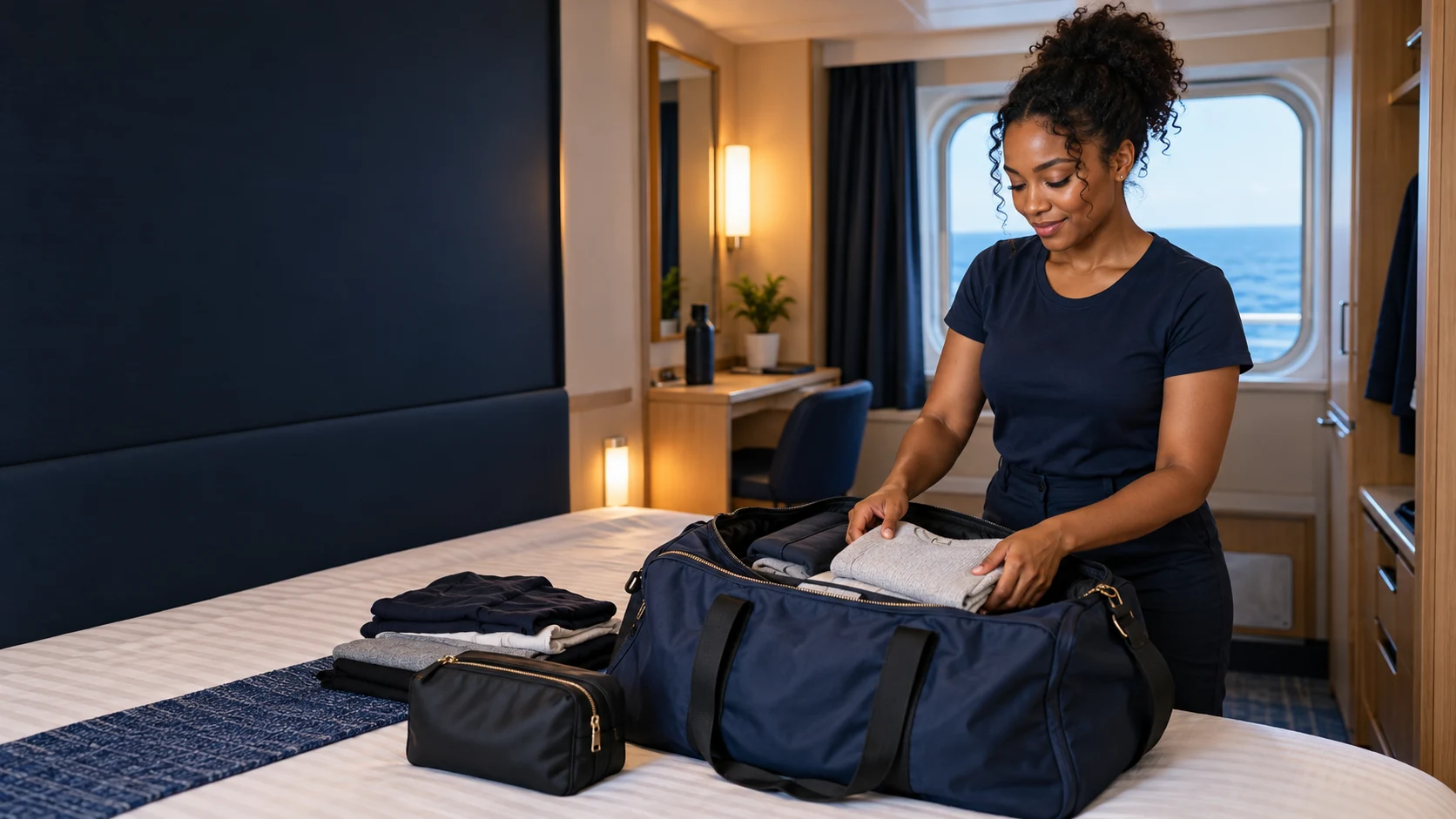

A practical packing guide for cruise ship crew
A good crew packing list starts with the employer’s written joining instructions. Use this guide to sort travel documents, clothing, personal essentials and restricted items before you close the bag.
Confirm every item against your employer and airline rules
Start with the written list
There is no single packing list for every cruise ship contract. Uniform, footwear, baggage limits, cabin storage and onboard restrictions can vary by employer, department, ship and itinerary. Treat the joining team’s current instructions as your source of truth.
Before buying equipment or adding items to your case, check what the company supplies, what you must bring, and what is prohibited. This avoids duplicate purchases and prevents a useful travel item from becoming a security or safety problem onboard.
A useful order for packing
Separate what you must carry, what you need for the first days and what can wait. Use the role-specific checklist from your employer to decide exact quantities. Separate guaranteed pay from tips, service charges or commission, and check how each is calculated and shared. Confirm travel responsibility, accommodation, meals, insurance, deductions and cancellation terms in the contract or an official written explanation before accepting.
Keep required passport, visas, joining letter, itinerary and certificates in a protected hand-luggage folder. Bring only the originals requested, plus secure digital copies.
Confirm whether uniform is issued, which colours or cuts are permitted, and whether non-slip, safety or formal shoes are required for your department.
Choose compact, easy-care items for travel and time off. Pack for the itinerary’s climate and laundry access rather than guessing how much space a cabin offers.
Bring permitted personal care basics and any necessary medication in accessible packaging. Check customs, airline and employer rules for medicines and liquids.
Check plug type, voltage guidance, ship rules and airline battery restrictions. Keep power banks and spare batteries in the baggage location required by the airline.
Consider a few compact, permitted items that help you settle in, such as earplugs or a familiar reading choice. Avoid valuables and anything not approved for the ship.
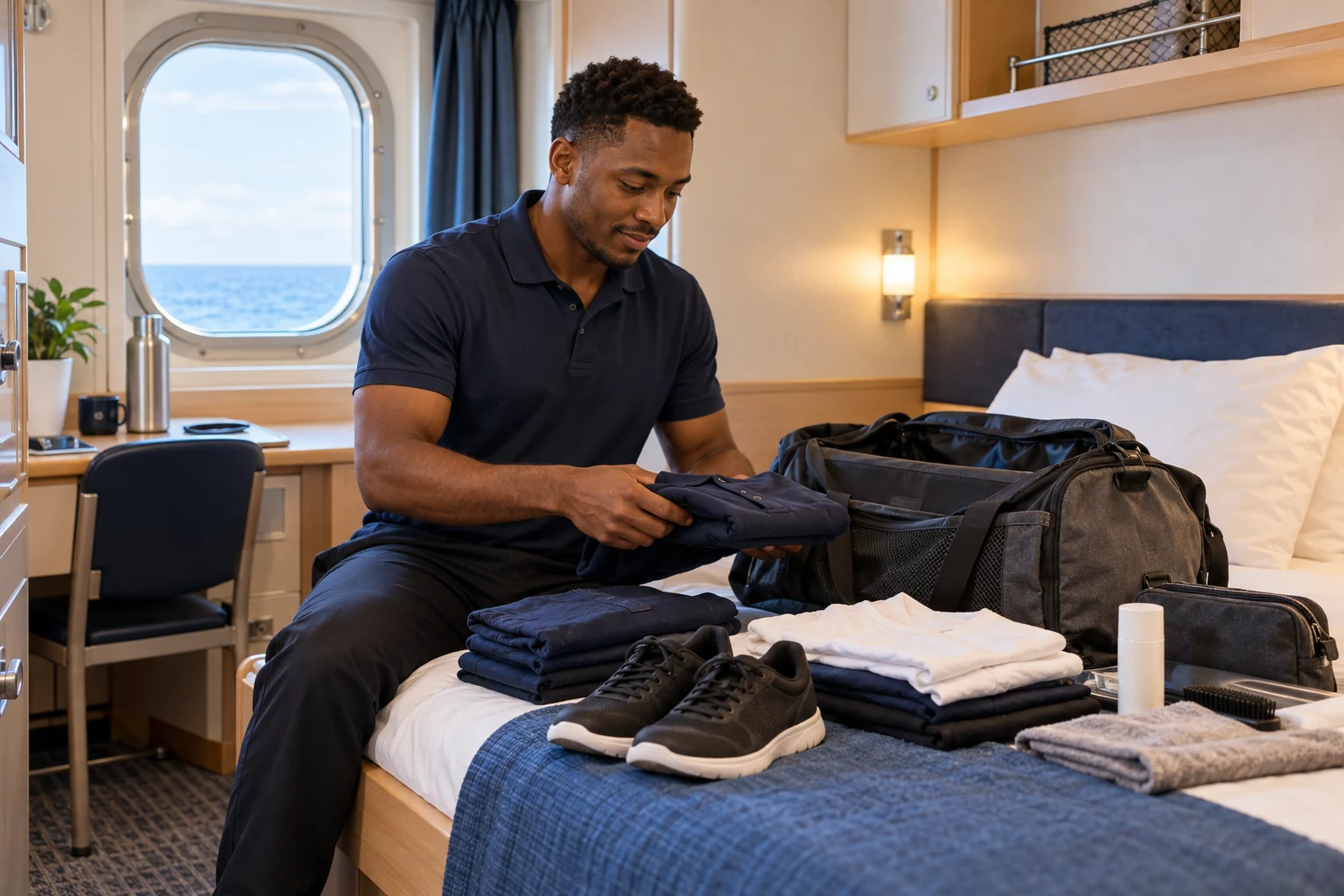
Clothing, cabin and workwear
Shipboard storage is usually more limited than a full wardrobe at home. Pack versatile clothing that can be folded compactly, and ask whether you will share a cabin, have hangers or drawers, and use crew laundry facilities. Do not assume you can bring bulky storage items.
Uniform and shoes are role-specific. Ask whether the company provides uniforms, name badges, protective equipment and laundering. If footwear is your responsibility, confirm required style, colour, coverage and safety rating before purchasing. Hotel, deck, galley, technical and medical posts may have different standards.
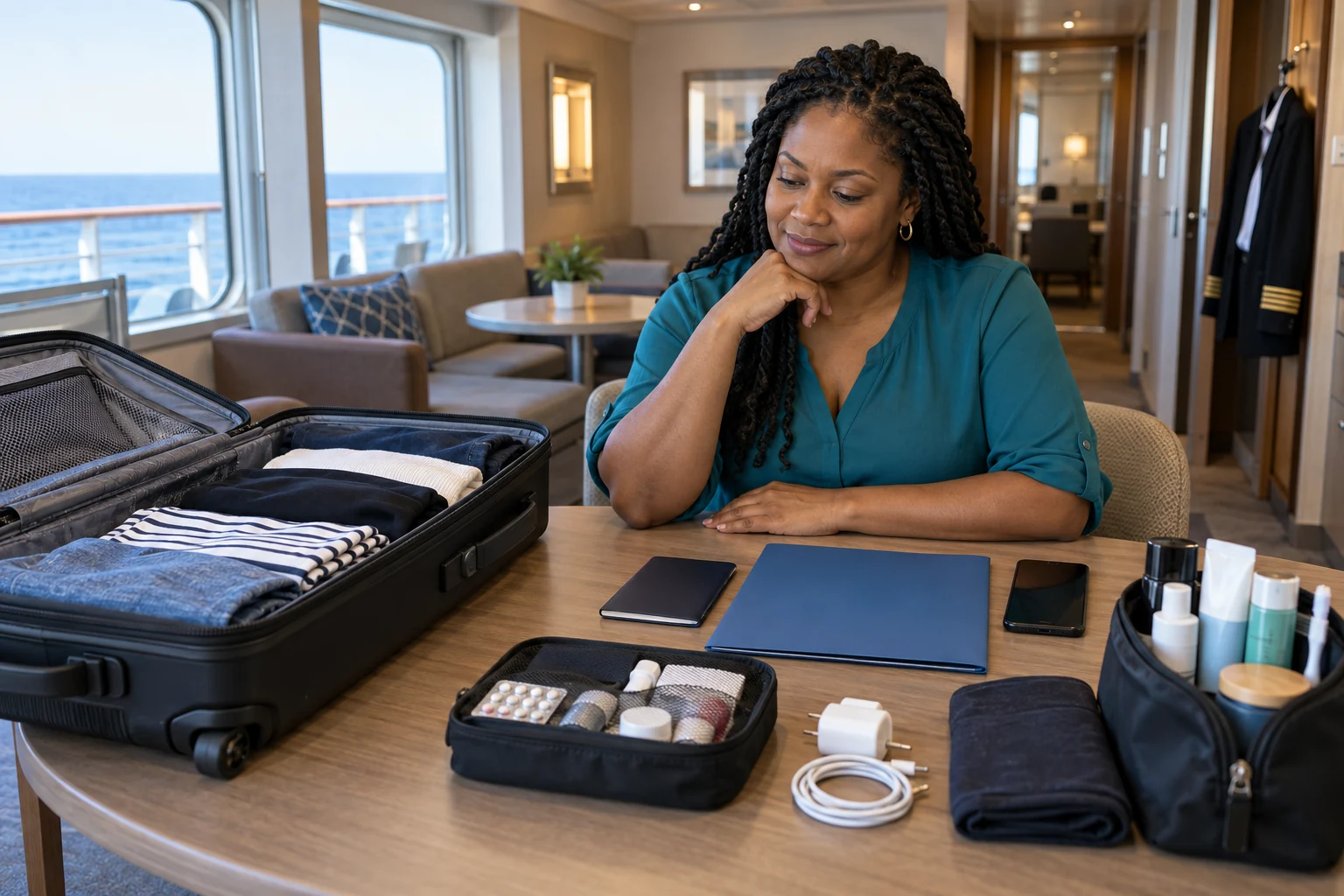
Hand luggage and first-day access
Check your joining instructions for documents and originals that must be presented during travel, at the port or onboard. Keep the passport and required entry documents secure but accessible, along with your joining letter, travel itinerary, employer contact and any medical or training records specifically requested.
Pack essential medication, a phone charger and one basic change of clothes in the cabin bag, subject to airline rules. Keep a secure backup of key documents separately. Do not send passport scans, identity numbers or medical records through an unverified channel; use the employer’s approved process.
Avoid preventable problems
Airline acceptance and shipboard approval are separate checks. Confirm both when an item uses electricity, contains a battery, is sharp, pressurised, flammable or restricted by customs. Read the written offer for the named employer, role, contract dates, wage basis, currency, payment timing, variable earnings, deductions, rest arrangements and termination terms. Ask for unclear amounts or conditions in writing, and keep the final agreement and any approved changes together.
| Item group | What to verify |
|---|---|
| Baggage allowance | Check the number, weight and dimensions of each bag with the employer and every airline, including connecting carriers. Ask about excess-baggage approval, transfer arrangements and what to do if a bag is delayed. |
| Medication | Check airline and destination rules, keep medicine labelled, and bring prescription evidence when required. Ask the employer whether any health documentation needs to be carried for joining. |
| Battery-powered items | Follow the airline’s current rules for phones, laptops, power banks and spare batteries, including battery capacity and carry-on placement. IATA guidance says power banks and spare lithium batteries must travel in hand luggage, not checked baggage. |
| Electrical appliances | Ask the ship or employer whether the appliance is allowed, what voltage or plug is used and whether crew cabins permit it. Do not assume a travel adapter makes an appliance safe or authorised onboard. |
| Restricted or hazardous items | Check the current shipboard prohibited-items list, airline dangerous-goods rules and destination customs rules. Never pack an item simply because it was permitted on a previous contract. |
Employer restrictions can be strict because of fire and cabin-safety risks. As one employer-specific example, Royal Caribbean Group lists weapons, clothing irons, hot plates, candles and incense among prohibited items. That example is not a universal or exhaustive list; your own employer’s current policy takes priority.
Also check IATA’s current passenger guidance for lithium batteries and your airline’s baggage rules. If you cannot confirm an item, ask the joining team in writing before travelling.
Your final packing check
A tidy packing routine reduces last-minute searching. Set aside time to verify names, dates and baggage details against the employer’s latest joining message. Read the written offer for the named employer, role, contract dates, wage basis, currency, payment timing, variable earnings, deductions, rest arrangements and termination terms. Ask for unclear amounts or conditions in writing, and keep the final agreement and any approved changes together.
Common questions
Use these answers as a starting point, then confirm the current rules for your employer, airline, route and position.
Start with the employer’s current joining and packing instructions. Common personal items include compact clothing, toiletries, approved footwear, prescribed medication and chargers, but uniform, baggage allowance and restricted-item rules vary by role, vessel and company.
There is no universal crew baggage allowance. Confirm the permitted number, dimensions and weight with the employer and each airline on your itinerary, including any connecting carriers. Ask what happens if a bag is delayed or exceeds the allowance.
Check your role-specific instructions. Some employers issue uniform onboard or before travel; others specify what you must bring, including footwear or formal pieces. Do not buy expensive uniform items until you have the exact written specification.
Follow your joining checklist. Keep required travel documents, joining letter or employment details, itinerary, essential contact information and any originals requested for check-in accessible, protected and consistent with the instructions. Keep secure digital copies separately where appropriate.
Check the employer, airline, transit and destination-country requirements before travelling. Keep medicines in their original labelled packaging and carry prescription or supporting documentation when required. Do not pack essential medicine where it is inaccessible during travel.
IATA guidance says spare lithium batteries and power banks should be carried in hand baggage, not checked baggage; airline limits and handling rules also apply. Check the current rules for your specific carrier, battery capacity and route before departure.
Restrictions are set by each employer and vessel. A Royal Caribbean Group FAQ lists examples such as weapons, clothing irons, hot plates, candles and incense because of safety risks. That is one employer’s example, not a complete universal list; check your own ship’s current policy.
Ask the recruiter or joining team in writing before packing it. Give the exact item name, model and battery details where relevant, and keep their reply with your travel information. Do not assume an item permitted by an airline is also permitted onboard.