Assigned craft duties
Ask which survival-craft task and certificate level the vacancy requires. The employer explains the shipboard assignment.

Learn who may need survival-craft proficiency, how it differs from basic survival training and fast rescue boat certification, and what certificate checks to make.
STCW regulation VI/2 addresses proficiency in survival craft, rescue boats and fast rescue boats. The course route relevant to you depends on the duties assigned, prior qualifications and the certificate required by the flag administration or employer.
Training should be completed through the approved route for the qualification. Provider approval, practical assessment, certificate endorsement and accepted evidence are administration-specific; confirm these points before booking.
Course names are similar, but they lead to distinct competencies and certificate requirements. Check the course against the requirement for your role, not just a similar-sounding certificate. Ask the provider who approves it, what is assessed, where practical training takes place, how long the certificate remains valid and whether your employer accepts that provider.
Ask which survival-craft task and certificate level the vacancy requires. The employer explains the shipboard assignment.
Confirm the course approval, facilities, prerequisites and assessment method with the training provider and administration. Ask the employer for the exact course title or code, certificate level, validity period and completion deadline. Verify the provider’s current approval with the responsible authority, and keep the full certificate and receipt.
Ask which refresher course or documentary evidence is accepted to show that required competence is maintained. Ask the employer for the exact course title or code, certificate level, validity period and completion deadline. Verify the provider’s current approval with the responsible authority, and keep the full certificate and receipt.
The training certificate does not replace ship familiarization, drills, equipment-specific instruction or authorization for a particular onboard task.
Confirm the course title and competence specified for the position rather than assuming one certificate covers every duty. Ask for the syllabus, entry requirements, assessment method, schedule and certificate details before enrolling. Training may improve readiness, but it does not guarantee recruitment or replace the experience and documents stated in a live vacancy.
Verify the requirements with the hiring team and maritime authority before paying for a course or refresher. Before paying, match the exact course title and competence in the vacancy to the provider’s approval, syllabus, practical assessment and certificate. Confirm recognition with the employer or maritime administration, and ask about prerequisites, expiry or refresher rules and the full cost.
Find out whether the job assigns survival-craft, rescue-boat or fast rescue boat duties. Ask the employer for the exact course title or code, certificate level, validity period and completion deadline. Verify the provider’s current approval with the responsible authority, and keep the full certificate and receipt.
Ask whether PSCRB, PFRB or another competence is required for the vessel and position. Check the training record against the current role and vessel assignment. Record the issuing body, completion date and expiry, and ask the employer how to update the file if a refresher or replacement certificate is needed.
Verify the course is approved for the specific certificate you need. Ask the employer for the exact course title or code, certificate level, validity period and completion deadline. Verify the provider’s current approval with the responsible authority, and keep the full certificate and receipt.
Maintain certificate copies and check what five-year competence evidence is accepted. Ask the employer for the exact course title or code, certificate level, validity period and completion deadline. Verify the provider’s current approval with the responsible authority, and keep the full certificate and receipt.
Practical activities are controlled by qualified instructors and follow the approved course. Vessel-specific equipment and procedures may differ. Before paying, match the exact course title and competence in the vacancy to the provider’s approval, syllabus, practical assessment and certificate. Confirm recognition with the employer or maritime administration, and ask about prerequisites, expiry or refresher rules and the full cost.
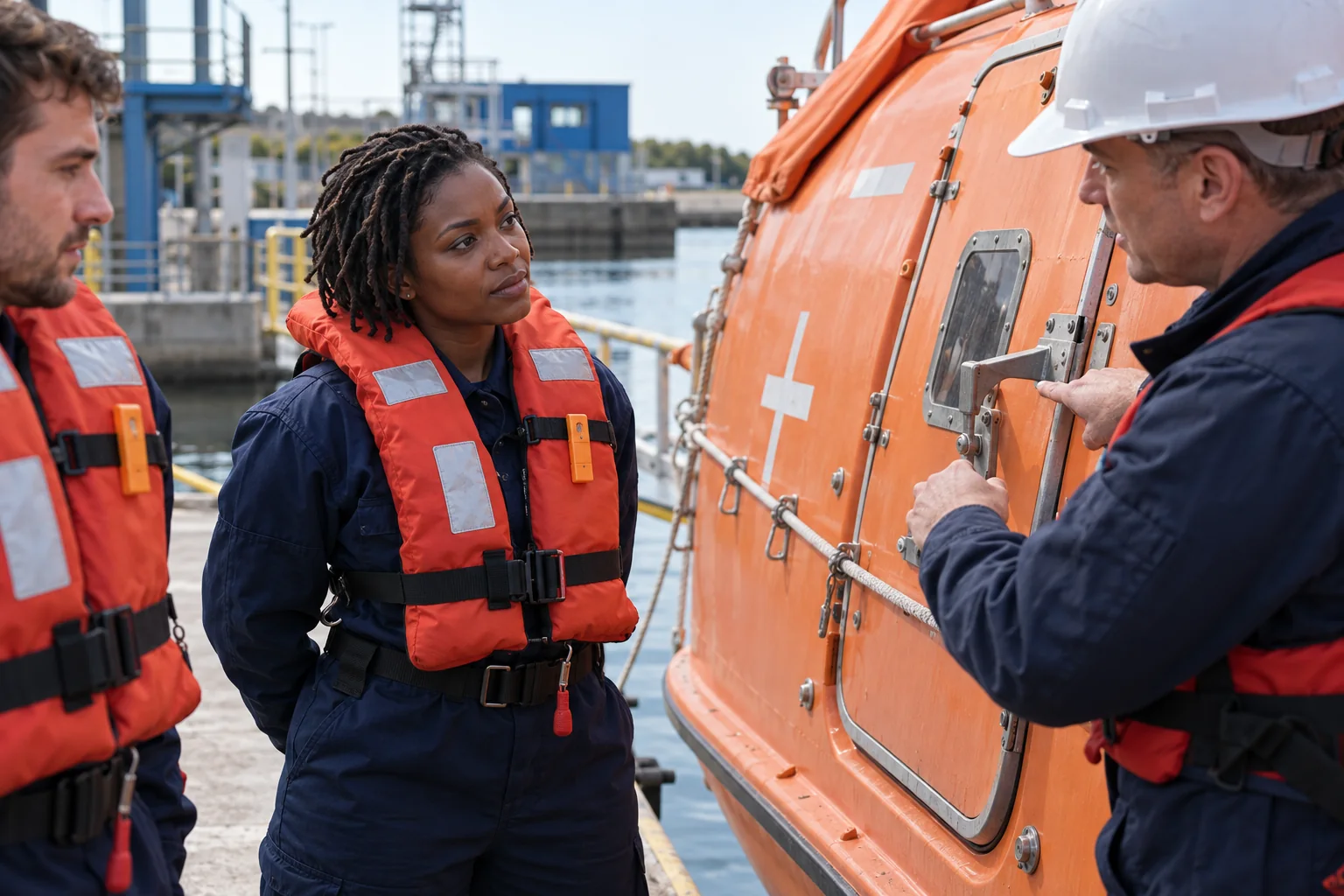
PSCRB training may include hands-on participation using approved equipment and methods. Confirm the specific course approval, prerequisites and assessment arrangements with the provider and your employer.
The IMO framework defines international competence standards; issuing administrations determine certificate and evidence routes. Check the course against the requirement for your role, not just a similar-sounding certificate. Ask the provider who approves it, what is assessed, where practical training takes place, how long the certificate remains valid and whether your employer accepts that provider.
Check the current certificate, competence evidence and assigned duties with the relevant administration and employer.
PSCRB commonly refers to Proficiency in Survival Craft and Rescue Boats other than Fast Rescue Boats, a competency addressed by STCW regulation VI/2.
Seafarers designated to take charge of or serve in survival craft may need the appropriate certificate. Check the duties and competency level stated by the employer and administration.
No. Personal Survival Techniques is part of basic STCW training. Survival craft proficiency is a separate competency for assigned survival-craft duties.
The standard PSCRB course concerns survival craft and rescue boats other than fast rescue boats. Fast rescue boat proficiency is a separate training route.
IMO states seafarers qualified under STCW VI/2 must provide evidence every five years of maintaining the required competence. Confirm accepted evidence with the issuing administration.
Approved training may include practical activities under qualified supervision. Follow the provider’s safety rules, entry requirements and assessment instructions.
Confirm that the course and provider are approved by the responsible maritime administration and accepted by the hiring company before booking.
Training demonstrates competence; the employer and ship assign duties and complete vessel-specific familiarization. A certificate does not assign you to a particular station.
Compare related training pathways. Requirements and course acceptance depend on the role, employer, vessel and responsible maritime administration.
Put the information to work
The required course depends on the vessel, assigned craft duties and level of responsibility. Confirm whether the employer requires a survival-craft qualification, rescue-boat competence or another course before paying.
Action 01
Ask which craft, equipment and duty level are relevant to your assignment. Do not treat basic personal-survival training as proof of competence to operate or command a survival craft.
Action 02
Confirm the approved provider, prerequisites, attendance, supervised practice and assessment before booking. Ask how the provider handles a missed practical session or failed assessment, especially if a joining date is approaching.
Action 03
Check the certificate for issue date, validity information and issuing body. Save proof securely and ask the employer which refresher or revalidation route applies to your duties.