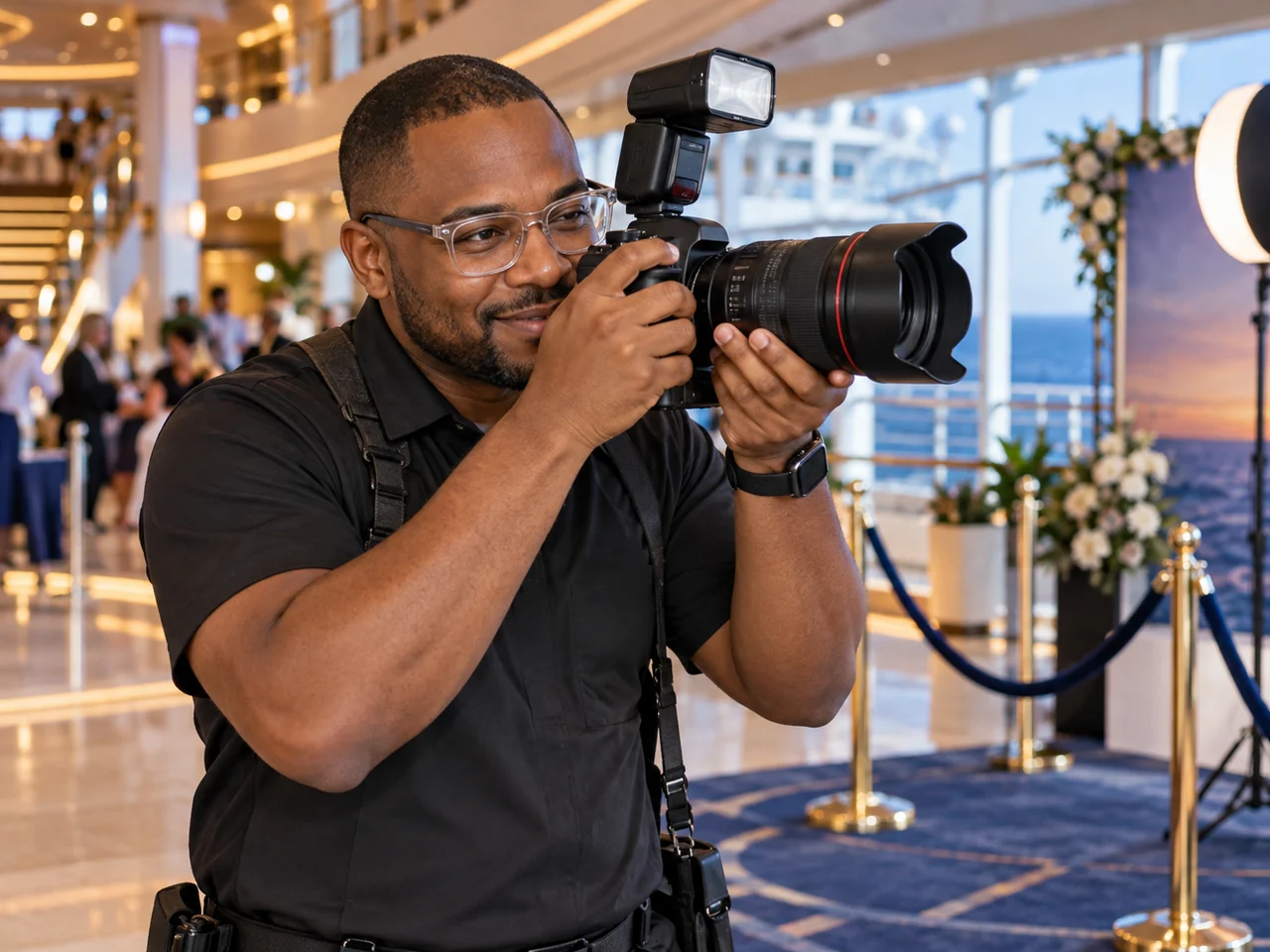
Black shipboard photographer with a camera in a warm cruise ship atrium
Crew Life at Sea
Menu

Shipboard department · photography and media

Photography at sea.Stories worth keeping.

A cruise ship photo team can combine portrait sessions, event coverage, guest service and image production. Explore the work areas, understand the day-to-day rhythm and prepare evidence that matches the actual vacancy.

Photography · guest experience · onboard media

Behind the finished photograph

Creative work meets a busy guest operation.

Shipboard photography teams create and sell images from a moving workplace. Depending on the cruise line and media operator, a shift may include scheduled portrait sessions, embarkation photographs, event coverage, gallery support, editing and helping guests choose their images.

The exact structure differs by ship. Some employers combine photography with sales or video; others separate capture, gallery and production duties. Read the job description closely and confirm who employs you, where the position sits and how performance is assessed.

Strong applications show both the images you can make and the care you take with guests, files and deadlines.

Four common work areas

Find where your strengths fit.

Titles vary between cruise lines and specialist media partners. These examples describe common tasks; use the live vacancy to confirm the role’s actual duties. Use the official contact details to confirm current services, eligibility and application routes. Keep the reply and any instructions with your records, and verify unusual requests for money, travel or identity documents through a second official channel before acting.

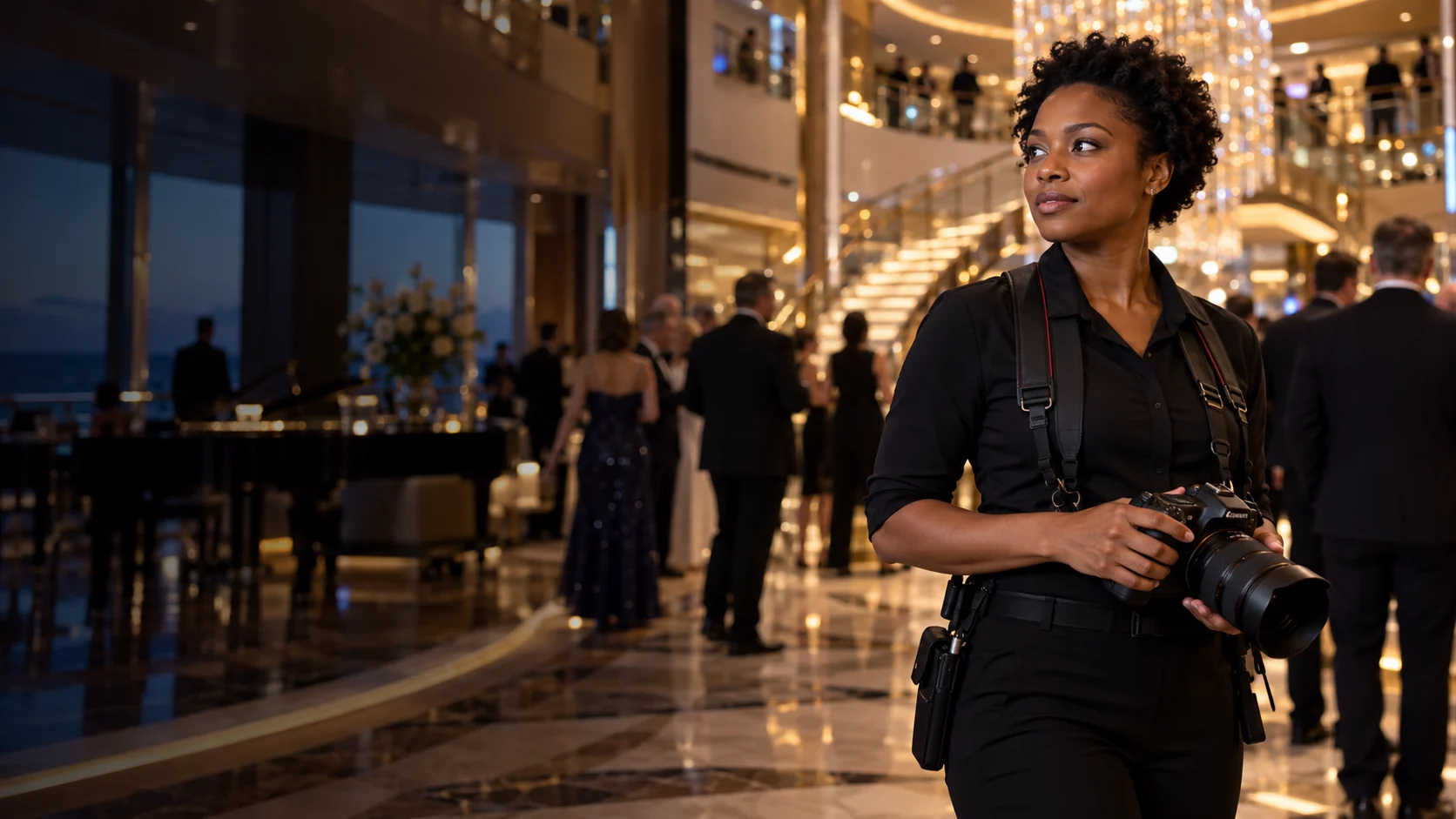
Black shipboard photographer framing a guest portrait at an onboard event

Capture

Portraits and events

Photograph guests at planned portrait settings, embarkation points, celebrations or shipboard activities. Work can involve friendly direction, quick camera adjustments, awareness of queues and consistent image quality through changing light.

Show: portraits, groups, event timing, lighting choices and examples of making people comfortable.
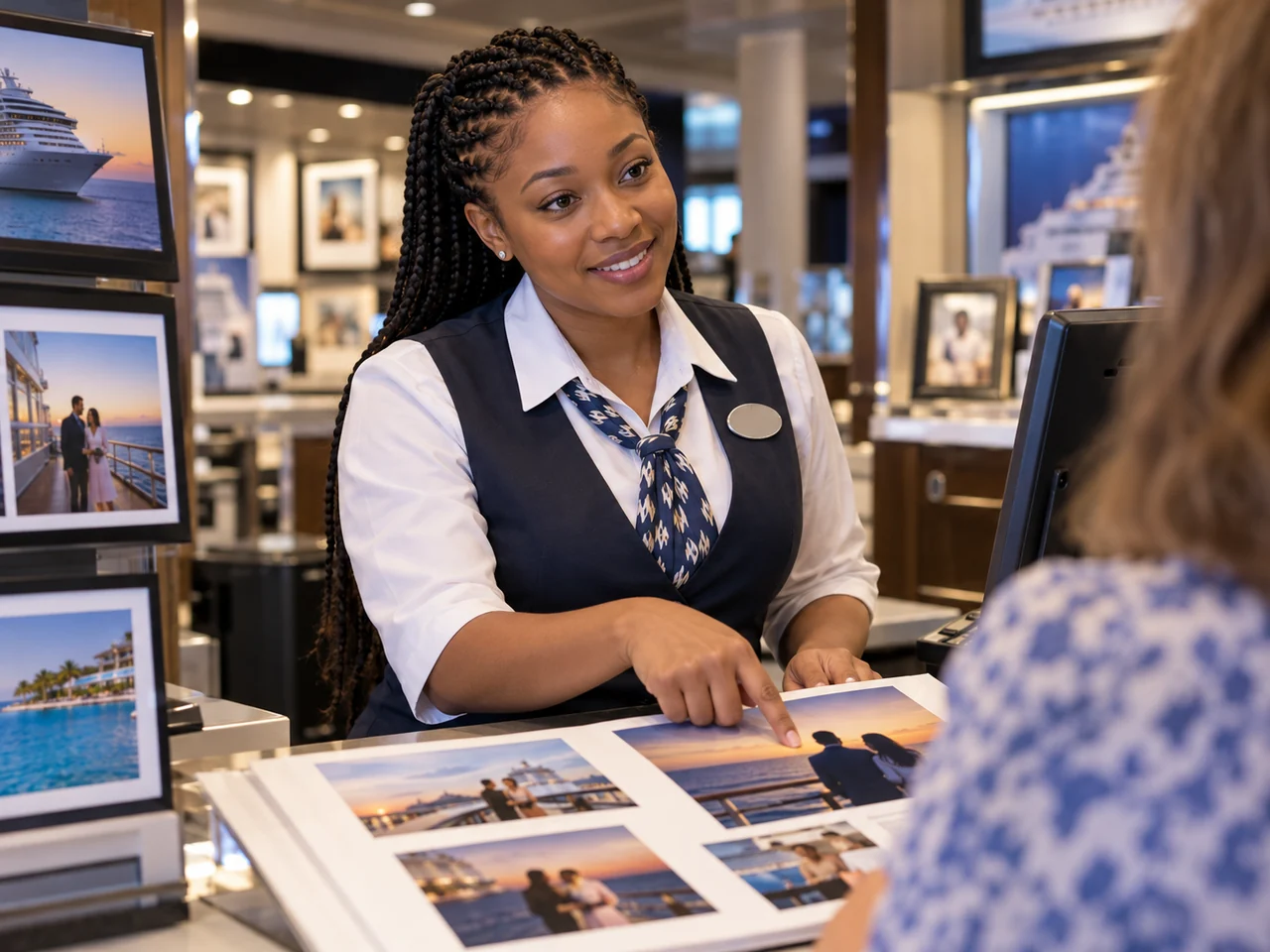
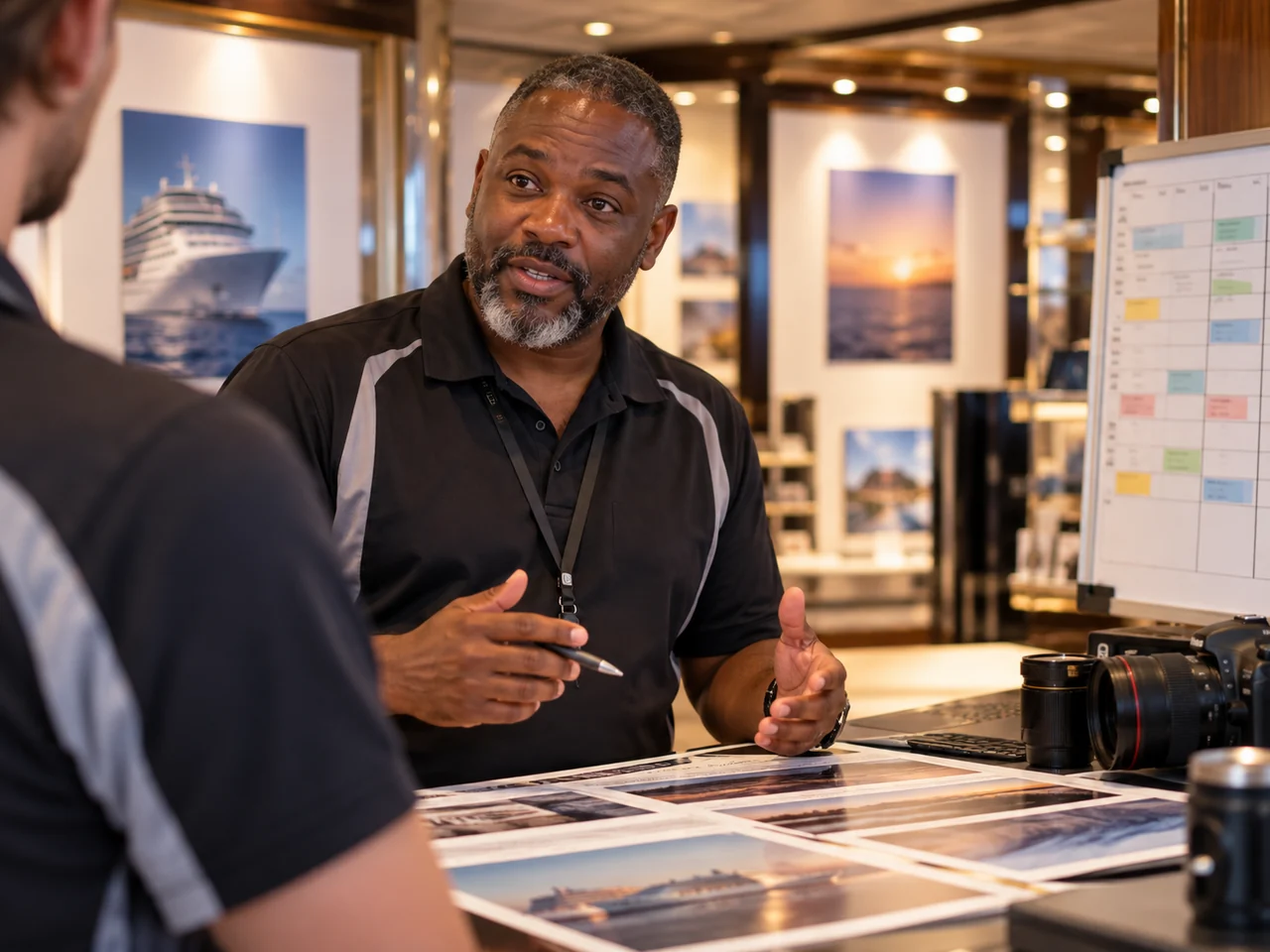
Black woman helping cruise guests compare portrait prints in a photo gallery

Guest service

Photo gallery and sales

Help guests find and review their images, explain available products, manage bookings or purchases, and respond professionally to questions. Some positions include sales goals or commission rules.

Show: clear product explanations, respectful service, accurate transactions and calm problem-solving.

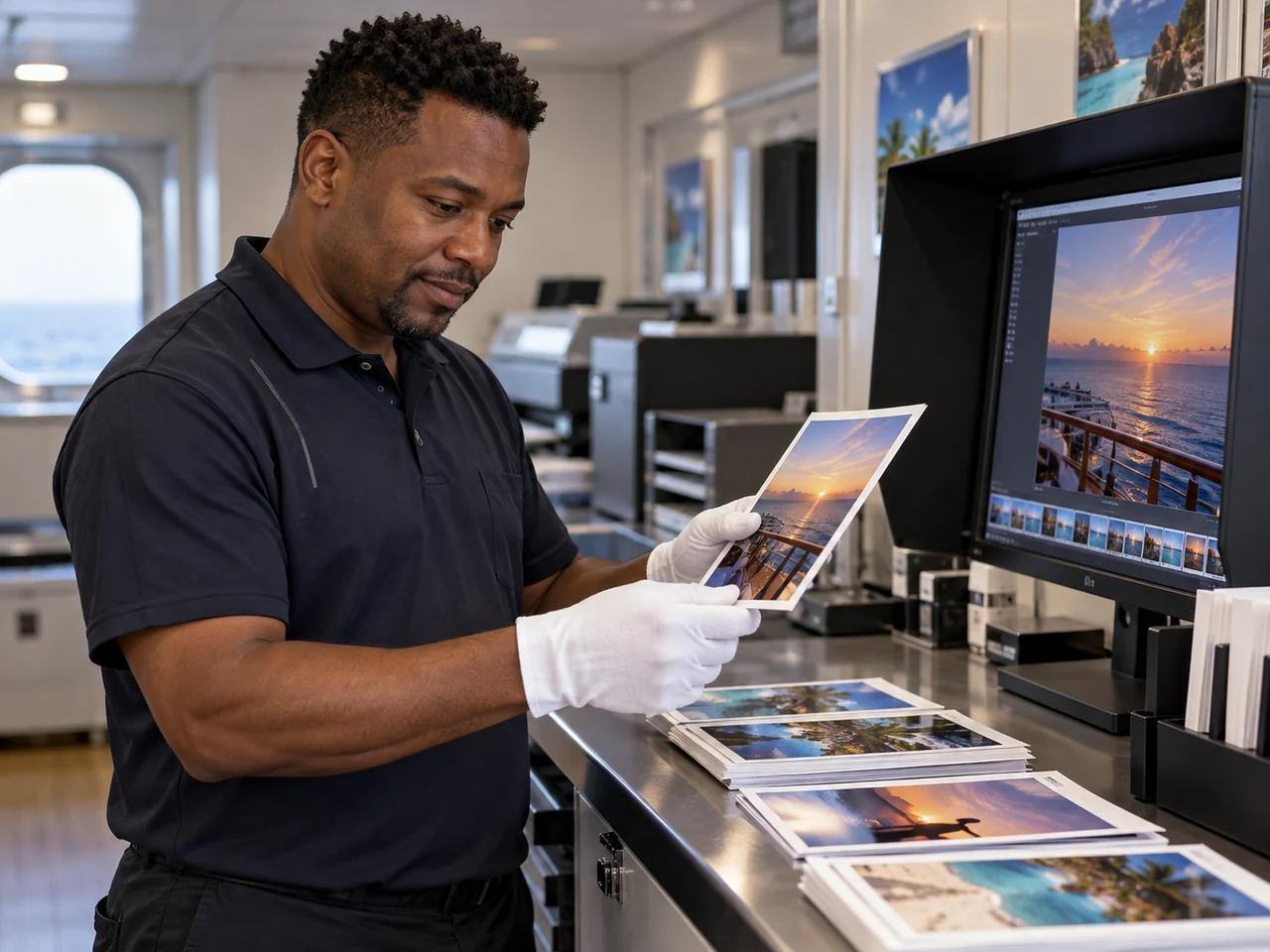
Black imaging technician checking cruise guest photographs at a production workstation

Production

Image editing and lab support

Where onboard production is part of the team, duties may include importing, sorting, basic edits, print checks, file delivery and keeping equipment or work areas organised.

Show: tools you have actually used, your quality checks, file discipline, backups and ability to meet a deadline.

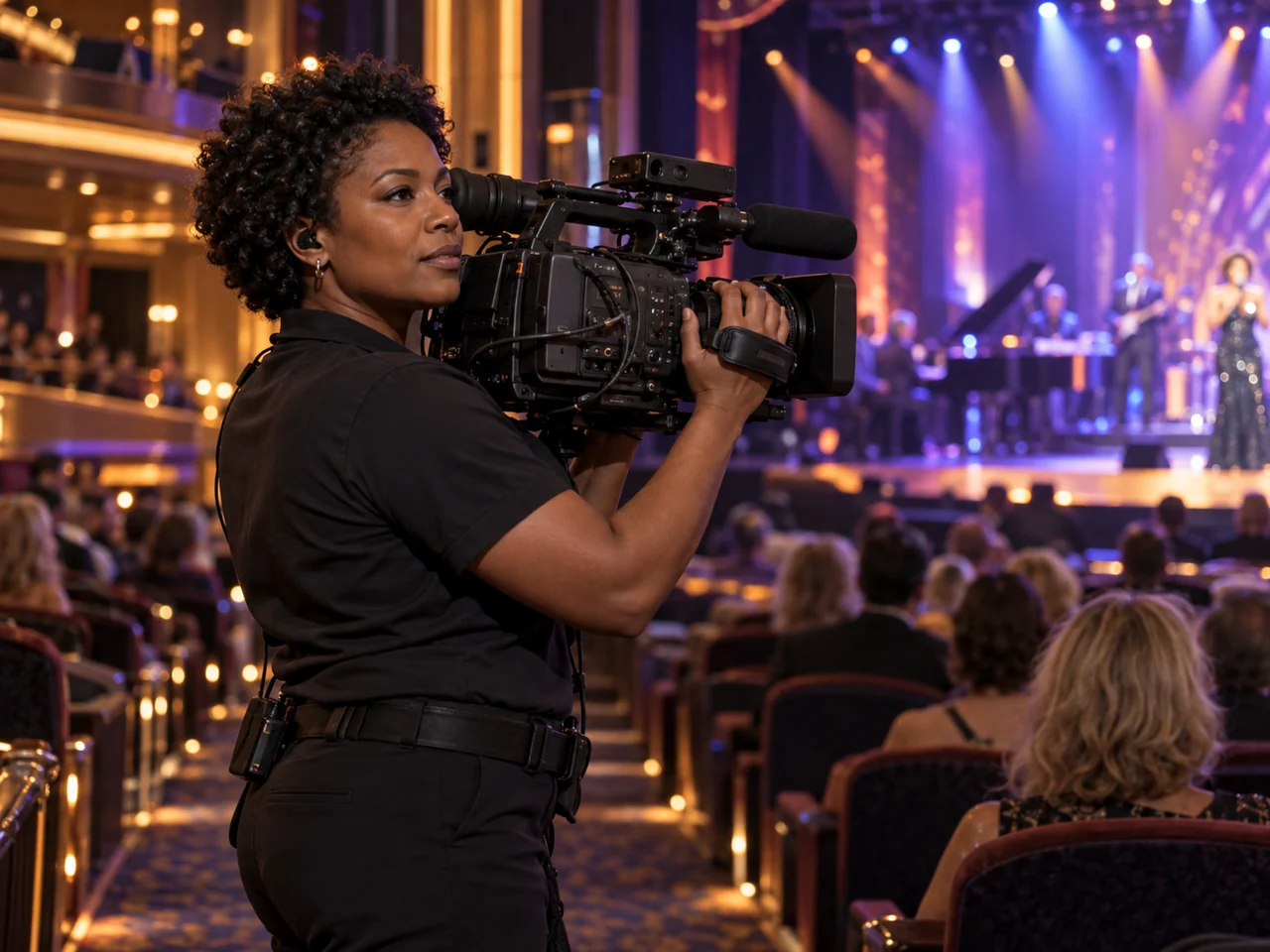
Black woman videographer filming a live performance in a cruise ship theatre

Moving image

Video and media capture

Some teams produce short event coverage, show footage or voyage highlights. Video roles may require a separate reel, steady camera work, usable sound, quick edits and clear permission to share examples.

Show: a concise reel, your exact contribution, editing workflow and examples made under real event conditions.

How the work flows

From guest moment to finished image.

Good work depends on a repeatable process. The schedule and systems are employer-specific, but these stages are useful to understand before an interview. Prepare two or three truthful examples that show the situation, your actions and the result. Include the procedure you followed, how you communicated with guests or colleagues and what you learned; keep the example concise and be ready to explain your own part in the work.

01 · Prepare

Check the brief and kit

Confirm the location, timing, lighting, equipment and any guest or event instructions before the session begins.

02 · Capture

Guide without pressure

Give simple direction, listen to preferences, work efficiently and keep the interaction welcoming for different guests.

03 · Select

Review and protect files

Follow the employer’s workflow for culling, editing, colour, naming, backup and handling guest images.

04 · Deliver

Complete the service

Meet the agreed deadline, explain gallery options accurately and escalate any technical or guest concern appropriately.

Black photography supervisor reviewing image selections with a colleague in an onboard gallery
Team setup, supervision and reporting lines differ by operator and ship.

Before you apply

Ask how this team works on this ship.

Photography services may be operated by the cruise line or by a specialist media company. Clarify the legal employer, department, reporting line and whether the vacancy combines photography with guest sales, video or production work.

Ask which camera or editing systems are used, whether equipment is supplied, what portfolio format is accepted, what working hours look like, and whether pay includes a base amount, commission or targets. Request the answers and contract terms in writing.

Prepare a stronger application

Make your evidence easy to assess.

Use a concise, well-labelled portfolio and connect each sample to a skill in the vacancy. Never include guest or client work unless you have permission to share it. For each role, identify the day-to-day tasks, who it reports to, the expected experience and any mandatory qualification. Build a shortlist around evidence you can provide, then use the live vacancy to confirm current duties and conditions because titles vary by employer.

01

Build a focused portfolio

Choose a small set that covers portraits, groups, events and mixed lighting. Include captions explaining your role, equipment and constraints. Check links, file sizes and image permissions before sending.

02

Explain your workflow

Describe how you plan a shoot, focus and expose, select images, edit consistently, export correctly and back up files. Name only the tools and software you have genuinely used.

03

Prove guest service

Give specific examples of helping someone feel at ease, handling a request, working through a busy queue or resolving a concern with care and good judgement.

Practical checks

Confirm the details before committing.

Requirements are set by the employer and role. Do not assume another cruise line’s rules, benefits or equipment arrangements apply to this vacancy. Compare the vacancy with the final agreement: employer, position, joining date, contract length and pay terms should make sense together. Resolve differences with the authorised recruiter before you resign, pay for travel or send original documents.

01

Vacancy and employer

Verify the job title, duties, legal employer, ship or fleet, hiring channel and application deadline through an official or authorised source.

02

Portfolio and interview

Ask what work samples are required, accepted file formats, interview stages and whether you should prepare a practical photography task.

03

Pay and performance rules

Get the wage calculation, commission or sales targets, payment schedule, deductions and any service-charge arrangement in writing.

04

Joining requirements

Confirm medical, visa, background-check, travel and safety-training steps for your nationality, role and itinerary before paying for anything.

Recruitment safety: Use the employer’s official careers site or verify the recruiter through an authorised partner list. Be cautious of requests for unexplained upfront payments or guarantees of a job.

Keep planning

Related crew guides

Continue with practical preparation for applications, interviews and life onboard. Read the vacancy and choose examples that match its actual duties. Practise explaining a guest-service challenge, teamwork or safety decision with clear dates and specific actions, then prepare questions about training, schedule, contract terms and the next selection step.