Crew Life at Sea
Menu
Black woman executive chef plating food in a cruise ship galley, with the working kitchen and sea visible behind her

Culinary department · career development

Cruise shipculinary careers

Understand how galley experience can develop into specialist kitchen responsibility and leadership, and prepare evidence that matches the role you want.

Galley craft · food safety · team leadership

A practical route, not a promise

Build your next step on skills you can show.

Cruise ship culinary teams prepare food across busy, structured operations. A career may begin in kitchen support or a junior production role and develop through station experience, specialist work and leadership. Employers use different job titles and crew structures, so there is no universal promotion ladder.

This guide focuses on career development. For day-to-day galley duties and role descriptions, see the separate Culinary & Galley Jobs guide. Use each job listing to confirm the experience, certificates, joining checks and application route for that opening.

Experience, performance, training, vacancies and employer policy all affect progression. A new title or promotion is never guaranteed by time served alone.

Common stages and specialist tracks

See where your current kitchen experience can lead.

These are examples of roles found across parts of the cruise industry, not steps every ship offers. Match your experience to the vacancy’s title, duties and employer requirements. For each role, identify the day-to-day tasks, who it reports to, the expected experience and any mandatory qualification. Build a shortlist around evidence you can provide, then use the live vacancy to confirm current duties and conditions because titles vary by employer.

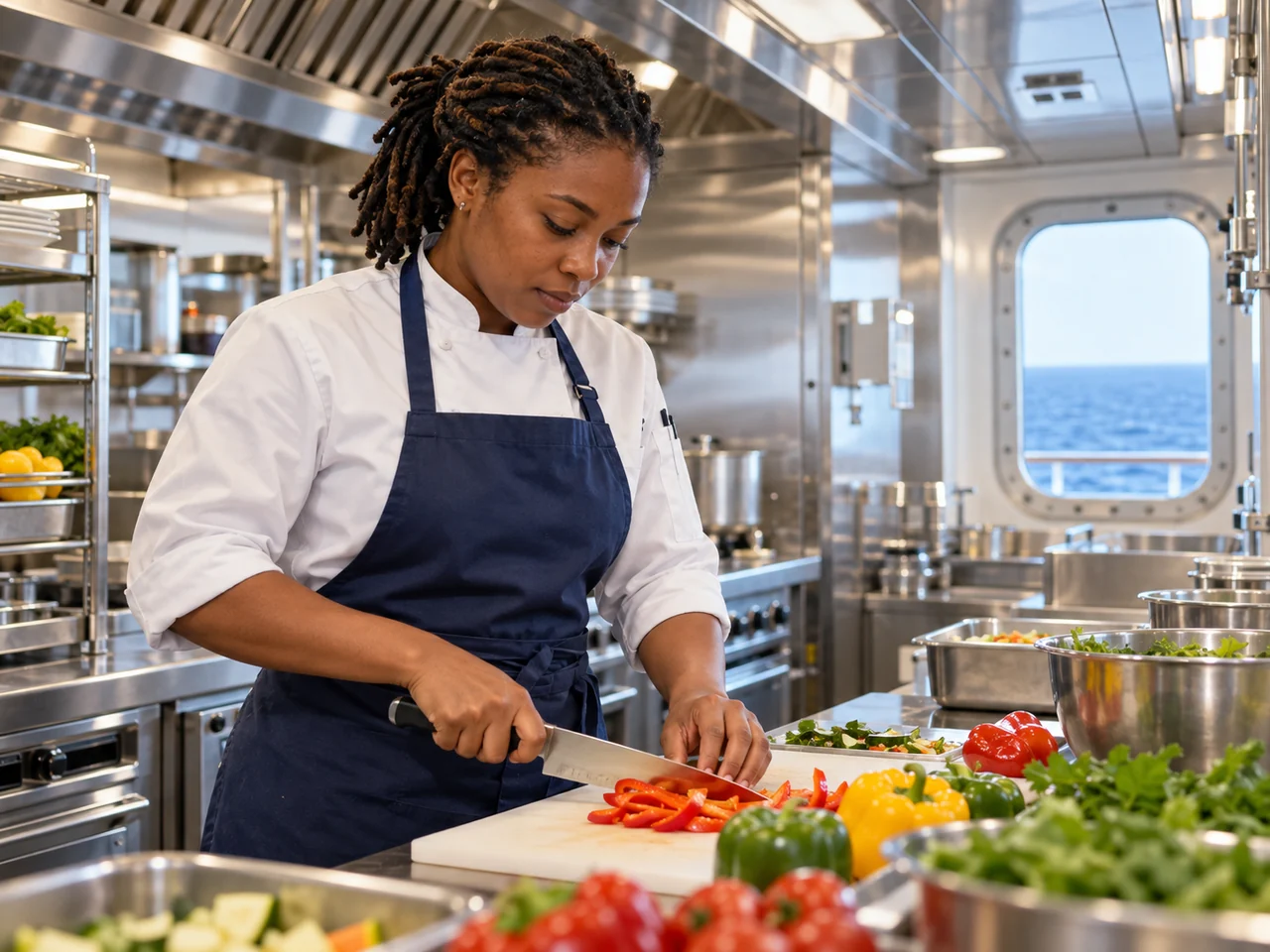
Black woman commis cook preparing vegetables at a stainless-steel galley workstation

01 · EARLY EXPERIENCE

Galley support and commis roles

Depending on the vacancy, entry and junior work can include preparation, basic production, mise en place, cleaning and safe storage. Build reliability, hygiene habits and clear communication while learning the kitchen’s equipment, recipes and service routines. Apply only when the stated requirements match your experience.

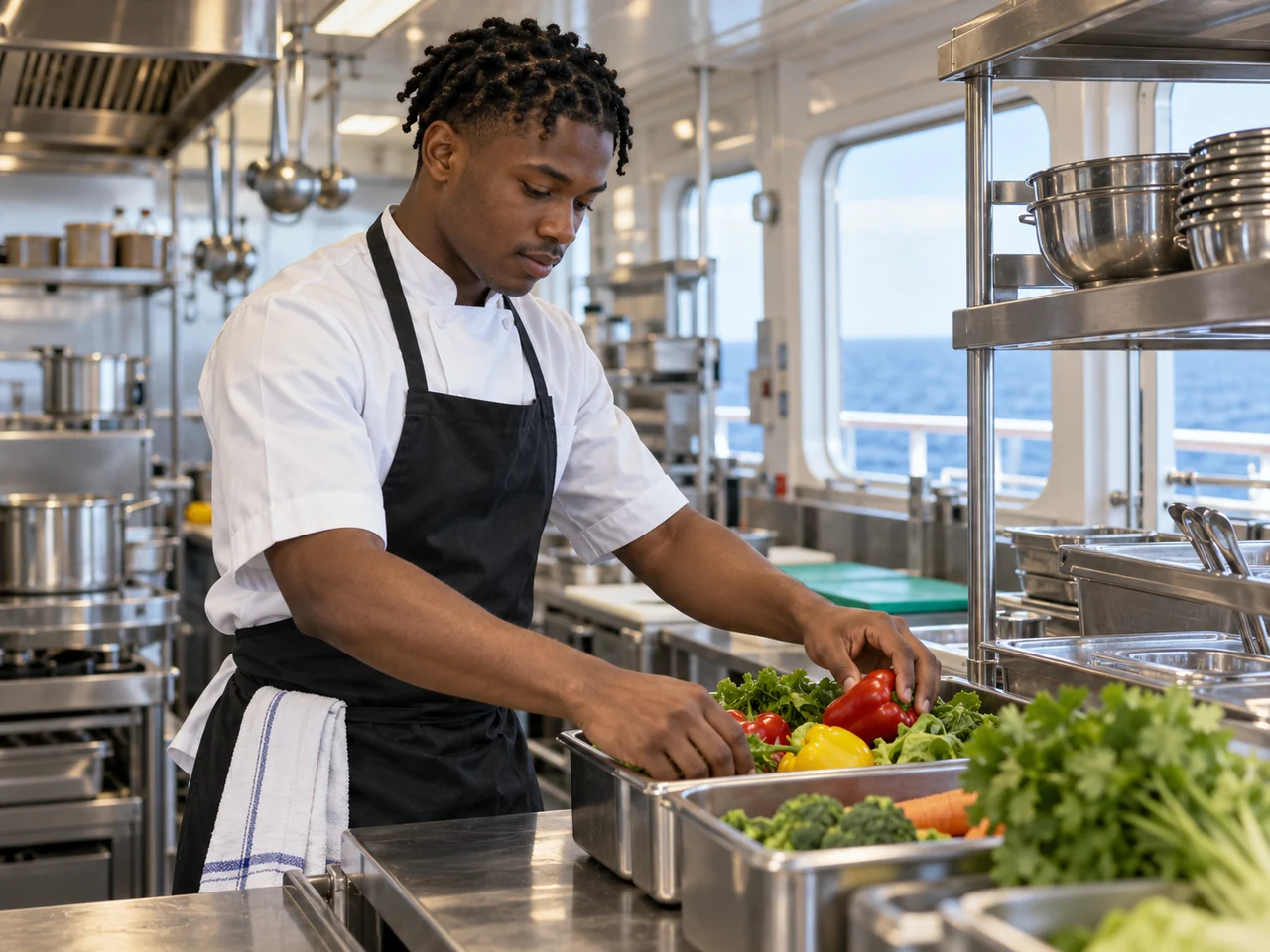
Black male culinary team member organizing produce at a stainless-steel galley workstation

02 · SECTION EXPERIENCE

Cook and station responsibility

With suitable experience, a cook may work across or specialise in assigned stations. Show safe knife and equipment use, consistent preparation, recipe accuracy and dependable timing. Keep examples specific: name the section, responsibilities, service context and level of supervision you actually had.

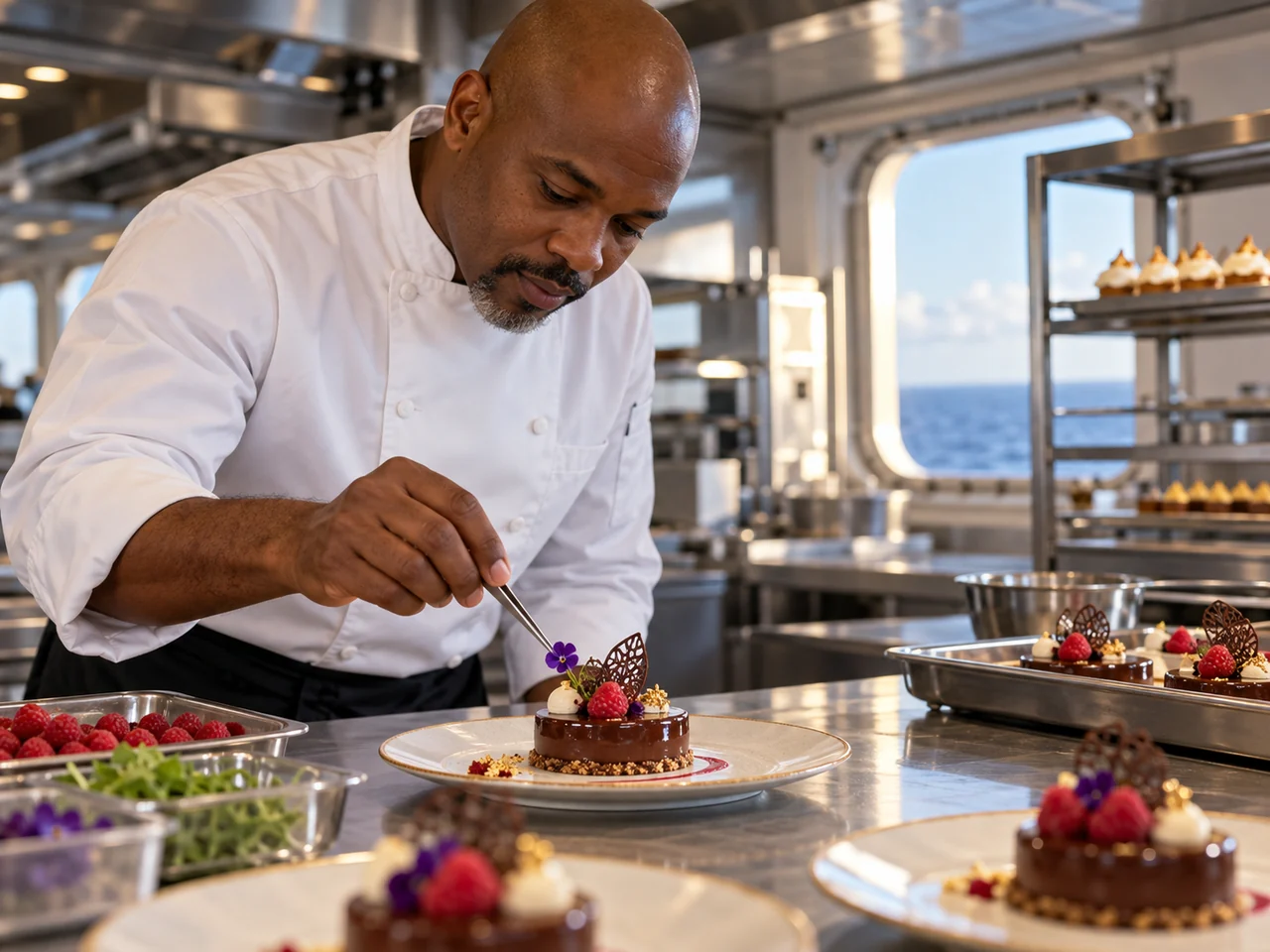
Black male pastry chef carefully finishing a plated dessert in a shipboard kitchen

03 · SPECIALIST CRAFT

Pastry, bakery and other sections

Some employers recruit for pastry, bakery, garde manger, butchery or other specialist production work. These can be separate career tracks or duties within a wider kitchen team. Document the techniques, volume and equipment relevant to the role, and verify whether the ship has that position.

Black woman senior chef reviewing a galley production sheet while colleagues prepare service

04 · LEADERSHIP

Chef de partie and kitchen leadership

Chef de partie, sous-chef and executive-chef roles typically carry broader responsibility for sections, people, production and standards. The scope varies by employer and vessel. Progression depends on the organisation’s openings and selection process as well as evidence of technical skill, judgement and team leadership.

Different employers use different structures. Royal Caribbean Group’s shipboard listings, for example, show culinary vacancies at varied levels. Confirm the current requirements in the actual advert; titles and duties are not standard across all cruise lines.

Grow your evidence

Turn steady performance into a stronger application.

Employers need proof of the work you can do. Record details as you go, ask for feedback and keep certificates, references and work examples accurate and appropriately confidential. Prepare a role-specific application file with a concise CV, contactable references and clear copies of relevant qualifications when requested. Check spelling, contact details, dates and certificate expiry, then follow the employer’s file format and keep a record of the submission date and response route.

Technical and food-safety practice

  • Follow the employer’s current food-hygiene, allergen, temperature-control and sanitation procedures.
  • Use knives, machinery and hot equipment only when trained and authorised; keep safety checks part of your routine.
  • Practise accurate recipes, portioning, presentation and production timing for your assigned section.
  • Use stock carefully, label and store food correctly, and follow waste reporting and inventory controls.
  • Keep a record of relevant training with provider, course and expiry details where applicable.

Team and leadership practice

  • Communicate clearly during handovers and busy service; raise problems early through the right supervisor.
  • Show dependable attendance, preparation and respect for a multicultural crew.
  • For leadership roles, gather real examples of training colleagues, organising a shift or maintaining standards.
  • Describe challenges and outcomes honestly; never claim a title, qualification or responsibility you did not hold.
  • Protect company recipes, guest information and internal documents when preparing a portfolio.

Plan your next move

A four-step preparation plan.

Use these steps to target a realistic position. Your employer’s recruitment and promotion process determines actual eligibility, timing and requirements. Use the live listing to decide what to emphasise, while keeping every claim accurate. For each required skill, note where and when you used it, what you personally handled and which evidence supports it; ask the recruiter before treating related experience as an equivalent qualification.

01

Choose a role to target

Compare your current skills with a specific galley, cook, pastry or leadership vacancy. Note the exact title and required level. Compare the actual vacancy’s duties, reporting line, shift pattern and essential criteria with your experience. Ask the recruiter about certificates, language expectations and contract terms that are not stated clearly.

02

Map your evidence

Match each requirement to a true example from work, training or a qualification. Identify gaps before you apply. Describe the work setting, your shift or station, the equipment or system used, the service or safety standard followed and your own contribution. Give one specific example and separate your actions from the team’s result.

03

Prepare a focused application

Tailor your CV to the listed duties, use accurate dates and job titles, and prepare clear examples for practical assessment or interview. Describe the work setting, your shift or station, the equipment or system used, the service or safety standard followed and your own contribution. Give one specific example and separate your actions from the team’s result.

04

Verify training and terms

Confirm the recruiter, employer, certificates, medical and travel steps, and written contract terms before making commitments. Compare the actual vacancy’s duties, reporting line, shift pattern and essential criteria with your experience. Ask the recruiter about certificates, language expectations and contract terms that are not stated clearly.

Check before you sign

Verify the employer, joining steps and contract.

A career plan should be based on a genuine vacancy and clear written terms, not a promise of fast promotion or guaranteed future work. Separate guaranteed pay from tips, service charges or commission, and check how each is calculated and shared. Confirm travel responsibility, accommodation, meals, insurance, deductions and cancellation terms in the contract or an official written explanation before accepting.

Questions for the recruiter

  • Which legal company employs you, and is the recruiter authorised for this vacancy?
  • What kitchen section, job title, ship assignment and reporting line are in the offer?
  • Which experience, food-safety documents, medicals or safety courses apply to this role and itinerary?
  • Who pays for required courses, travel, uniforms and joining documents?
  • What are the pay, currency, deductions, contract duration, working arrangements and repatriation terms?

Before you commit

  • Compare the signed contract with the offer and keep copies of all official communications.
  • Use the cruise line’s own career site or confirmed hiring-partner list to validate the vacancy.
  • Ask questions in writing when any promised promotion, training or pay term is unclear.
  • Do not pay a third party based only on an informal message; verify any request directly through official channels.
  • Read Crew Contracts Explained and Our Cruise Line Partners before accepting an offer.

Check real examples on Royal Caribbean Group ship careers and Carnival’s official careers site. Requirements vary by vacancy and can change, so use the employer’s current listing as the source of truth.

Common questions

Cruise ship culinary career FAQs.

Role titles, qualifications and promotion processes differ between employers, ships and vacancies. Check current official requirements before applying.

What is a typical cruise ship chef career path?

There is no single route across cruise lines. A person may gain experience in an entry kitchen role or as a commis, take responsibility for a station, and later apply for chef de partie, sous-chef or executive-chef positions where those roles exist. Progress depends on performance, vacancies, the employer’s structure and documented experience; it is not automatic or tied to a fixed timeline.

Do I need culinary qualifications before applying?

Requirements depend on the specific vacancy and employer. Some roles prioritise relevant professional kitchen experience; others may request formal culinary training, food-safety credentials or other evidence. Read the current job listing and ask the authorised recruiter which certificates are accepted and when they must be valid.

Can I start in the galley without chef experience?

Some employers recruit galley utility, stewarding or junior kitchen-support positions with duties and experience criteria different from cook jobs. Do not assume any opening is entry-level: check the listed tasks, physical demands, shift pattern and required experience, then apply only when your background matches.

What does a chef de partie do on a cruise ship?

A chef de partie generally leads or works a defined kitchen section, prepares food to the menu and production plan, and follows the team’s hygiene, timing and quality procedures. The section and authority vary by ship and employer; confirm the vacancy’s specific responsibilities and reporting line.

Are pastry and bakery roles separate career paths?

They can be specialist kitchen tracks when a ship or employer recruits for them. Relevant pastry or bakery experience, production skills and portfolio evidence may help, but team size and job titles differ. Follow the requirements in the actual listing instead of assuming every vessel has a separate department.

Which skills help a culinary crew member progress?

Employers may value consistent food preparation, safe hygiene routines, organisation, teamwork, communication, recipe accuracy, waste awareness and calm performance during busy service. To prepare for a larger role, keep examples of responsibilities you genuinely held and feedback or training you can document.

Do cruise ship galley jobs require STCW training?

There is no one-size-fits-all answer for every culinary vacancy. Joining and safety requirements can depend on employer, vessel, itinerary, flag and role. Ask the recruiting employer which courses and certificates apply to your offer and whether they must be completed through an approved provider before paying for training.

How should I prepare a CV for a cruise ship chef job?

List accurate employers, dates, job titles, kitchen type, sections, service volume where you can verify it, equipment or systems used, food-safety training and real leadership duties. Tailor the opening profile and evidence to the vacancy. See the CV-writing and interview guides linked below for more preparation.