Personal survival equipment
Recognise common life-saving appliances, understand their purpose, and use lifejackets and protective equipment as taught. Practical course tasks can include fitting, checks and safe handling.

Understand the practical survival skills taught in STCW basic training, what to check before booking, and how to confirm a certificate meets your employer’s and maritime administration’s requirements.
Personal Survival Techniques is one of the four elements of STCW basic training under regulation VI/1. It develops practical competence for survival at sea, including the correct use of life-saving appliances, safe actions during an emergency, and ways to improve the chance of being located and recovered.
The exact approved course, assessment, certificate format and refresher route are managed by the relevant maritime administration and its recognised training providers. A course title alone does not prove that a certificate is accepted for your flag, job or joining date.
STCW provides the minimum competence framework. An approved provider delivers the practical instruction and assessment required by its administration. Before paying, match the exact course title and competence in the vacancy to the provider’s approval, syllabus, practical assessment and certificate. Confirm recognition with the employer or maritime administration, and ask about prerequisites, expiry or refresher rules and the full cost.
Recognise common life-saving appliances, understand their purpose, and use lifejackets and protective equipment as taught. Practical course tasks can include fitting, checks and safe handling.
Learn the actions that prepare people to board or enter survival craft safely and follow the responsible officer’s directions. Do not assume PST replaces a separate proficiency-in-survival-craft qualification.
Understand the importance of group survival, signals, safe behaviour in the water and actions that support recovery. The course uses approved exercises and assessment methods set by the training administration.
PST is basic safety training. It is not a substitute for advanced training, a ship’s safety induction, muster-station familiarisation, or the separate survival-craft course when a role requires it.
Training is hands-on. Preparation should make the session safer and your certificate easier for the employer to verify. Check the course against the requirement for your role, not just a similar-sounding certificate. Ask the provider who approves it, what is assessed, where practical training takes place, how long the certificate remains valid and whether your employer accepts that provider.
Confirm the requested training, accepted administration, provider approval and certificate expiry rules with the employer. Ask the employer for the exact course title or code, certificate level, validity period and completion deadline. Verify the provider’s current approval with the responsible authority, and keep the full certificate and receipt.
Follow provider instructions on clothing, swimming, medical or accessibility disclosures, schedule and required identification. Ask the employer for the exact course title or code, certificate level, validity period and completion deadline. Verify the provider’s current approval with the responsible authority, and keep the full certificate and receipt.
Listen to the safety briefing, use equipment as instructed and stop to ask the instructor if an exercise is unclear or unsuitable.
Check that your name and certificate details are correct; keep the original or verified digital record and note any refresher date.
Training providers use approved facilities and assessment plans. The exercises below are illustrative; your actual course may differ. Ask for the syllabus, entry requirements, assessment method, schedule and certificate details before enrolling. Training may improve readiness, but it does not guarantee recruitment or replace the experience and documents stated in a live vacancy.
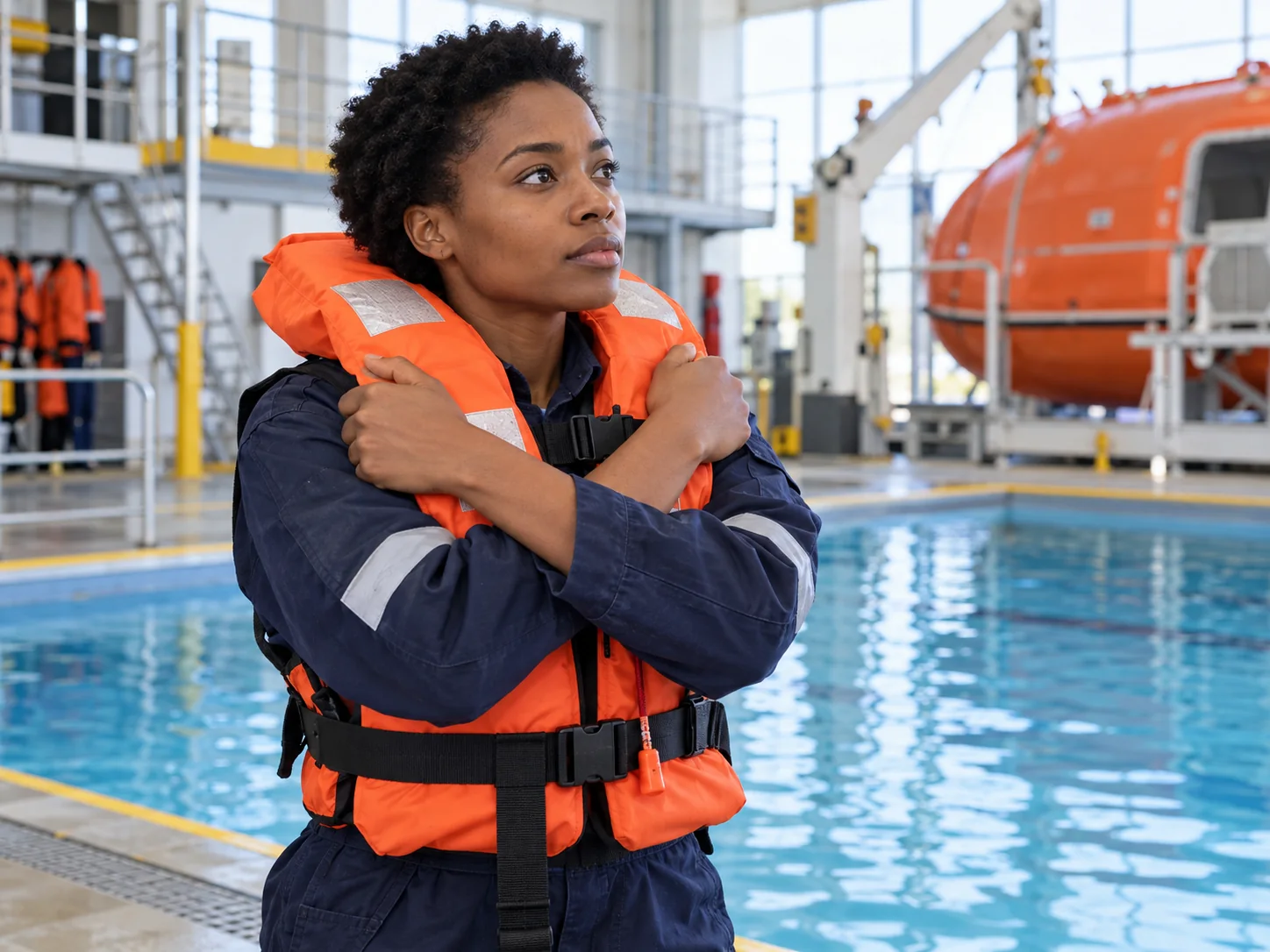
Personal survival techniques includes supervised practical elements. Ask the approved provider what participation, pool or water-based assessment, and equipment are required for the course you need.
Check the maritime administration’s current list of approved providers or ask the employer for its accepted training route. Verify approval for the exact PST course, not merely the school’s general maritime offering.
Match your certificate name and identity document, keep the payment receipt and course reference, and ask how the provider reports results or replaces a lost certificate. Avoid anyone promising guaranteed employment or an authority decision.
Course approvals, certificates and renewal procedures are administration-specific. Confirm the current requirements with the issuing authority and hiring company.
PST means Personal Survival Techniques. It is a component of STCW basic training under regulation VI/1.
No. PST is one component. Basic training also includes fire prevention and firefighting, elementary first aid, and personal safety and social responsibilities.
No. PST is not the same as Proficiency in Survival Craft and Rescue Boats. Check the vacancy and administration for separate qualifications required by your assigned duties.
Do not assume so. Acceptance depends on the issuing administration, provider approval, certificate details and employer requirements. Confirm before booking.
Some STCW basic-training competencies have refresher or evidence-of-continued-competence requirements. The applicable rule depends on the competency, administration and employer. Check your certificate and current authority guidance.
Use the provider’s joining instructions. These commonly specify identification and course details; do not rely on a generic checklist if the provider gives different directions.
Contact the approved provider before booking so it can explain the facilities, exercises and any applicable medical or safety requirements. Do not conceal a condition that could affect safe participation.
Check the relevant maritime administration’s current approval list or confirm directly with the employer. Verify the provider and exact course category before paying.
Compare related training pathways. Requirements and course acceptance depend on the role, employer, vessel and responsible maritime administration.
Put the information to work
PST includes practical learning related to survival at sea. Course format, provider approval and certificate acceptance should be confirmed against the employer’s written requirement and the authority’s current guidance.
Action 01
Ask what equipment practice, pool or water activity, assessment and attendance are included. Read the provider’s safety and clothing instructions in advance, and raise an access or medical question directly with the provider.
Action 02
A basic survival course, survival-craft duties and fast rescue craft training are not interchangeable labels. Confirm the precise qualification required for the vessel and assignment before selecting a course.
Action 03
Review your name, course title, provider and completion date on the issued record. Save a clear copy and ask the employer whether a refresher or additional practical evidence is needed for your role.