01 · Readiness
Prepare your station
Arrive ready for the briefing, check the assigned area, confirm the service plan and keep approved supplies organised. Clear preparation supports timely service when the venue fills.

Cruise ship departments · Food and beverage
Explore restaurant, bar and buffet roles at sea. Learn what the work can involve, which experience may transfer and what to verify in the actual job offer.
A practical department guide
Food and beverage teams work across dining rooms, specialty restaurants, buffets, cafés, lounges, bars and other service venues. Depending on the assignment, the work can include preparing a station, welcoming guests, explaining menu options, taking orders, serving food or drinks, handling point-of-sale transactions and resetting the area for the next service.
One cruise line may divide these duties among several roles; another may organise its teams differently. The venue, service style, reporting line, hours and experience criteria come from the current vacancy and written contract, not from a universal shipboard career ladder.
Explore the work
The names below are examples. Teams, seniority and responsibilities differ across operators, venues and vessels. Read the role description carefully and ask the authorised recruiter if its scope is unclear. Match each essential vacancy criterion to dated evidence: a specific duty, your own contribution, a result and a referee or certificate that can support it. Keep job titles and dates consistent across your CV and forms, submit through the verified channel and save the version you sent.

Restaurants and dining rooms
Depending on the venue and level, work may include preparing a section, supporting table service, explaining menu items, taking and delivering orders, coordinating with the galley and responding to guest requests. Some teams divide setup, clearing and guest contact among different roles.
Useful experience can come from restaurants, hotels, resorts or other busy service settings. Describe the service style, responsibilities and systems you actually know.

Bars and beverage service
Bar teams may prepare the venue, replenish stock, handle glassware, take or fulfil orders, use point-of-sale equipment and maintain a clean station. A bartender role can require drink preparation knowledge; a utility or server post may focus on different tasks.
Check whether the employer asks for specific bar experience, product knowledge, language ability or a recognised certificate. Do not assume the same criteria apply to every ship or itinerary.

Buffet, café and casual venues
Assignments can involve setting up food stations, replenishing approved items, answering routine questions, keeping service areas orderly and supporting safe, timely guest flow. The exact division between food handling, cleaning and service depends on the employer’s team plan.
Highlight accuracy, stamina, cleanliness, teamwork and communication from roles where you worked to a service schedule.
Coordination and leadership
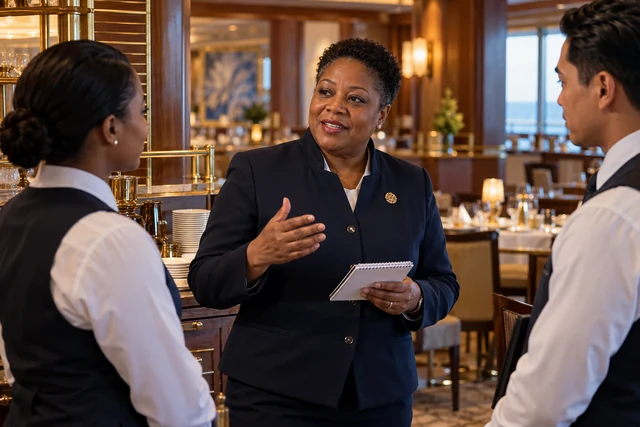
Where these positions exist, senior crew may coordinate assignments, support training, monitor service standards, communicate operational issues and help resolve guest concerns within their authority. Managerial responsibilities can include administration or stock and cost processes, depending on the role.
Show evidence of coaching, calm decisions, accurate handovers and responsibility you truly held. Previous service does not guarantee appointment to a senior vacancy.
Specialist service posts: wine stewards, sommeliers, baristas and specialty-dining staff may have narrower criteria. Confirm the venue, product knowledge and experience requested in the individual vacancy.
What good service involves
Service procedures vary by employer. Follow the shipboard training and escalation process whenever a request involves an allergy, alcohol, payment or a matter outside your authority. Ask for the syllabus, entry requirements, assessment method, schedule and certificate details before enrolling. Training may improve readiness, but it does not guarantee recruitment or replace the experience and documents stated in a live vacancy.
01 · Readiness
Arrive ready for the briefing, check the assigned area, confirm the service plan and keep approved supplies organised. Clear preparation supports timely service when the venue fills.
02 · Accuracy
Listen carefully, repeat key details when appropriate, use the correct system and pass information clearly to colleagues. Ask for clarification instead of guessing.
03 · Menu knowledge
Learn the current menu, ingredients and service notes relevant to your role. When you are uncertain about an ingredient or dietary question, follow the employer’s verification route.
04 · Guest care
Offer courteous, inclusive service, protect guest privacy and keep a calm tone during busy periods. Follow the team’s process when a guest raises a concern.
05 · Safety and hygiene
Use approved hygiene, cleaning and food-handling methods and equipment. Follow workplace instructions for spillages, hazards and protective measures; report issues promptly.
06 · Beverage service
For alcohol service, follow the venue’s training, local requirements and escalation procedures. Ask a supervisor when an age, intoxication or refusal decision is outside your authority.
Skills employers can recognise
Restaurant, hotel, café, resort, event, catering and bar backgrounds may transfer when they match the vacancy. Use concrete examples rather than broad claims about being a people person. For each role, identify the day-to-day tasks, who it reports to, the expected experience and any mandatory qualification. Build a shortlist around evidence you can provide, then use the live vacancy to confirm current duties and conditions because titles vary by employer.
Prepare before you apply
Requirements and compensation can differ by role, employer, venue and itinerary. Use the current advert and authorised recruiter as your source of truth. Compare the vacancy with the final agreement: employer, position, joining date, contract length and pay terms should make sense together. Resolve differences with the authorised recruiter before you resign, pay for travel or send original documents.
A realistic development route
Some employers have senior service or supervisory vacancies. The stages below are a preparation framework, not a promise of promotion or a standard timeline. For each role, identify the day-to-day tasks, who it reports to, the expected experience and any mandatory qualification. Build a shortlist around evidence you can provide, then use the live vacancy to confirm current duties and conditions because titles vary by employer.
Learn a service routine, guest communication, hygiene practices and reliable teamwork in a suitable food-and-beverage setting.
Compare the stated duties, venue, experience and joining criteria with your background. Ask the recruiter about the team structure.
Complete employer induction and role training, then apply the venue’s service, safety, payment and escalation procedures.
Seek feedback, keep an accurate record of responsibilities and apply for a senior vacancy when you meet its stated requirements.
Common questions
Use these answers to prepare. A current vacancy and written employer terms take priority for the specific job.
Vacancies may include assistant waiter, waiter, restaurant attendant, buffet attendant, bar utility, bar waiter, bartender, wine steward, team leader or manager. Job titles and responsibilities vary by cruise line and sometimes by venue; read the current listing for the specific duties.
Experience requirements depend on the role and employer. Some service vacancies ask for relevant restaurant, hotel or bar work; specialist positions may require substantial experience or qualifications. Apply against the stated criteria and describe your own experience accurately.
Depending on the venue, a waiter may prepare a section, explain menu items, take and deliver orders, coordinate timing with colleagues and the galley, respond to guest needs and reset the work area. The exact service style, cover count and responsibilities vary.
There is no single certificate requirement for every shipboard bar job. Employers set role-specific experience, training and legal responsibilities based on the vessel and itinerary. Ask which certificates are required, who accepts them and whether employer training is provided before paying for a course.
Never guess or promise that a dish is safe. Follow the employer’s allergen process, confirm details with the authorised kitchen or supervisor, communicate only verified information and escalate uncertainty. The ship’s procedures and training govern.
No general guide can confirm your pay structure. Basic pay, gratuities, service charges, sales commissions, deductions and eligibility vary by employer, role and contract. Request the complete written terms and ask how each amount is calculated and paid.
Confirm the legal employer, venue, duties, pay structure, gratuity or commission terms, contract length, work and rest arrangements, deductions, travel and joining costs, training, uniform and applicable medical, visa or safety steps. Get important terms in writing.
Some employers offer senior service and supervisory opportunities, but the job structure differs. Progress depends on performance, experience, available vacancies and the employer’s selection process; a promotion or timeline is not guaranteed.
Continue exploring
Compare other onboard departments, find current vacancies and prepare your application with role-specific guidance. Match each essential vacancy criterion to dated evidence: a specific duty, your own contribution, a result and a referee or certificate that can support it. Keep job titles and dates consistent across your CV and forms, submit through the verified channel and save the version you sent.