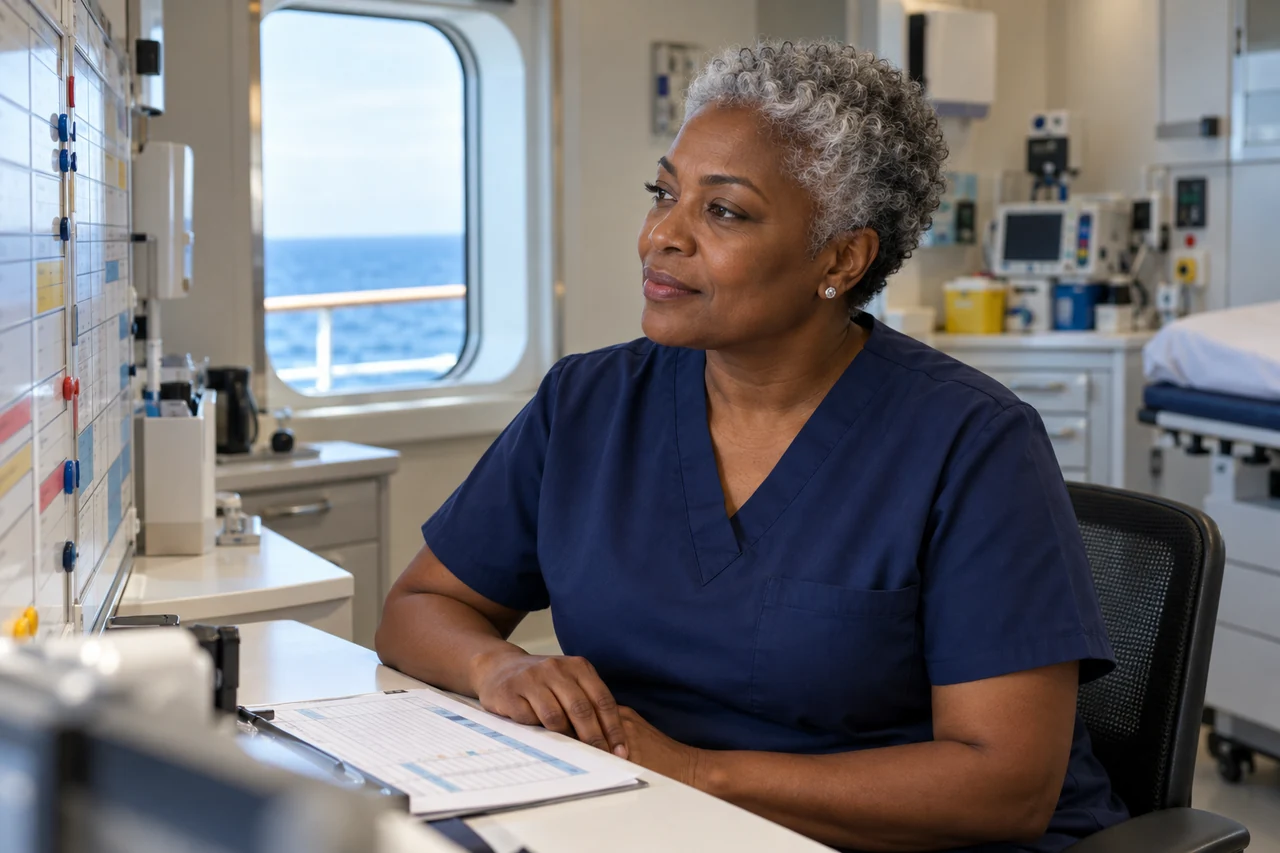
Black woman cruise ship physician in a modern onboard medical centre
Crew Life at Sea
Menu

Career guide · Medical department

Bring clinical experience to the ship’s medical team

Learn how shipboard nurse and physician roles differ, what employers may ask you to prove, and how to assess the realities of practising in a small medical facility at sea.

Clinical careers · Care at sea

A specialised career at sea

Bring sound clinical judgement to a distinct working environment.

Cruise ship medical teams support the health of people living and travelling onboard. Royal Caribbean Group places medical roles within its ship operations support teams and lists nurse and doctor opportunities. Each company decides how its clinic is staffed and what experience its vacancies require.

Clinical work at sea combines professional practice with shipboard procedures, careful records, team handovers and coordination with shoreside support. Your qualifications must match the vacancy and the employer’s accepted licensing rules. This guide helps you assess fit; the recruiter and current job description determine the actual terms.

This page is career guidance, not clinical advice. Follow your professional standards, employer protocols and the applicable law for the post and vessel.

Explore the role families

Start with the work your licence supports.

Onboard titles, team size and reporting lines vary between cruise operators. These examples describe common role families, not one universal promotion ladder. Keep the referral, appointment instructions and completed certificate together. If medication, a condition or a follow-up could affect your schedule, discuss it with the authorised clinic and recruiter early. Do not assume that a certificate from a different provider or route will be accepted.

Black male shipboard nurse reviewing a clinical chart on a tablet inside a cruise clinic

Nursing

Shipboard registered nurse

Cruise operators recruit nurses for shipboard medical teams. Duties and required clinical backgrounds depend on the vacancy; employers may seek current professional registration and substantial recent experience in acute, emergency or other specified settings. Read the full posting before assuming your nursing specialty is a match.

What to evidence: Show where you are registered, the settings and patient groups you have worked with, your current emergency-care training and how you communicate under pressure. Do not include confidential patient details.

Black male physician reviewing clinical notes in a modern onboard cruise ship medical centre

Physician roles

Shipboard doctor or physician

A physician vacancy may involve assessing and managing guest or crew health concerns within the employer’s clinical protocols, coordinating referrals and supporting the wider medical team. The employer sets the required licence, postgraduate training, recent practice and credential verification process.

What to evidence: State your medical registration, relevant postgraduate qualifications and recent clinical scope. Confirm which licences or registrations the employer recognises for the ship, flag and itinerary.

Black woman cruise ship nurse checking a medical monitor during a calm onboard response drill

Acute and emergency care

Emergency-ready clinicians

Some vacancies value experience in emergency medicine, urgent care, critical care or another high-acuity environment. This is not a universal condition for every job. Emergency response also depends on ship procedures, available resources, team roles and access to shoreside medical support.

What to evidence: Use evidence from your actual role: triage, escalation, clear handovers, simulation drills, teamwork and working within clinical protocols. Explain your responsibilities accurately.

Black woman senior clinician reviewing a clinic handover checklist aboard a cruise ship

Clinical leadership

Senior and team-lead responsibilities

Experienced clinicians may apply for senior posts that include team coordination, handovers, clinical quality, training or operational planning. Titles and reporting structures vary, and a senior position is a separate vacancy with its own criteria—not an automatic promotion after a set number of contracts.

What to evidence: Describe examples of coaching colleagues, improving a process, supporting safe handovers and raising concerns through the correct clinical governance route.

Black woman physician reviewing an electronic medical record at a clinic workstation aboard a cruise ship
Accurate documentation and clear handovers support continuity when a clinical team works at sea.

The shipboard setting

Clinical work includes the handover and the wider operation.

Medical work onboard is shaped by the vessel’s procedures, equipment, staffing and itinerary. A clinician may need to communicate clearly across departments, respect privacy in a shared environment and record decisions so another authorised professional can follow the case.

When shoreside care or a referral is needed, the team coordinates through the employer’s defined channels. Candidates should be comfortable following escalation routes, consulting colleagues and working within their own competence and the clinic’s resources.

Ask the recruiter how the role is staffed, who provides clinical oversight, what the on-call arrangement means and how the ship links with shoreside medical support. These details matter as much as the job title.

Responsibilities can extend beyond consultations

Help keep the clinic ready and the team coordinated.

The exact division of duties depends on the operator and the clinicians assigned to the ship. Medical checks can depend on the role, employer and applicable seafarer rules. Get the accepted examination name, provider and timing in writing; bring the requested history and records; and ask the clinic how results or additional tests will be communicated to the hiring team.

01 · Clinical service

Work within your scope

Assess and support care only within your professional authority, the employer’s protocols and the resources available onboard. Clarify who makes clinical decisions and how concerns are escalated.

02 · Records and privacy

Document and hand over carefully

Maintain complete, timely records and communicate relevant information to authorised colleagues. Protect patient privacy during conversations, handovers and use of digital systems.

03 · Emergency readiness

Know the ship’s response plan

Understand the clinic’s emergency equipment, call procedures, role assignments and referral or evacuation pathways. Employers set the drills and training required for each position.

04 · Clinic operations

Support a prepared workplace

Depending on assignment, contribute to supply checks, infection-prevention routines, shift handovers and service coordination. Ask which operational duties are part of the vacancy.

The International Labour Organization’s Maritime Labour Convention addresses seafarer medical fitness and onboard medical care. Requirements are implemented through the relevant authority and vary with vessel, flag, role and employer.

Match credentials to the advert

Confirm every professional and joining requirement.

Do not pay for a course or assume a shore-based credential is accepted until the hiring employer confirms it for the specific role. Medical checks can depend on the role, employer and applicable seafarer rules. Get the accepted examination name, provider and timing in writing; bring the requested history and records; and ask the clinic how results or additional tests will be communicated to the hiring team.

Professional registration

Check that your licence or registration is current, in good standing and recognised for the position. Ask how the employer verifies primary-source credentials and any specialist certifications.

Recent clinical experience

Compare your recent practice, clinical setting and patient groups with the vacancy. If the advert names emergency, acute or critical-care work, explain your relevant responsibilities and dates precisely.

Safety and emergency courses

Ask which clinical, maritime and shipboard safety courses are required, who approves the provider and whether the employer arranges or reimburses training. Course names alone do not prove acceptance.

Medical, documents and screening

Follow the employer’s instructions for seafarer medical fitness, passport, visas, background checks and vaccinations. Requirements and timing can vary by nationality, route and contract.

Royal Caribbean Group’s published FAQ describes an approved pre-employment medical process for its crew and asks for role-relevant qualifications, background checks and travel documents. Use that as an example of one operator’s process, not a universal checklist.

Build a credible application

Make your clinical experience easy to verify.

Use a focused CV that states your professional registration, qualifications, relevant clinical settings and dates. Put the experience asked for in the job description near the top, then describe your responsibilities clearly. Name current certifications and their expiry dates where useful.

Use anonymised examples to show careful triage, clear handovers, emergency teamwork, accurate records, patient confidentiality and appropriate escalation. Never include identifying details from a patient case or share documents you are not authorised to disclose.

Improve your cruise CV ↗ Prepare for interviews ↗
Black woman medical professional checking organised clinic supplies and an inventory tablet aboard a cruise ship
Show how your work supports both clinical care and the readiness of the onboard service.

Plan your next professional step

Build depth first; apply when the right role opens.

There is no guaranteed schedule for advancement at sea. Your next opportunity depends on your profession, experience, employer needs and available vacancies. Keep the referral, appointment instructions and completed certificate together. If medication, a condition or a follow-up could affect your schedule, discuss it with the authorised clinic and recruiter early. Do not assume that a certificate from a different provider or route will be accepted.

01

Meet the role criteria

Keep registration and specialist credentials current. Compare your recent practice with the actual requirements before applying.

02

Learn shipboard protocols

Complete required onboarding, understand reporting lines and demonstrate accurate records, reliable handovers and sound judgement. Ask the employer for the exact course title or code, certificate level, validity period and completion deadline. Verify the provider’s current approval with the responsible authority, and keep the full certificate and receipt.

03

Broaden relevant experience

Where suitable, develop emergency readiness, clinical coordination, mentoring or service-quality experience within your professional scope. Ask the employer for the exact course title or code, certificate level, validity period and completion deadline. Verify the provider’s current approval with the responsible authority, and keep the full certificate and receipt.

04

Apply for an open position

Senior roles are separate vacancies. Confirm their qualifications, responsibilities, clinical authority and contract terms before accepting.

Nursing and physician careers have distinct qualifications and scopes of practice. A move into a senior post is not an automatic step from one job title to another.

Before accepting an offer

Ask specific questions about the contract.

Request clear written answers so you understand the work, clinical accountability and employment conditions. Medical checks can depend on the role, employer and applicable seafarer rules. Get the accepted examination name, provider and timing in writing; bring the requested history and records; and ask the clinic how results or additional tests will be communicated to the hiring team.

01 · Clinical scope

Authority and support

Confirm the role’s clinical remit, reporting structure, oversight, staffing, on-call expectations, referral process and responsibility during emergency response.

02 · Employment

Employer and schedule

Identify the legal employer, vessel, contract duration, hours and rest arrangements, leave, travel, visa and repatriation provisions.

03 · Pay and cover

Written financial terms

Confirm pay currency and schedule, deductions, overtime or on-call compensation, insurance, professional indemnity and any costs you are expected to cover.

Apply carefully

A practical checklist before you submit.

Use the official careers portal or confirm an agency through the employer’s own hiring-partner directory. Medical checks can depend on the role, employer and applicable seafarer rules. Get the accepted examination name, provider and timing in writing; bring the requested history and records; and ask the clinic how results or additional tests will be communicated to the hiring team.

01

Read the full vacancy

Match every licence, experience and training requirement. Note closing dates, contract type, location and required documents.

02

Prepare verifiable documents

Check that registration, references and certificates are current. Share sensitive identity or health documents only through the employer’s verified process.

03

Prepare evidence-based examples

Use anonymised examples that show communication, teamwork, sound escalation, accurate documentation and respect for professional scope.

04

Verify costs and instructions

Ask who pays for medical examinations, travel documents, courses and transport. Get the terms in writing and verify any recruiter before paying.

Medical career FAQs

Answers before you apply.

Confirm role-specific decisions with the hiring organisation and your professional regulator.

Do cruise ships hire nurses and doctors?

Yes. Royal Caribbean Group’s ship careers page lists nurses and doctors among the medical roles on its vessels. Other operators publish their own role titles and selection criteria, so use the specific employer’s current vacancy.

What qualifications do I need for a shipboard nurse job?

The employer may require active professional registration, a nursing qualification and recent experience in specified clinical settings. Exact requirements differ by company and opening; confirm the accepted licence, experience threshold and supporting documents from the current advert.

What qualifications do cruise ship doctors need?

Physician vacancies set their own licensing, postgraduate training, clinical experience and credential-verification criteria. Check the full role description and ask the hiring employer which medical registrations are recognised before applying.

Is emergency or intensive-care experience always required?

No single specialty requirement applies to every operator and post. Some vacancies may emphasise emergency, acute or critical care experience. Treat each advert as the source of truth and describe only the practice you can document.

Do medical department staff need STCW training?

Training depends on the job, vessel, flag state and employer. The Maritime Labour Convention refers to STCW medical-care or first-aid training for designated seafarers on ships that do not carry a doctor; this is different from assuming every nurse or physician needs the same course. Ask for the exact approved course and timing.

Do I need a seafarer medical certificate?

The Maritime Labour Convention sets a medical-certificate requirement for seafarers. The employer and relevant authority will specify the accepted examination, provider and timing. Royal Caribbean Group says its crew complete an approved pre-employment medical process; procedures at other companies may differ.

What work does the ship’s medical team do?

Depending on the employer and assignment, the team may provide clinical services to guests and crew, keep accurate records, coordinate referrals, maintain clinic readiness and follow onboard medical procedures. The vacancy and clinical protocols define the actual scope.

How much do cruise ship nurses and doctors earn?

There is no reliable universal salary for these job titles. Pay and benefits vary with employer, seniority, experience, contract and written terms. Ask for base pay, payment schedule, overtime or on-call arrangements, deductions, insurance and repatriation terms in writing.

Is there a fixed path from nurse to chief doctor?

No. Nursing and physician roles have different professional qualifications and scopes of practice. Senior clinical positions depend on vacancies, employer criteria and demonstrated experience; one clinical role does not automatically qualify someone for another profession.

How should I apply safely?

Start with the cruise line’s official careers site or an agency listed by that employer. Royal Caribbean Group states that it does not charge candidates to apply or secure a job. Verify the policy of the employer you are applying to and do not pay an unverified recruiter.
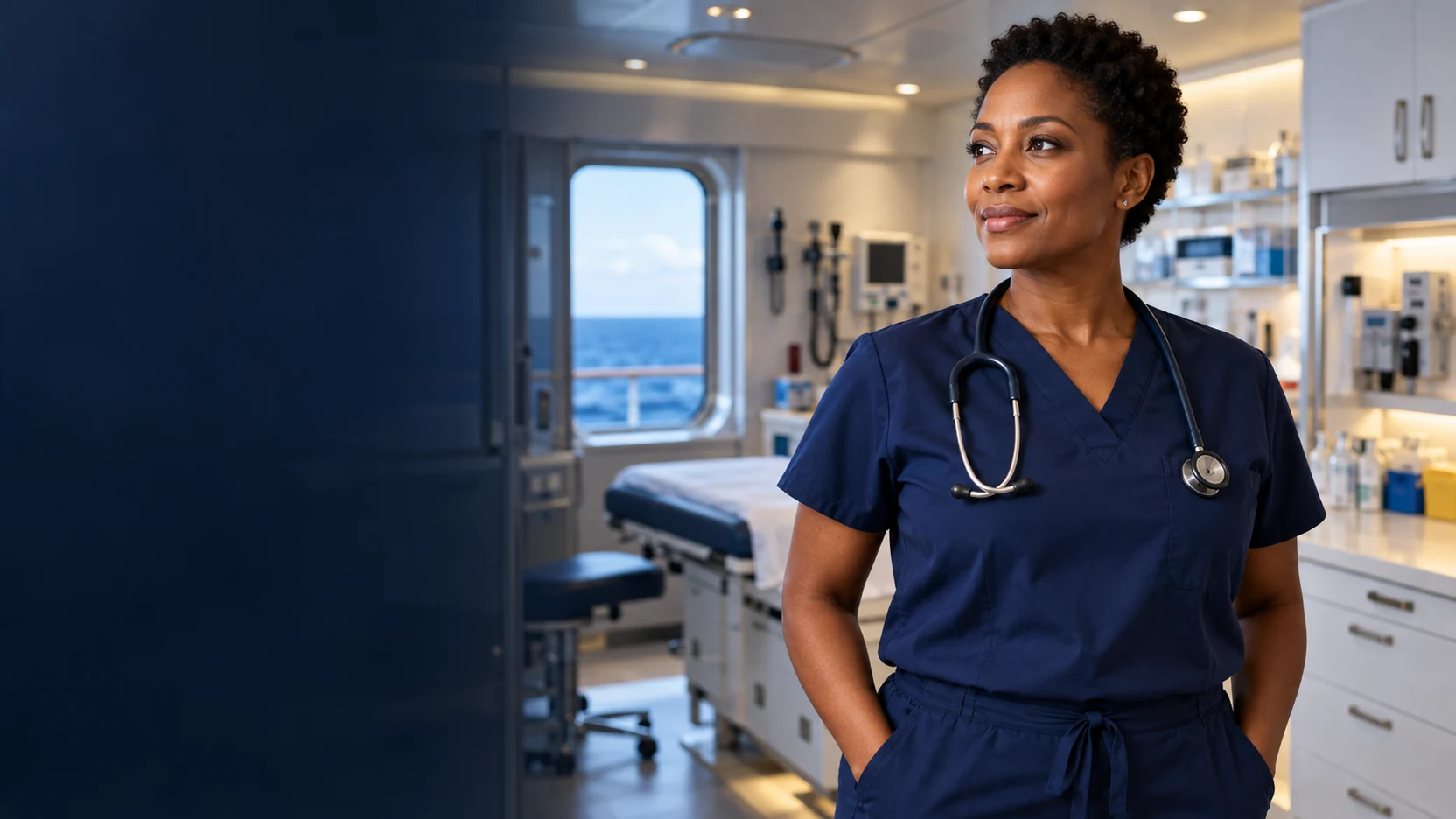

Keep your career research connected

Related cruise crew guides.

Compare departments, review job requirements and prepare documents before you apply. Keep the referral, appointment instructions and completed certificate together. If medication, a condition or a follow-up could affect your schedule, discuss it with the authorised clinic and recruiter early. Do not assume that a certificate from a different provider or route will be accepted.

Official sources checked: Royal Caribbean Group ship careers lists nurse and doctor roles and describes its own hiring requirements. The ILO Maritime Labour Convention covers medical fitness and medical care for seafarers. Always check the current vacancy, relevant maritime authority and your professional regulator for requirements that apply to you.