01 · Prepare
Organise the section
Check the production plan, organise ingredients and equipment, complete mise en place and confirm that the work area is ready before service begins.

Cruise ship departments · Culinary and galley
Explore professional kitchen and galley roles at sea, from utility and entry-level production to specialist sections and senior kitchen leadership. Learn how to match your real experience to the vacancy.
A practical department guide
The galley is the working kitchen behind cruise ship restaurants, buffets, crew dining and specialist outlets. Larger vessels may have several production areas, with teams for hot kitchen, cold kitchen, pastry, bakery, butchery, food preparation and utility support. The exact organisation depends on the ship and its food operation.
Food production at sea combines practical skill with timing, hygiene, communication and reliable handovers. A section has to be ready for service, meet the employer’s standards and work in step with neighbouring teams. Role titles and seniority differ across cruise lines, so the current vacancy is the best guide to duties and required experience.
Explore the work
These are examples, not a universal rank system. One employer may use different titles or combine responsibilities. Compare each vacancy’s duties, required experience, section and reporting line. Compare the listed duties, experience level, language needs, schedule and required certificates with work you have actually done. Note evidence for each essential criterion and ask whether equivalent experience is accepted before spending money on training or travel.
Kitchen operations
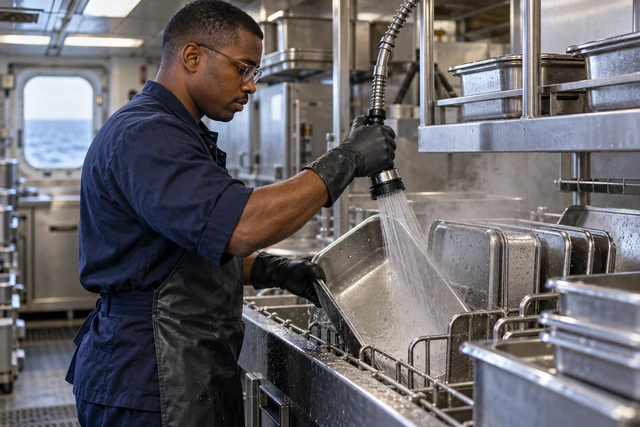
Support an orderly kitchen through assigned cleaning, dishwashing, utensil handling, equipment care and waste routines. The role helps production areas remain ready, but its responsibilities are different from a cook’s food-preparation duties.
Relevant experience may include stewarding, commercial dishwashing or other fast-paced cleaning work. Ask about equipment, shift pattern, lifting tasks and the employer’s safety training.

Early production roles
Depending on the operation, junior crew may prepare ingredients, follow recipes and specifications, support a cooking station and help with production and service under more experienced chefs.
Show practical kitchen time, the tasks you handled, equipment or techniques you used and how you followed hygiene routines. Culinary school can support an application, but does not automatically substitute for the experience a vacancy asks for.
Section responsibility
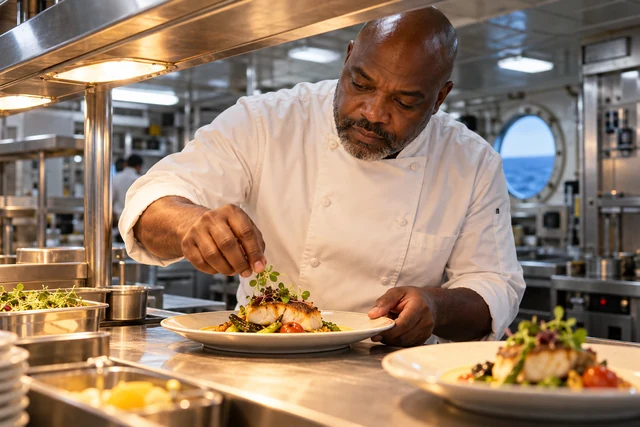
Intermediate and section roles can involve working with greater independence, maintaining mise en place, producing dishes to specification, managing service timing and supporting junior crew. A Chef de Partie may run a defined section, depending on the employer.
Applications should explain the kitchen type, section, service style, volume where known, equipment and level of ownership. Do not rely on a senior-sounding title without describing what you were responsible for.

Specialist production
Specialist posts focus on relevant production skills such as baking, pastry, desserts, bread, meat preparation or another defined area. Work may require technical consistency, careful planning and close attention to the operation’s handling and hygiene procedures.
Make your specialist portfolio and experience clear. Confirm what equipment, products, qualification or level of independent work the specific vacancy requires.
Senior kitchen leadership: Sous Chef, Executive Sous Chef and Executive Chef positions may involve wider responsibility for people, production planning, quality and operational control. Employers set their own structure and experience criteria; these roles are not an automatic promotion after a fixed number of contracts.
Before the first ticket
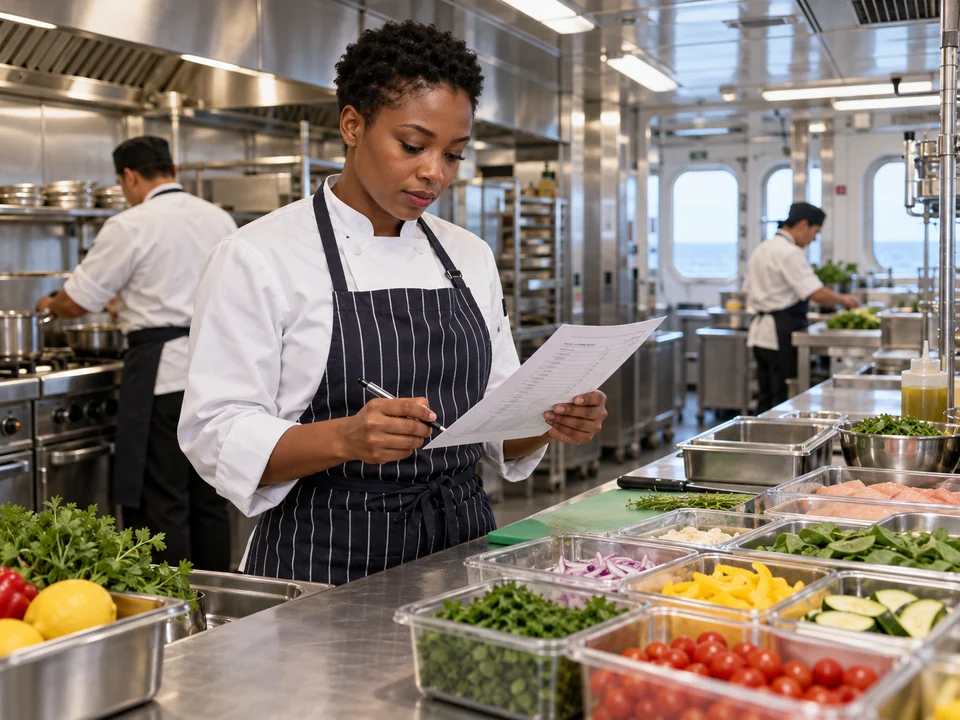
Before service, a cook may check the section plan, collect the approved ingredients, prepare the required quantities and arrange tools in a safe, reachable order. The exact routine comes from the ship’s kitchen team and the role you hold.
When describing this work to an employer, explain your section and the tasks you completed yourself. Mention recipe-following, portioning, preparation timing, equipment you used and how you communicated when an ingredient or item was unavailable.
The rhythm of a working kitchen
The exact schedule depends on the job, venue and ship. A galley role commonly follows the production and service plan, with tasks assigned by the section chef or supervisor. Record the tasks and responsibilities you can support with references, service records or certificates. Compare them with the vacancy’s must-haves, contract and joining requirements, and ask the recruiter about any gap rather than assuming it will be waived.
01 · Prepare
Check the production plan, organise ingredients and equipment, complete mise en place and confirm that the work area is ready before service begins.
02 · Produce
Prepare, cook, finish or support food production according to the employer’s recipe, portion and presentation instructions. Ask when specifications are unclear.
03 · Coordinate
Communicate with chefs and neighbouring sections so that preparation and service stay coordinated. Raise delays or equipment problems early.
04 · Protect
Use the hygiene, food handling, storage and equipment procedures taught by the employer. Follow instructions for protective equipment, cleaning products and hazard reporting.
05 · Reset
Store items as instructed, complete assigned cleaning and sanitation work, return equipment correctly and set up the section for the next work period.
06 · Handover
Report shortages, faults, production changes or outstanding tasks to the relevant team member. Clear handovers help the next shift keep standards consistent.
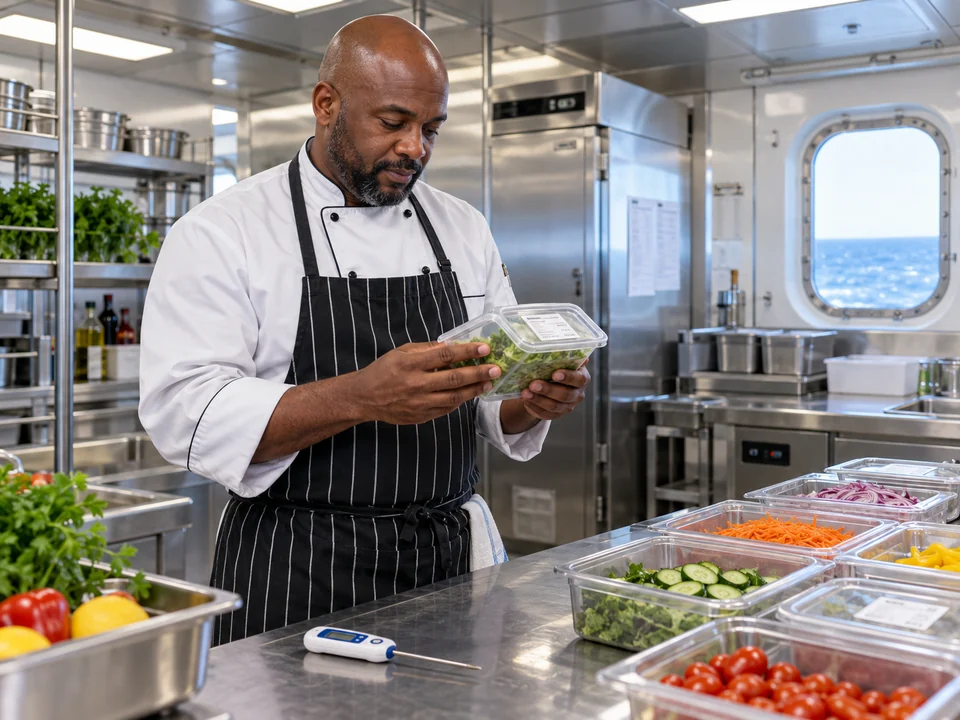
Food handling and team standards
Shipboard galley teams work to the vessel’s food-safety programme and the rules that apply to its operation. Crew are expected to follow the employer’s instructions for hand hygiene, cleaning, storage, separation of ingredients and recording checks. Procedures and equipment can differ between ships, so learn the system used at your assigned station.
If a label, temperature reading, ingredient or dietary request is unclear, stop and ask the supervisor rather than guessing. For allergen or special-diet requests, use the approved communication route and never promise a meal is safe unless the authorised team has confirmed it.
For further context, review the CDC Vessel Sanitation Program guidance; each employer will still train crew on its own onboard system.
Choose a suitable level
Use this comparison to organise your search. It is a starting point only: job titles, qualifications and seniority vary by company and vessel. Prepare a concise question with the role, application stage and reference number, if available. Share only the information needed to resolve it, and use verified company contact channels for sensitive documents or requests involving payment.
| Role area | Useful evidence | Typical focus |
|---|---|---|
| Galley Utility or Steward | Kitchen support, stewarding, cleaning routines or commercial dishwashing. | Assigned cleaning, utensils, equipment and galley support. |
| Commis or Assistant Cook | Practical preparation, basic cooking, recipe-following and hygiene experience. | Production support under direction, preparation and service tasks. |
| Demi Chef or Chef de Partie | Relevant section work, reliable timing, specification and increasing independence. | Station or section output, quality and coordination during service. |
| Pastry, Bakery or Butchery | Verifiable specialist production skills and experience with relevant equipment. | Focused technical production for a specific galley area. |
| Sous Chef or Executive Chef | Substantial kitchen leadership, planning and operational responsibility. | People, production, standards and wider galley operations. |
Apply for the vacancy whose required duties match your real experience. A certificate or course alone may not show the practical responsibility an employer expects.
Professional habits that matter
A good application explains both the kitchen work and the habits that help a person contribute to an organised, multicultural team. Use the live listing to decide what to emphasise, while keeping every claim accurate. For each required skill, note where and when you used it, what you personally handled and which evidence supports it; ask the recruiter before treating related experience as an equivalent qualification.
Prepare before applying
Start with the exact vacancy and use the authorised employer or recruiter. Joining documents and training can vary by job, nationality, itinerary and employer. Check the course against the requirement for your role, not just a similar-sounding certificate. Ask the provider who approves it, what is assessed, where practical training takes place, how long the certificate remains valid and whether your employer accepts that provider.
“Prepared mise en place for the hot section and supported lunch service, following house recipes, portion guidance and the kitchen’s cleaning procedures.”
Use this only if it describes work you have actually done. Add your real kitchen type, dates, equipment and level of responsibility.
Prepare a short account of your strongest station, one busy service you handled, a safety routine you follow and a time you reported a problem early. If you have a portfolio or certificates, share them only through the employer’s authorised application process.
Career development
Career movement depends on performance, skill, vacancies and the employer’s structure. These stages are a preparation framework, not a guaranteed ladder or timeline. Compare the listed duties, experience level, language needs, schedule and required certificates with work you have actually done. Note evidence for each essential criterion and ask whether equivalent experience is accepted before spending money on training or travel.
Build safe routines, dependable preparation, teamwork and confidence with the equipment used in your current role.
Learn the work of a station, follow production instructions and keep service timing and quality consistent.
Seek feedback, support colleagues and build evidence of planning, quality checks or supervision where appropriate.
Compare your record with a specific senior vacancy and apply when your real responsibilities meet its stated requirements.
Common questions
Use these answers to prepare, then confirm the details that apply to the particular vacancy you want.
Not always. Some employers consider relevant hotel, restaurant, catering or other professional kitchen experience. Requirements vary by position; senior posts normally call for stronger evidence of relevant production responsibility and leadership. Follow the current vacancy.
A qualification may support an application, but it does not automatically replace practical kitchen experience. State any placements, supervised production or work experience accurately and check the vacancy’s required level.
Galley Utility is generally a kitchen-support position. Depending on the employer, duties can include dishwashing, cleaning assigned equipment and areas, handling utensils and supporting an organised galley. It is different from a cook or chef role focused on food preparation and production.
Compare the vacancy with the work you actually perform: kitchen setting, section, production tasks, independence, equipment and any team responsibility. Apply at the level that matches your evidence rather than relying on a job title alone.
There is no single set of certificates that applies to every galley vacancy. Employer, role, itinerary and flag or port requirements can affect training and joining steps. Confirm accepted qualifications and any required safety training with the authorised recruiter before paying for a course.
Schedules vary, but work commonly follows the operation’s preparation plan, food production and service periods, then cleaning, safe storage and handover. Your section and shift determine the exact sequence and tasks.
Some operators have progression from junior production roles towards section responsibility and wider leadership. Progress depends on performance, experience, vacancies and company requirements; there is no guaranteed title sequence or timeline.
List accurate job titles and dates, kitchen types, sections, production duties, equipment or systems you know, relevant qualifications and any genuine supervision responsibilities. Use specific examples and do not overstate your level.
Ask the authorised recruiter whether the vacancy includes an assessment, what tasks and equipment it uses, how long it lasts and what hygiene or presentation standards are expected. Follow the employer’s instructions and do not pay an unverified person for an assessment or training place.
Read the written offer and seafarer employment agreement. Confirm the contract period, work and rest arrangements, pay and deductions, joining travel, accommodation, food and repatriation terms with the employer. The applicable agreement and national rules govern the details; do not rely on general estimates from another ship or company.
Continue exploring
Compare kitchen roles with other onboard departments and prepare each part of your application with relevant guidance. Use the live listing to decide what to emphasise, while keeping every claim accurate. For each required skill, note where and when you used it, what you personally handled and which evidence supports it; ask the recruiter before treating related experience as an equivalent qualification.