Crew Life at Sea
Menu
A Black cruise ship guest services officer welcomes visitors inside a sunlit atrium beside the open ocean

Cruise ship jobs · clear answers

Cruise Ship Jobs FAQ Before you apply or join

Practical answers about cruise ship roles, experience, documents, pay, contracts and life onboard. Requirements vary by employer and assignment, so use the current vacancy and written instructions for your own application.

Role-specific guidance · verified hiring · confident applications

Start with the essentials

Get the facts for the job you want.

Cruise ship jobs span guest services, food and beverage, housekeeping, entertainment, retail, marine operations and specialist roles. A requirement that applies to one department or cruise line may not apply to another.

Use the vacancy to identify the employer, duties, qualifications and application channel. Then get personal requirements, contract terms and joining steps in writing before spending money or sending sensitive documents.

Match the role

Compare your real experience with the duties and required certificates in the active vacancy. Check the employer’s live vacancy and written instructions for your own role, nationality and vessel. Requirements can differ between cruise lines and assignments, so confirm details before paying or travelling.

Confirm documents

Ask which passport, medical, visa, background and safety items apply to your assignment. Check the employer’s live vacancy and written instructions for your own role, nationality and vessel. Requirements can differ between cruise lines and assignments, so confirm details before paying or travelling.

Read the offer

Check pay, deductions, dates, leave, travel, accommodation and responsibilities in writing. Get the amount, currency, pay date, deductions, overtime or commission rules, leave and travel costs in writing. Compare the final agreement with the offer and ask the employer or provider to clarify any difference before signing.

Verify the contact

Check the employer’s site and authorised partners before paying or sending personal documents. Check the employer’s live vacancy and written instructions for your own role, nationality and vessel. Requirements can differ between cruise lines and assignments, so confirm details before paying or travelling.

Explore the work

Four broad areas of cruise ship work.

Titles and responsibilities vary by company and vessel. These examples help you decide what to research; the individual vacancy sets the criteria for that opening. Use the official contact details to confirm current services, eligibility and application routes. Keep the reply and any instructions with your records, and verify unusual requests for money, travel or identity documents through a second official channel before acting.

Guest experience

Hotel and guest services

Reception, guest relations and onboard services teams answer questions, handle requests and help solve problems. Clear communication, patience and service experience can be useful evidence.

Explore current positions →
Food and hospitality

Dining, bar and galley

Food and beverage roles can involve preparation, safe handling, table service, bar operations or team supervision. Confirm the shift pattern, experience level and certificates listed for the specific position.

Review job requirements →
Vessel operations

Deck, engine and technical

Marine and technical teams help operate, navigate and maintain the vessel. Roles may require formal qualifications, sea service, endorsements or flag-specific documents; confirm each item with the employer.

Read seafarer document guidance →
Specialist services

Entertainment and wellbeing

Shows, activities, retail, spa, medical, security and youth services each have their own duties and selection criteria. Some openings may require auditions, licences, language skills or professional credentials.

See available roles →

Behind the guest experience

Everyday work depends on consistent standards.

Housekeeping and linen teams help keep cabins and shared spaces ready for guests. The duties, work areas, pace, equipment and amount of guest contact depend on the role and vessel.

When you review a vacancy, look for the exact responsibilities and ask how the employer introduces its cleaning, hygiene and safety procedures. Describe relevant experience with quality, attention to detail, teamwork and working to a schedule.

  • Match your examples to the listed duties.
  • Ask what equipment or standards the role uses.
  • Confirm what training is provided before your first shift.
  • Explain how you maintain quality during busy periods.
A Black cruise ship crew member checks folded linen in a bright shipboard laundry room

GETTING STARTED

Explore roles and match your experience

Cruise ships bring together hospitality, technical, marine and guest-facing teams. Start with the actual duties in a current vacancy: job titles, entry criteria and hiring channels differ between cruise lines.

What kinds of cruise ship jobs are available?

Cruise ship vacancies can include food and beverage, galley, housekeeping, guest services, entertainment, retail, spa, youth programmes, deck, engine, medical, security and other specialist work. Each ship and cruise line organises departments differently. Browse current openings, then compare the listed duties, qualifications, location and hiring channel before applying.

Do I need previous cruise ship experience?

Not always. Some employers consider relevant experience from hotels, restaurants, resorts, retail, healthcare, trades or other customer-facing and technical workplaces. A specialist or senior vacancy may ask for a licence, formal training, shipboard service or a particular record of experience. Use examples from your real work history to show how you meet the specific role requirements.

Can I apply for an entry-level cruise ship job?

Some openings are suitable for applicants building a career at sea, but “entry-level” does not mean that every requirement disappears. A line may still specify language skills, service experience, physical duties, a medical assessment, background screening or certificates. Read the job description closely and explain relevant transferable skills instead of relying on a general promise that no experience is needed.

What qualifications and skills should I highlight?

Prioritise requirements named in the vacancy. Depending on the role, useful evidence may include hospitality or trade qualifications, food-safety training, customer-service results, language ability, a driving or professional licence, maritime certificates or supervisory experience. Give accurate dates, issuing organisations and certificate names. Do not add a qualification you have not earned or claim that a course is accepted before the employer confirms it.

Do I need to speak English?

The required level depends on the employer, role and ship. Some cruise lines identify English as a basic shipboard requirement; guest-facing and safety-related duties can require clear spoken and written communication. Check the official vacancy for other language requirements too. If asked, describe your real ability in practical terms—for example, handling guest questions, reading instructions or completing reports.

Can I choose my department, ship or travel with someone I know?

You can apply for roles that fit your background, but the employer decides hiring, ship assignment and timing. Preferences are not a guarantee, and two applicants may be assessed separately or assigned to different vessels. Ask the recruiter when an assignment is confirmed, how preferences are recorded and whether operational changes can happen before joining.

ELIGIBILITY AND DOCUMENTS

Check each requirement against your own vacancy

Age, passport, visa, medical, background and training rules can depend on the cruise line, role, itinerary, nationality and applicable maritime requirements. Get the exact checklist from the official employer or its authorised hiring partner.

What is the minimum age for cruise ship work?

There is no single age rule that should be assumed for every role and cruise line. For example, Royal Caribbean Group currently lists a minimum of 18 for shipboard applicants and 21 for beverage-serving roles; MSC publishes an 18-year minimum for onboard work. Other employers or specific duties can set different criteria. Check the current official vacancy for the cruise line you are applying to.

Do I need a passport before applying?

Many shipboard hiring processes require a valid passport, and some cruise lines state this as a basic qualification. If yours is expired or close to expiry, ask the employer what validity is needed for your joining date and itinerary before paying for other steps. Requirements may also depend on your nationality and where you will join the vessel.

What passport validity and visas will I need?

The validity period and visas depend on your nationality, ports, vessel, joining location and contract. A recruiter may provide instructions or supporting documents, but do not assume every visa is arranged or paid for by the employer. Ask for a written, assignment-specific checklist that identifies which applications you make, who supplies supporting letters and when each document must be valid.

Will I need a medical exam or police clearance?

An employer may require a pre-employment medical assessment, background check or both. The accepted doctor, form, test scope, certificate validity and timing can vary. Wait for written instructions before booking, and confirm who pays, how results are submitted and how your private information is handled. Use the company-approved process rather than sending sensitive documents to an unverified contact.

Is STCW training required for every cruise ship job?

Do not assume that one safety course is required in the same way for every job. Requirements depend on duties, ship, flag, employer policy and applicable rules. Deck and engine personnel can have specific certificates, while hotel staff may receive particular training before or after joining. Ask for the exact certificate title, approved provider, deadline and validity before enrolling or paying.

Do I need a seafarer’s book or other maritime document?

Some positions, flag states or joining processes require a seafarer identity document, record book or another maritime credential; it is not safe to assume the same document is needed for every hotel and marine role. Ask the employer which document is required, which authority issues it and whether a specific format or endorsement is accepted. Keep it separate from your passport, visa and training certificates.

PAY AND LIFE ONBOARD

Understand the work pattern and written offer

Employment packages and onboard routines vary. Compare the written terms for your position and ship, including what is included, what is deducted and whom to contact when plans change.

How much do cruise ship crew members earn?

There is no reliable universal salary figure for all cruise ship work. Pay can depend on role, seniority, employer, currency, contract, tips or service-charge arrangements, and any stated deductions. Ask for the gross amount, how and when it is paid, whether variable earnings are guaranteed, what deductions may apply and how leave or overtime is treated. Compare a written offer with the current vacancy.

How long are cruise ship contracts?

Contract length and time between assignments vary by cruise line, position and operational schedule. Ask for the expected start and end dates, whether an extension is possible, how early the company may change the dates and what notice applies. Make sure the written agreement explains leave, sign-off arrangements and who covers travel at the end of the assignment.

What are the working hours and rest periods like?

Shipboard schedules can include rotating shifts, weekends, holidays, sea days and busy embarkation periods. The exact roster depends on your department and ship. Ask what a typical week looks like, how shifts are assigned, how rest periods are recorded, and how to raise fatigue or scheduling concerns. The Maritime Labour Convention covers hours of work and rest for seafarers within its scope; the rules applicable to your employment depend on the ship and relevant implementation.

Are accommodation and meals provided?

Some cruise employment packages include crew accommodation and meals, but room arrangements, facilities, deductions and access rules differ. Ask whether you share a cabin, what is included, what charges may apply, how laundry and internet work, and where crew meals are served. Get the details for your actual position rather than assuming another employee’s package is the same.

Does the cruise line pay for travel to and from the ship?

Travel arrangements vary. The employer may organise or reimburse some travel, while other costs or visa fees may be handled differently. Before buying a ticket, ask who books it, which joining airport or port to use, what receipts are needed, whether changes are covered and what happens if your joining date moves. Confirm any repayment condition in writing.

What if I become ill or need help while onboard?

Cruise ships have onboard procedures for medical concerns, emergencies and crew support, but the services and employment benefits depend on the vessel and contract. Ask what onboard medical care is available, how you report an illness or injury, what insurance or follow-up arrangements apply and whom to contact after sign-off. Read the agreement and company policy so you know the limits and process.

APPLICATION AND SAFE HIRING

Apply through verified channels and keep clear records

Use the employer’s official vacancy and authorised application route. Save the job description, recruiter details, written instructions and a copy of every document you submit.

How do I apply for a cruise ship job?

Start with a live position on the cruise line’s official careers site or a hiring partner the line identifies. Confirm the title, department, location, qualifications and closing or interview instructions. Submit the requested materials through that channel and follow up using verified contact details. For Crew Life at Sea, applications are submitted online through its official channels; recruitment is by appointment and invitation, with no walk-ins.

What should I prepare before applying?

Prepare a clear CV with contact details, employment dates, job titles, relevant duties, education, qualifications, languages and referees if requested. Gather accurate copies of certificates the vacancy asks for, but share identity and medical documents only when needed through a verified channel. Make sure dates and contact details match across your application, and keep a record of the role and recruiter you applied to.

How can I prepare for a cruise ship job interview?

Review the vacancy and prepare brief examples that show service, teamwork, problem-solving, reliability or technical skill relevant to the role. Be ready to explain your responsibilities and results honestly. Ask about daily duties, schedule, ship assignment, contract dates, pay structure, accommodation, training and next steps. A genuine recruiter should be able to explain the process and tell you where to verify important details.

Should I pay an application or job-placement fee?

Check the employer’s official policy before paying anyone. Crew Life at Sea states on its official website that it does not charge candidates job-placement fees. Royal Caribbean Group also says its hiring partners must not collect administrative, agency or processing fees from applicants. Legitimate personal costs such as a passport, required medical or government document can be separate; confirm the reason, recipient and amount independently before making any payment.

What happens after I am selected?

Selection may be followed by references, medical clearance, background checks, certificates, visa or work-authorisation steps, contract review, training and joining travel. The order, timing and responsible party vary. Ask for a written sequence with deadlines, approved providers, payment details, the contact for questions and what happens if an appointment or document is delayed. Do not book non-refundable travel based only on an informal promise.

How do I spot a cruise recruitment scam?

Verify the vacancy on the cruise line’s own careers site and confirm that any agency appears on its authorised-partner list. Treat guaranteed jobs, urgent pressure, personal bank-account payments, unofficial email addresses and requests for sensitive documents over unverified messaging as warning signs. Do not pay a fee or share identity details until you have independently confirmed the contact and the specific requirement.

Three Black cruise ship crew members share a meal in their shipboard dining room

Life between shifts

Ask what everyday life onboard means for your role.

Crew life combines work, safety routines and shared facilities. The experience differs across ships and departments, so ask practical questions while you review the offer—not after you have made travel plans.

Find out how rosters are communicated, where crew eat, whether cabins are shared, what personal items are allowed, how shore leave works and which contact supports crew concerns. Port calls do not automatically mean you will be free to go ashore.

  • Request the expected roster and rest arrangements.
  • Confirm what meals and cabin facilities are provided.
  • Ask how travel dates and joining changes are handled.
  • Keep a copy of your contract and joining instructions.

A clear application sequence

Four checks before you accept.

Keep your application tied to a real opening, and compare the final written offer with what the recruiter described. Match each essential vacancy criterion to dated evidence: a specific duty, your own contribution, a result and a referee or certificate that can support it. Keep job titles and dates consistent across your CV and forms, submit through the verified channel and save the version you sent.

01

Verify the vacancy

Record the employer, job title, duties and official application route.

02

Prepare accurate evidence

Tailor your CV and organise only the qualifications requested.

03

Review the offer

Check pay, dates, deductions, travel, leave and living arrangements.

04

Follow confirmed steps

Arrange medical, visa, training and travel only from written guidance.

Keep your own record. Save the vacancy, recruiter contact, application date and copies of all instructions. Verify changes through contact details published by the employer.

Official cruise-line and seafarer references

These pages provide examples of employer-specific requirements, application routes and onboard information. The current vacancy and your signed agreement remain the relevant sources for your own assignment.

Related crew guides

Take the next practical step.

Use these guides to prepare for the parts of recruitment that apply to the position you are considering. Use the live listing to decide what to emphasise, while keeping every claim accurate. For each required skill, note where and when you used it, what you personally handled and which evidence supports it; ask the recruiter before treating related experience as an equivalent qualification.

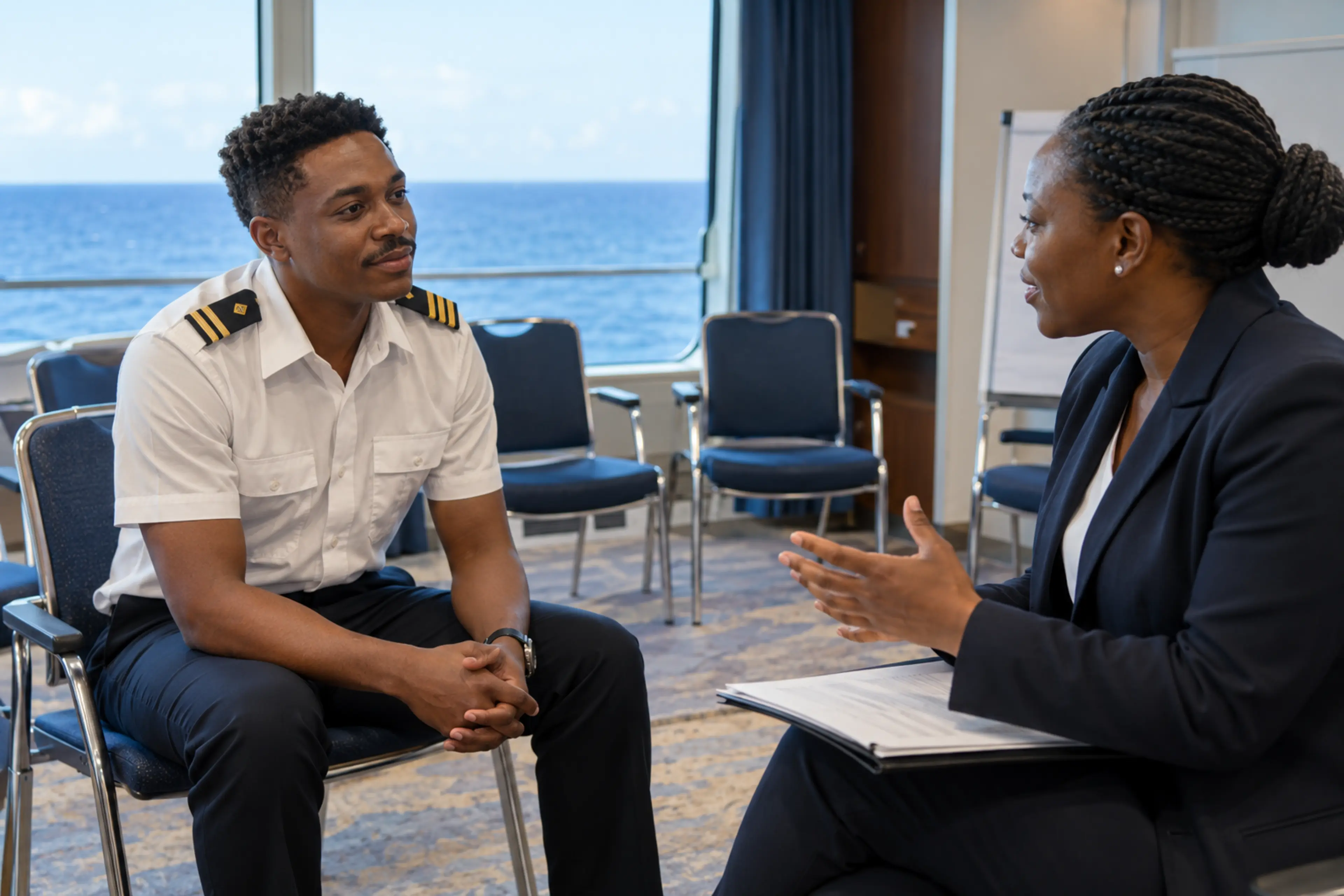
A Black cruise crew member asks a supervisor a question during a shipboard orientation

Practical preparation

Get answers that match your assignment

General career guidance can help you prepare, but practical requirements often vary by role, employer, vessel and itinerary. Keep a written copy of the offer and ask the recruiter to clarify anything that affects your documents, joining date or contract.

Continue with related guidance →