
Table games
Dealer and gaming-floor service
Dealers explain and run assigned games, handle chips accurately, follow table procedures and maintain a professional guest experience. Employers may assess specific games, pace, accuracy and communication.

Cruise ship department guide · Casino operations
Cruise ship casino teams combine table games, guest support and careful operating procedures. Learn what the department can involve, how roles differ and what to confirm before applying.
Casino work varies by ship, operator and itinerary
A specialist guest-facing team
A shipboard casino is a specialist operation within the wider hotel and entertainment environment. Guest-facing roles may include dealers and hosts; other openings can focus on cash control, gaming equipment, supervision or team operations. The team’s size and responsibilities depend on the vessel and the company running the casino.
Work at sea adds shipboard routines to the role: following the operator’s procedures, coordinating with colleagues, keeping accurate records and adjusting to the itinerary. Casino opening hours and duties can change by ship, port schedule and applicable rules, so confirm the expectations for the vacancy you are considering.
Roles across the department
Some posts require substantial casino experience. Others may value guest service, cash accuracy or technical maintenance. The hiring company sets the criteria for each vacancy. Prepare a concise question with the role, application stage and reference number, if available. Share only the information needed to resolve it, and use verified company contact channels for sensitive documents or requests involving payment.
Table games
Dealers explain and run assigned games, handle chips accurately, follow table procedures and maintain a professional guest experience. Employers may assess specific games, pace, accuracy and communication.

Guest relations
Hosts may welcome guests, explain casino services, support events or coordinate requests with the floor team. Some vacancies include sales or guest-retention measures; check the written duties and how performance is assessed.

Gaming systems
Technical posts can involve authorised checks, basic fault reporting, equipment availability and clear handovers. The job may require relevant electronics or gaming-machine experience, access controls and operator-specific training.

Casino floor operations
Cash operations, floor supervision and management can involve reconciliation, escalation, staff coordination and compliance with internal controls. These are distinct responsibilities; confirm the reporting line, authority and experience level for each role.
Match your evidence to the job
A strong application names the work you have done, the controls you followed and the responsibility you held. Use the vacancy criteria to select relevant examples rather than sending one generic casino CV to every employer. Keep the CV focused and readable, with recent relevant work, language skills, qualifications and contactable referees. Remove unsupported claims, check the file on a phone as well as a computer and save a clean PDF using a clear filename.
List the games you can deal, where and when you worked them, and how you maintain accurate procedures while communicating with guests. Be ready to demonstrate your current ability if the employer uses a practical assessment.
Show guest-service situations, event support, languages and examples of professional follow-up. Explain how you handle a request discreetly and refer a concern to the right supervisor.
Describe cash or chip transactions, reconciliation, record-keeping and the checks you personally completed. Give an example of identifying a discrepancy and following the required escalation process.
Name the equipment you have serviced, diagnostic tools used and the limits of your authorisation. Explain how you isolate a fault, document the work and hand over anything requiring specialist approval.
Use examples of shift coordination, procedure checks, coaching and incident escalation. State the size of the team or area you supported only where you can verify it.
Give evidence of planning, control reviews, staff development and guest-service standards. Ask the employer which commercial, compliance and team responsibilities belong to the specific position.
Keep examples factual. Do not share guest details, internal security procedures or confidential gaming information in a CV or interview. Describe your own responsibility without exposing protected information.
What the work looks like
Guest interaction is only one part of a casino shift. Accurate records, clear handovers and authorised access help the team deliver a consistent experience while following the operator’s procedures. Before joining, note what the employer has confirmed and what still needs an answer: schedule, cabin, meals, uniform, contact access and port-day rules. Keep those questions in writing and use the ship’s official induction for final procedures.
Cash and records
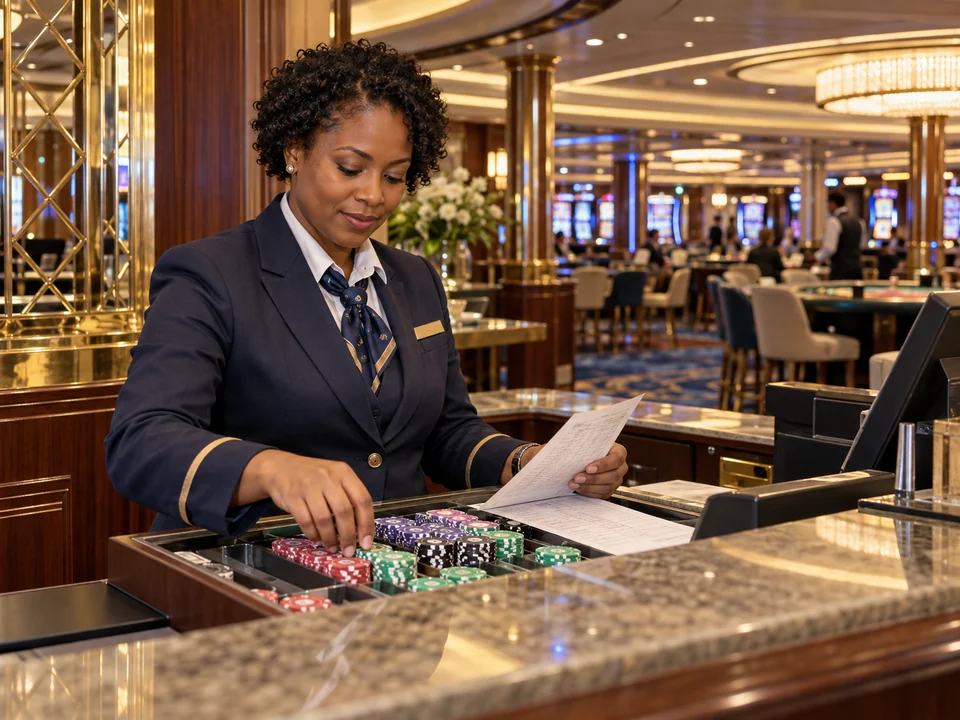
Cashier and table roles may require checks at the start or end of a shift, transaction records and prompt reporting of a mismatch. Learn the employer’s process before handling cash or chips. If a figure does not reconcile, pause and report it through the designated channel instead of making an unauthorised adjustment.
Briefing and handover
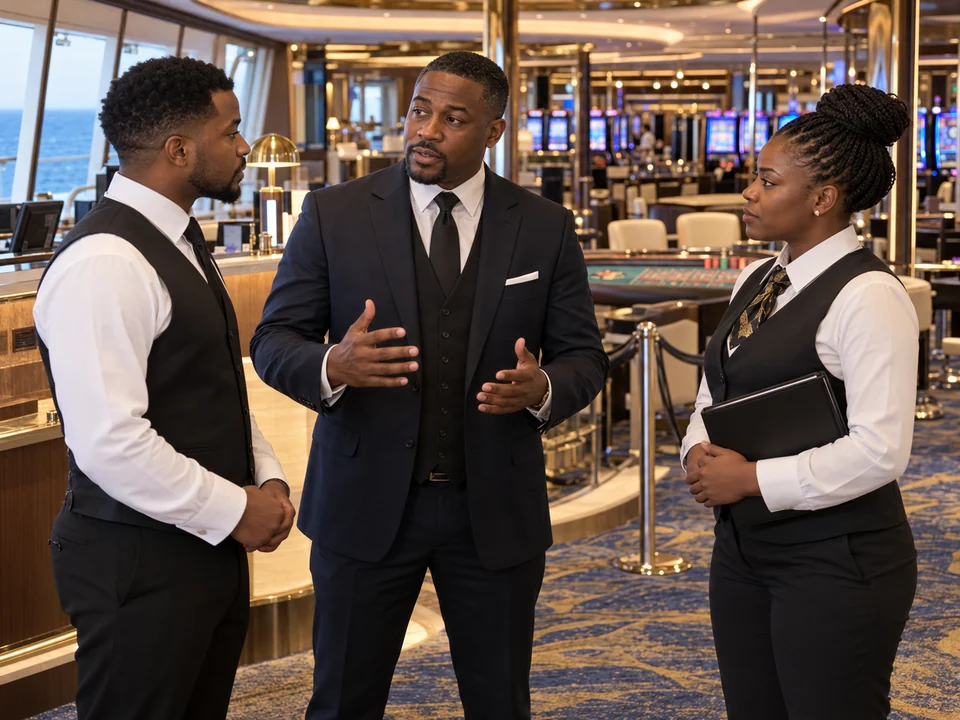
Briefings can clarify station assignments, service priorities and operational updates. A useful handover records what happened, what remains unresolved and who has been informed. Keep it concise, factual and limited to the information colleagues need for the next shift.

Close-out and escalation
Follow the employer’s closing steps for your position, secure equipment and complete required records. Report a guest concern, technical fault or procedural issue promptly to the named supervisor. Only carry out tasks that fall within your training and access permissions.
The details vary by operator. These examples describe sound workplace habits, not a substitute for the ship’s approved gaming, cash-control or security procedures.
Moving from shore to ship
Some applicants have worked in land-based casinos; others come from hotels, restaurants, retail, finance or technical service. The right entry point depends on the vacancy, so separate transferable strengths from role-specific experience. For each role, identify the day-to-day tasks, who it reports to, the expected experience and any mandatory qualification. Build a shortlist around evidence you can provide, then use the live vacancy to confirm current duties and conditions because titles vary by employer.
Before paying for a private course, confirm the exact qualification or assessment the named employer requires. Training providers and course titles do not guarantee a job or replace a vacancy’s stated selection criteria.
A typical operating rhythm
Exact tasks differ by role and employer. These examples describe common work habits, not a universal shipboard procedure. Shipboard work includes routines between port calls: safety drills, handovers, shared spaces and role-specific shifts. Confirm the applicable rest arrangements, cabin allocation and personal-item rules with the employer, then follow the vessel’s induction and safety instructions.
Attend the briefing, confirm your station and any updates, inspect assigned equipment and follow the opening checks for your position. Do not use equipment or systems outside your authorisation.
Explain the service you provide in plain language, stay attentive to guests and keep game, cash or technical tasks within your training. Ask a supervisor when a request falls outside your authority.
Use the required checks for transactions and equipment issues. If a guest disputes a result, a record does not balance or equipment behaves unusually, keep to procedure and escalate promptly rather than improvising.
Complete the records assigned to your role, secure equipment or materials as instructed and hand over unresolved issues with the time, action taken and person notified.
Prepare for a role match
Make your application easy to assess by connecting your real experience to the work described in the advert. Be precise about games, systems, cash duties and service responsibilities. Prepare a role-specific application file with a concise CV, contactable references and clear copies of relevant qualifications when requested. Check spelling, contact details, dates and certificate expiry, then follow the employer’s file format and keep a record of the submission date and response route.
Check before you commit
Some cruise casinos are operated by a specialist gaming partner. Confirm the hiring entity and read the written offer and contract carefully before making travel or payment arrangements. Separate guaranteed pay from tips, service charges or commission, and check how each is calculated and shared. Confirm travel responsibility, accommodation, meals, insurance, deductions and cancellation terms in the contract or an official written explanation before accepting.
Royal Caribbean Group publishes shipboard casino vacancies and hiring-partner guidance. Use the official employer’s current source to verify openings. Crew Life at Sea’s Ethics and Anti-Bribery Policy explains its position on recruitment fees; confirm any request directly before paying.
Common questions
Check the active job advert and employer’s instructions for requirements that apply to a specific vacancy or vessel.
Depending on the vessel and gaming operator, a team may include table-game dealers, casino hosts, cashiers, slot or gaming-equipment technicians, floor supervisors and managers. Titles and team size vary, so use the vacancy description to confirm the actual job.
No. The casino layout, games, opening hours and staffing model differ by ship, itinerary and operator. Some specialist roles may be employed by a casino concessionaire rather than directly by the cruise line.
Many dealing vacancies ask for recent, demonstrable experience with the named games. The employer may assess dealing procedures, game knowledge, accuracy and guest communication. Check the current advert; do not assume a short course alone meets its criteria.
Guest-service, hotel, events or sales experience can be relevant to host positions when it shows attentive communication, discretion and reliable follow-through. Casino-specific experience may still be preferred or required by the employer.
There is no single maritime licence that applies to every casino job. Employers may require role-specific screening, medical clearance, travel documents, familiarisation or safety steps. Complete only the items confirmed for your vacancy and joining route.
Operating hours depend on the vessel, itinerary, port schedule, local rules and the casino operator’s procedures. A vacancy or recruiter should explain the expected shift pattern and how port days affect the role.
Ask which legal entity issues the offer and contract, who manages the casino onboard and which official careers channel confirms the vacancy. Compare the job title, duties, pay structure, deductions, contract length and joining instructions in writing.
Prepare an accurate CV with dates, job titles, games or systems used, transaction or service responsibilities and examples of working to procedures. Keep identity documents private until a verified employer requests them through a suitable channel.
It can support an application when the vacancy values guest service, accurate transactions or calm communication. Describe the tasks you personally handled, and be clear about casino games or systems you have not used. Transferable experience does not replace a qualification or dealer assessment when the employer requires one.
Pay arrangements vary by legal employer and role. Ask for base pay, any commission or incentive formula, gratuity treatment, currency, payment dates and deductions in writing. Confirm whether targets affect earnings and how amounts are calculated during training or when the casino is closed.
Continue your research
Use the department overview to understand the work, then follow the role guide and practical application pages that match your background. Match each essential vacancy criterion to dated evidence: a specific duty, your own contribution, a result and a referee or certificate that can support it. Keep job titles and dates consistent across your CV and forms, submit through the verified channel and save the version you sent.