Crew Life at Sea
Menu
Black cruise ship entertainment host backstage in a softly lit theatre.

Onboard roles · guest experiences

Cruise shipentertainment careers

Explore the people who host activities, support youth programmes, bring live productions to the stage and help guests feel part of life at sea.

Different teams · different ways to entertain

A varied department

Entertainment is a collection of different careers.

A cruise ship entertainment department can include guest activities, recreation, youth programmes, event hosting, live performers and theatre production. There is no single route into all of these jobs: the skills, selection process and employer can be different for each vacancy.

Start with the work you actually want to do. A strong application links your real experience to the advert: a host may show confident communication and event delivery; a youth counsellor may need relevant supervised-care experience; a technician may need a show portfolio and knowledge of particular equipment; a performer may be asked to audition.

Check the employer and role carefully: some entertainment teams are engaged through a specialist company or concession partner.

Roles and day-to-day work

Find the entertainment route that fits your skills.

Use the job title and current vacancy description to understand the actual team, duties, schedule and experience criteria. These examples are common role families, not a promise that every ship employs every position. Record the tasks and responsibilities you can support with references, service records or certificates. Compare them with the vacancy’s must-haves, contract and joining requirements, and ask the recruiter about any gap rather than assuming it will be waived.

Black male cruise recreation host leading a deck game beside the ocean

01 · ACTIVITIES & RECREATION

Recreation and activities host

Hosts may lead games, trivia, sports, social events or guest activities. The exact programme depends on the ship and itinerary. Clear microphone work, inclusive facilitation, punctual set-up and confidence engaging mixed-age groups can be useful evidence. Ask whether the role includes outdoor duties, evening events, sales targets or other assignments.

Black female youth counsellor guiding a children’s art activity in a shipboard club

02 · YOUTH PROGRAMMES

Youth staff and counsellors

Youth-team vacancies can involve welcoming families, running age-appropriate activities, keeping attendance records, following supervision and safeguarding procedures, and communicating with parents. Employers may set minimum age, experience, screening, training and qualification criteria. Verify the exact requirements for the country, employer and position before paying for training.

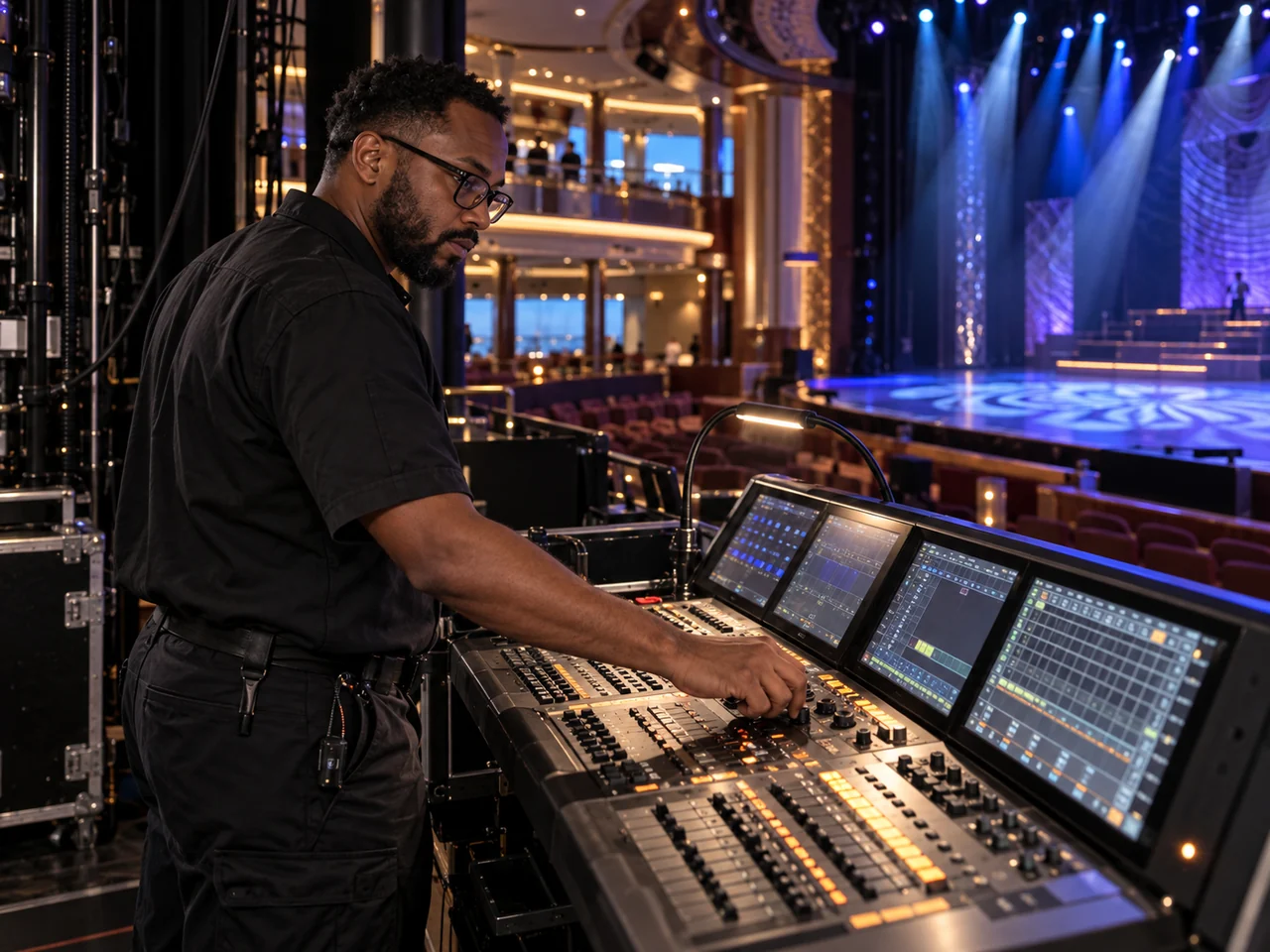
Black male stage technician operating a lighting console in a cruise ship theatre

03 · SHOW PRODUCTION

Stage and technical crew

Production teams support rehearsals and live shows through lighting, sound, video, props, wardrobe, staging or technical operations. Relevant theatre, event or venue experience matters; roles can require a portfolio, technical interview, practical assessment or specialist skills. Confirm the job description and employing company because production may be recruited separately from hotel teams.

Black female cruise host introducing a live music performance in an onboard lounge

04 · HOSTING & LIVE PERFORMANCE

Cruise host and performers

Hosts, musicians, singers, dancers, comedians and other performers have different selection routes. A host may present events and communicate schedules; an artist may be engaged through an audition or entertainment contractor. Prepare a concise performance reel or showreel only when requested, and check rehearsal, repertoire, contract and travel terms in writing.

Before you pay for a course or audition trip: confirm whether the employer recognises the course, what selection format is used, whether travel is reimbursed and which company will issue your contract. Ask through a verified recruitment channel.

Prepare strong evidence

Make your application specific to the role.

Entertainment hiring teams need evidence that you can deliver the work safely, professionally and consistently. Keep your CV truthful and make any showreel, portfolio or certificates relevant to the vacancy. Describe what you personally did rather than relying on broad claims. Name the setting, tools or systems, service or safety procedures and the result, then check that dates and job titles match references, certificates and application forms.

For hosting, activities and youth teams

  • Describe real events, activities, groups or programmes you have helped deliver.
  • Show how you brief participants, adapt communication and include different guests.
  • For youth roles, state relevant supervised-care experience and current training accurately.
  • Prepare examples of following safeguarding rules, recording information and escalating concerns.
  • Be ready to discuss schedules, teamwork and calm responses when an activity changes.

For performers and production crew

  • List your discipline, repertoire, production role, equipment or software accurately.
  • Prepare a concise reel, portfolio or show history only in the format requested.
  • For auditions, confirm material, timing, accompaniment, attire, rights and travel details.
  • For technical positions, explain your role in load-in, cueing, troubleshooting or safe operation.
  • Ask whether the offer is from the cruise line or an entertainment contractor.

A realistic career path

Build experience before the next opening.

Some employers have lead, supervisor or director positions. Job titles and reporting lines differ, and promotion depends on openings and the employer’s selection process. These stages are a planning guide, not a guaranteed ladder. Match each essential vacancy criterion to dated evidence: a specific duty, your own contribution, a result and a referee or certificate that can support it. Keep job titles and dates consistent across your CV and forms, submit through the verified channel and save the version you sent.

01

Choose your specialty

Decide whether your strengths fit guest activities, youth programmes, hosting, live performance or technical production. Describe the work setting, your shift or station, the equipment or system used, the service or safety standard followed and your own contribution. Give one specific example and separate your actions from the team’s result.

02

Gather relevant evidence

Build real experience ashore and prepare role-specific examples, references, certificates or portfolio material. Describe the work setting, your shift or station, the equipment or system used, the service or safety standard followed and your own contribution. Give one specific example and separate your actions from the team’s result.

03

Verify the vacancy

Check the employer, recruiter, duties, audition or interview process and written contract before committing money. Describe the work setting, your shift or station, the equipment or system used, the service or safety standard followed and your own contribution. Give one specific example and separate your actions from the team’s result.

04

Develop on the job

Learn ship procedures, request feedback and apply to future senior vacancies only when eligible and available. Check the next role’s published duties, sea-service or experience threshold, certificates and appraisal criteria with the employer. Keep evidence from each contract so a promotion request can be checked against those requirements.

Before accepting an offer

Get the role and terms in writing.

Contract conditions vary by employer and position. An entertainment offer may differ from hotel-team employment, especially where a specialist contractor is involved. Compare the vacancy with the final agreement: employer, position, joining date, contract length and pay terms should make sense together. Resolve differences with the authorised recruiter before you resign, pay for travel or send original documents.

Confirm the work

  • Exact title, department, venue and legal employer.
  • Audition, rehearsal, embarkation and contract dates.
  • Daily duties, evening or outdoor work and any additional assignments.
  • Pay basis, currency, deductions and payment schedule.
  • Who provides costumes, instruments, technical equipment and maintenance.

Confirm joining arrangements

  • Work and rest arrangements, accommodation and meals.
  • Travel, visas, medical checks, training and any joining costs.
  • Cancellation, early termination, insurance and repatriation terms.
  • How to contact the employer using details on its official careers site.
  • Whether any fee is lawful and authorised; get an itemised explanation first.

For an employer-specific example, consult Royal Caribbean Group’s ship careers page. Compare openings through Available Cruise Ship PositionsPhotography Career PathYouth & Kids Club Career Path and review Crew Contracts Explained before signing.

Common questions

Cruise ship entertainment FAQs.

Use the vacancy and the authorised employer’s written guidance as the final reference for a specific job.

What entertainment jobs are available on cruise ships?

Roles can include cruise activities hosts, recreation staff, youth counsellors, cruise directors, singers, dancers, musicians, production technicians and other performers. Titles and responsibilities vary by ship and employer, and some specialist teams may be hired by a separate contractor.

Do I need experience before applying for cruise entertainment work?

Requirements depend on the vacancy. Guest-facing roles may value hosting, recreation, childcare or event experience; performer and technical roles often require relevant professional evidence. Read the live advert and show how your own experience matches its stated criteria.

Do cruise ship performers need to audition?

Some performer vacancies use auditions or request a performance reel, while other jobs use interviews, practical assessments or portfolio reviews. Follow the specific employer’s instructions and confirm the format, repertoire, rights and any costs before preparing or travelling.

What qualifications are needed for cruise ship youth staff?

There is no single qualification that applies to every employer. A vacancy may specify childcare experience, minimum age, safeguarding training, background screening or other criteria. Confirm the exact rules directly with the hiring company and relevant authorities.

What does an entertainment host do on a cruise ship?

The role may involve presenting activities, hosting games or events, making announcements, engaging guests and coordinating with other departments. Schedules, evening work, outdoor activities and additional duties depend on the position and itinerary.

Are entertainment jobs hired directly by cruise lines?

Some positions are advertised by cruise operators and others may be recruited by an authorised agency, production partner or concessionaire. Verify who the legal employer is, what entity signs the contract and how to contact the company through its official careers channel.

What should I check in an entertainment job offer?

Confirm employer identity, role and venue, pay structure, contract and rehearsal dates, work and rest arrangements, travel, accommodation, deductions, equipment or costume responsibilities, medical and visa steps, and repatriation terms. Get the complete offer in writing and question anything unclear.

Can I move from activity staff to cruise director?

Some employers have senior activity and entertainment positions, but there is no universal promotion ladder or timeline. Progress depends on the employer’s structure, performance, experience, available vacancies and selection criteria; a future role is never guaranteed.


Continue planning

Related crew career guides.

Compare another department and prepare each part of your application before you contact a recruiter. Use the live listing to decide what to emphasise, while keeping every claim accurate. For each required skill, note where and when you used it, what you personally handled and which evidence supports it; ask the recruiter before treating related experience as an equivalent qualification.