Report and prepare
Review your roster, uniform and department updates. Safety briefings, handovers and equipment checks may come before guest-facing work begins.


A realistic guide to living and working at sea
Cruise ship crew share a workplace and a home while the vessel keeps moving. Get a practical picture of schedules, cabins, meals, port time and the questions worth asking before you join.
Daily routines depend on role, ship and contract
A clear picture before you join
Life at sea can be rewarding, social and demanding. Your working day is shaped by your department, guest schedule, port calls and safety procedures. Housekeeping, dining, deck, engine, entertainment and guest-services teams each follow different routines, so another crew member’s schedule may not match your own.
Outside work, the ship becomes your living environment: cabins, crew dining areas, laundry facilities and shared recreation spaces. The exact facilities and rules vary between cruise lines and vessels. Read your offer and joining documents carefully and ask the recruiter to explain any condition that is unclear.
A day is built around the role
There is no universal shift pattern. These common parts of the day show what can shape a crew member’s routine; your actual hours and rest must be confirmed with the employer for your job. Shipboard work includes routines between port calls: safety drills, handovers, shared spaces and role-specific shifts. Confirm the applicable rest arrangements, cabin allocation and personal-item rules with the employer, then follow the vessel’s induction and safety instructions.
Review your roster, uniform and department updates. Safety briefings, handovers and equipment checks may come before guest-facing work begins.
Guest activity, meal times, entertainment and vessel operations set the pace. Busy periods can call for teamwork, accurate communication and calm service.
Pass on unfinished tasks, guest requests, stock issues or safety concerns through the department’s process. Good records help the next shift continue smoothly.
Use breaks and rest periods to recover, eat and handle personal tasks. Follow the ship’s schedule and ask how working and rest hours are recorded.
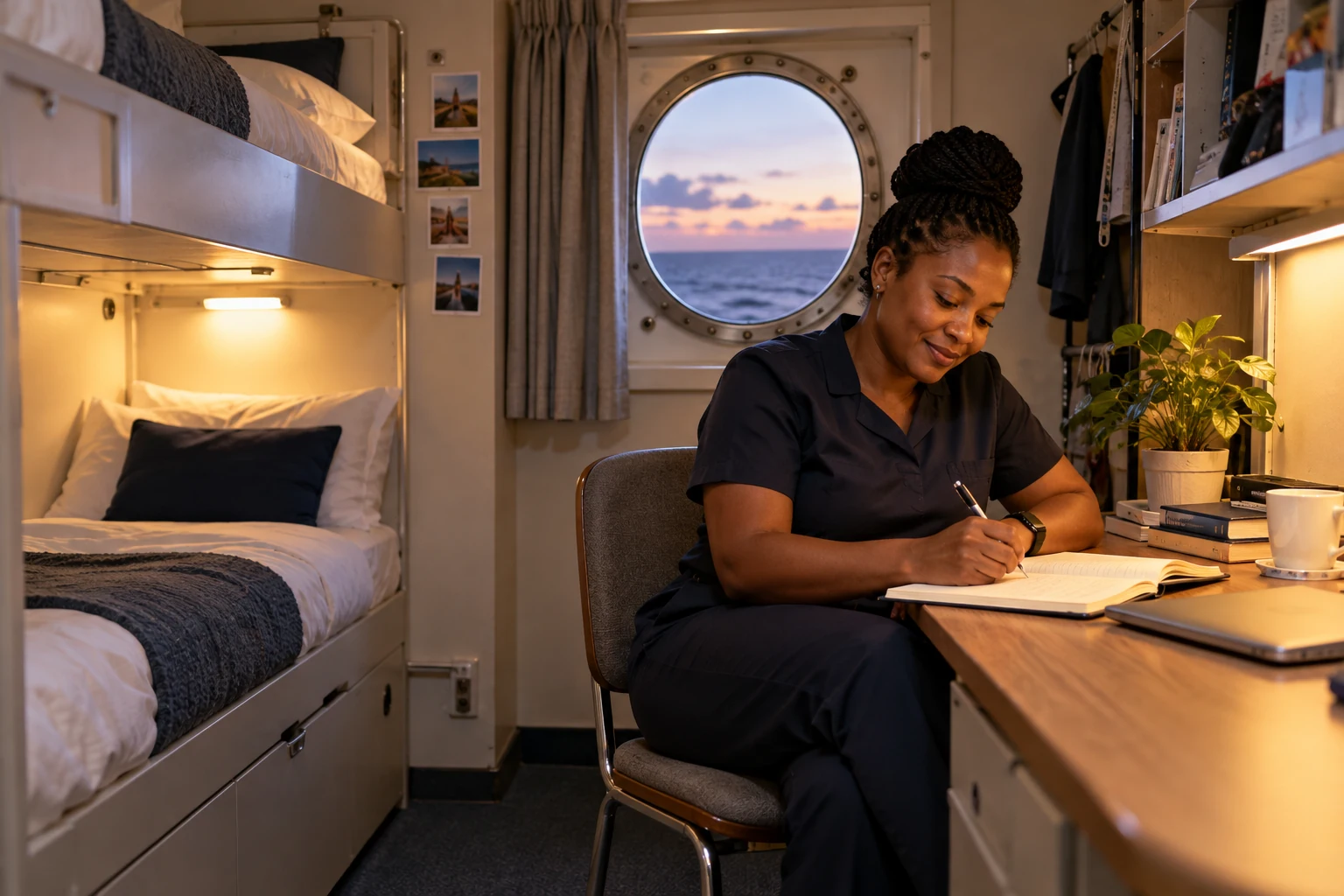
Your onboard living space
Accommodation is close to the workplace, and space is often more limited than at home. Some roles may share a cabin; arrangements differ between employers and can vary by vessel. Ask what is included, how storage is arranged and what happens if a cabin assignment changes.

Meals, connection and downtime
Crew dining, laundry, internet access and recreation are managed by each ship and company. Check the current policy at joining: menus and dining hours, laundry access, crew-space rules, Wi-Fi pricing or limits, and any restrictions on personal devices can differ.
Plan a repeatable routine around the roster. Eat when your shift allows, keep drinking water available, prepare uniform and essentials ahead of time, and use time off for sleep as well as social activities. Staying connected with home may take planning because connectivity at sea can be limited or interrupted.
Ships may organise social events, sports or other crew activities, but attendance is optional and depends on your schedule. The company’s Life at Sea overview gives one employer’s example; arrangements differ across the industry.
Port time and personal wellbeing
A port call does not automatically mean shore leave, and personal time is affected by both operations and your roster. Build habits that work whether the ship is alongside or at sea. Airline rules and shipboard joining instructions are separate. Check baggage, medication and battery restrictions with the carrier, then confirm the ship’s uniform, luggage and transfer requirements with the employer. Save your itinerary and a verified contact number offline.
Assigned duties, port procedures, immigration or security checks, operational changes and the ship’s instructions can affect whether you go ashore. Confirm permission and return times before leaving.
Follow your roster and record work and rest as required. Raise a concern through the correct onboard channel if your recorded hours do not match what you worked. Rules depend on the applicable maritime framework.
Review pay dates, deductions, onboard spending and any transfer costs. Keep a personal budget for communication, toiletries and port purchases; never assume every expense is covered.
Set expectations with family about time differences, busy shifts and possible internet outages. Keep important contacts and key information available offline.
Fatigue, homesickness and adjustment can take time. Speak with a supervisor, crew welfare contact or medical team when you need support, and learn the ship’s confidential help channels.
Learn muster instructions, restricted-area rules, emergency signals and reporting routes during familiarisation. Ask questions before carrying out a task you have not been trained to do.
Before you accept an offer
Get answers in writing where possible. The recruiter should be able to explain the terms for your position or point you to the right department contact. Use the live listing to decide what to emphasise, while keeping every claim accurate. For each required skill, note where and when you used it, what you personally handled and which evidence supports it; ask the recruiter before treating related experience as an equivalent qualification.
What shift or watch pattern applies? How are rest hours recorded? What are the regular handover and break arrangements?
Will I share a cabin? What facilities, storage and laundry access are available to my position? For “Living arrangements”, note the requirement, the document or example that proves it, who confirms it and the next date to check. Use the named employer or authority for your specific assignment.
What is the pay schedule, and which deductions, travel costs or onboard expenses should I budget for?
Which documents, medicals and training are needed before joining, and who can help with welfare or urgent concerns onboard?
Common questions
Policies and conditions vary. Confirm current details directly with the hiring company for your job and vessel.
There is no single schedule for every cruise ship job. Hours and rest periods depend on the role, watch or shift pattern, vessel operations, employment agreement and applicable maritime rules. Ask the employer about the actual roster and how work and rest are recorded.
Do not assume a regular shore-based weekend or a full 24-hour day off. Ships operate continuously, so days off and rest periods depend on the job, roster, company and applicable requirements. Confirm the arrangement for the offered role.
Cabin arrangements differ by ship, role, seniority, employer and availability. Some employees may share accommodation. Ask the recruiter what applies to your position, and whether the arrangement can change during the contract.
No. Shore leave can depend on assigned work, operational needs, port procedures, immigration or security controls and the ship’s instructions. A port call does not guarantee time ashore.
Crew dining and laundry arrangements are set by the employer and ship. Ask what is provided, where crew can eat, how laundry works and whether any costs or restrictions apply to your role.
Internet availability, speed, price and access rules vary by vessel and employer, and connectivity can be limited at sea. Confirm the current crew policy and plan important communication around possible outages.
Ask for the role’s written duties, contract length, pay and deductions, roster and rest arrangements, accommodation, meals, travel and joining instructions, medical and training requirements, and the employer’s shore-leave and communication policies. Check that the terms match your written offer.
More detail for your next step
Living onboard brings work, accommodation and shared spaces together. The details vary by ship and role, so use your supervisor’s briefing and the vessel’s rules to plan daily routines.
Practical check 01
Learn your duty roster and how changes are communicated. Use the approved process to report fatigue, illness or a scheduling concern, and avoid relying on informal messages as the final shift instruction.
Practical check 02
Agree simple routines for lights, storage, calls and cleaning with cabin mates. Keep valuables and identity documents secure, and ask the accommodation contact what to do if a repair or safety issue affects the room.
Practical check 03
Check all-aboard times and shore-leave permission before going ashore. Keep an alternate return plan and follow the ship’s announcement if the itinerary or port arrangement changes.