Crew Life at Sea
Menu
A Black cruise ship applicant speaks with a recruiter during an onboard interview.
CAREER GUIDE · PREPARE WITH CONFIDENCE

Cruise Ship Interview Tips

Prepare to explain your experience, understand the role and answer questions clearly. A thoughtful interview helps the recruiter see how your skills fit the work onboard.

Clear examples. Honest answers. Thoughtful questions.
A PRACTICAL START

Know the role. Show your real experience.

Interview formats differ between cruise lines, recruitment teams and positions. You may speak with a recruiter online, by phone or in person, and some jobs may include additional assessments. Follow the instructions in your invitation and confirm the time zone and meeting details.

Use the vacancy as your guide. Connect your skills to the listed duties with specific examples from work, training or volunteering. Be direct about what you have done, what you learned and where you are still building experience.

Preparation means being ready to have a clear conversation, not memorising a script.
BEFORE THE CALL

Build a simple interview plan.

Use these steps to focus your preparation. Details vary by employer and role, so rely on the recruiter’s current instructions for the process and required documents. Read the vacancy and choose examples that match its actual duties. Practise explaining a guest-service challenge, teamwork or safety decision with clear dates and specific actions, then prepare questions about training, schedule, contract terms and the next selection step.

Illustration representing a focused job search01

Read the job description

Highlight the main duties, essential criteria, working environment and qualifications named in the vacancy. Build one concise example around the situation, your assigned task, the action you personally took and the result. Name the procedure or system involved, keep dates accurate and use figures only when you can verify them.

Illustration representing relevant work experience02

Choose real examples

Prepare short stories that show customer care, teamwork, reliability, safety awareness or role specific skill. Build one concise example around the situation, your assigned task, the action you personally took and the result. Name the procedure or system involved, keep dates accurate and use figures only when you can verify them.

Illustration representing interview documents03

Check your details

Keep your CV, application and dates nearby. Review your qualifications and explain your work history accurately.

Illustration representing communication and teamwork04

Practise aloud

Practise concise answers. Speak naturally, listen to the full question and ask for clarification when needed. Match this section to the live vacancy: use its essential criteria, accurate employment dates and a verified application route. Keep a copy of the final CV and form so you can answer follow-up questions consistently.

Illustration representing an interview appointment05

Plan your setup

For a video call, test your connection, sound and camera, choose a quiet place and use the recruiter’s link.

Illustration representing careful verification06

Verify who contacted you

Use official recruitment channels. Verify unusual fees or requests for sensitive information before responding. Match this section to the live vacancy: use its essential criteria, accurate employment dates and a verified application route. Keep a copy of the final CV and form so you can answer follow-up questions consistently.


ANSWER WITH A CLEAR EXAMPLE

Structure your experience stories.

For experience questions, explain the situation, the task, your action and the result. Keep it brief and make your contribution clear. Prepare a role-specific application file with a concise CV, contactable references and clear copies of relevant qualifications when requested. Check spelling, contact details, dates and certificate expiry, then follow the employer’s file format and keep a record of the submission date and response route.

Illustration representing a work situation01 · Situation

Set the scene

Give enough context for the recruiter to understand the workplace and challenge. Build one concise example around the situation, your assigned task, the action you personally took and the result. Name the procedure or system involved, keep dates accurate and use figures only when you can verify them.

Illustration representing a clear task or goal02 · Task

Explain your responsibility

Say what needed to be done and what your part was in the situation. Build one concise example around the situation, your assigned task, the action you personally took and the result. Name the procedure or system involved, keep dates accurate and use figures only when you can verify them.

Illustration representing action and collaboration03 · Action

Describe what you did

Focus on your choices, communication and the practical steps you took. Match this section to the live vacancy: use its essential criteria, accurate employment dates and a verified application route. Keep a copy of the final CV and form so you can answer follow-up questions consistently.

Illustration representing an outcome and reflection04 · Result

Share the outcome

Describe what happened, what you learned or what you would improve. Build one concise example around the situation, your assigned task, the action you personally took and the result. Name the procedure or system involved, keep dates accurate and use figures only when you can verify them.

QUESTIONS TO PRACTISE

Prepare for topics that fit the job.

Recruiters may ask about your motivation, experience and readiness. These examples can help you practise; they are not a guaranteed interview script. Use examples you can verify, not memorised claims. Explain the context, the action you took, the outcome and any feedback; if you have not done the exact task, describe the closest relevant experience and how you would learn the ship’s procedure.

Illustration representing guest service

Guest service

“Tell me about a time you helped someone who was unhappy or needed extra support.” Build one concise example around the situation, your assigned task, the action you personally took and the result. Name the procedure or system involved, keep dates accurate and use figures only when you can verify them.

Illustration representing teamwork

Working with a team

“How do you help a team stay organised during a busy shift?” Match this section to the live vacancy: use its essential criteria, accurate employment dates and a verified application route. Keep a copy of the final CV and form so you can answer follow-up questions consistently.

Illustration representing safe work practices

Safety and judgement

“What would you do if you noticed a safety concern or did not understand an instruction?” Match this section to the live vacancy: use its essential criteria, accurate employment dates and a verified application route. Keep a copy of the final CV and form so you can answer follow-up questions consistently.

Illustration representing reliability and consistency

Reliability

“How do you manage punctuality, changing priorities and consistent standards?” Match this section to the live vacancy: use its essential criteria, accurate employment dates and a verified application route. Keep a copy of the final CV and form so you can answer follow-up questions consistently.

Illustration representing transferable work skills

Transferable experience

“Which parts of your past work prepare you for this position?” Build one concise example around the situation, your assigned task, the action you personally took and the result. Name the procedure or system involved, keep dates accurate and use figures only when you can verify them.

Illustration representing motivation and career direction

Motivation

“What interests you about this role, and what would you like to contribute?” Build one concise example around the situation, your assigned task, the action you personally took and the result. Name the procedure or system involved, keep dates accurate and use figures only when you can verify them.

ON THE DAY

Small details help you feel ready.

Make it easy for the recruiter to focus on your answers and understand your experience. Use the live listing to decide what to emphasise, while keeping every claim accurate. For each required skill, note where and when you used it, what you personally handled and which evidence supports it; ask the recruiter before treating related experience as an equivalent qualification.

Illustration representing arriving on time

Be ready a little early

Allow time for login or travel and check the invitation for the correct time and location.

Illustration representing professional presentation

Present yourself professionally

Choose neat, appropriate clothing and a quiet setting suited to the interview format. Build one concise example around the situation, your assigned task, the action you personally took and the result. Name the procedure or system involved, keep dates accurate and use figures only when you can verify them.

Illustration representing an attentive interview conversation

Listen and answer directly

Pause if you need a moment, answer the question asked and be honest about your experience.

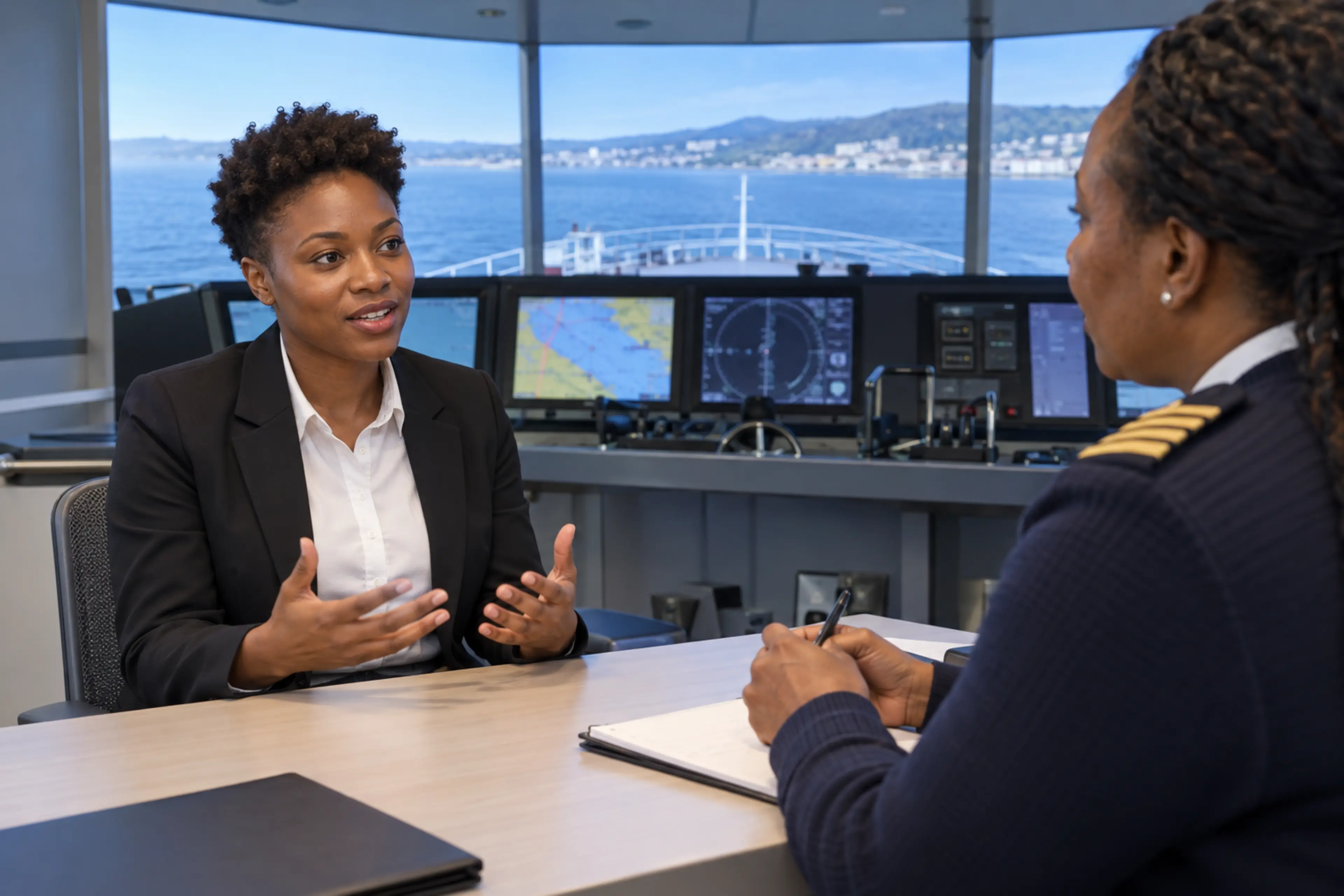
A Black cruise-ship job candidate practises interview answers with a coach in a ship bridge simulator.
Listen carefully and answer the question in front of you.
YOUR QUESTIONS MATTER TOO

Use the conversation to understand the role.

Prepare two or three practical questions. You might ask about the next step in selection, the responsibilities of the position or which documents the recruiter needs. Choose questions that the vacancy and invitation have not already answered.

After the interview, follow the instructions you received. If you send a thank-you note, keep it brief and use the official contact route.

REVIEW JOB REQUIREMENTS

A practical interview preparation plan

Prepare examples that show how you work

A strong interview answer connects a real work example to the duties in the vacancy. These steps help you prepare clearly without memorising scripted responses. Read the vacancy and choose examples that match its actual duties. Practise explaining a guest-service challenge, teamwork or safety decision with clear dates and specific actions, then prepare questions about training, schedule, contract terms and the next selection step.

01

Build a small bank of examples

Choose a few honest situations that show service, teamwork, reliability, problem solving and learning from feedback. For each one, be ready to explain the context, what you personally did and what happened next.

Keep the story focused on your actions. Avoid claiming that you handled a responsibility that belonged to a manager or colleague; explain your own contribution and what you learned.

02

Practise role-specific scenarios

Review the job description and prepare for questions about common tasks, busy periods, guest concerns, safety instructions or teamwork. A technical applicant can describe how they follow a procedure and report an issue; a service applicant can explain how they remain calm and respectful.

If you do not know an answer, say what you would check or who you would ask rather than guessing. Employers may value clear communication and good judgement as much as a polished answer.

03

Set up the conversation professionally

For an online interview, test your connection, camera, microphone and quiet location ahead of time. Keep your CV and vacancy nearby, join using the link provided and let the recruiter know promptly if a genuine technical issue occurs.

Prepare one or two relevant questions about duties, team structure, schedule or the next recruitment step. Do not ask for promises that cannot be confirmed; use the conversation to understand the role and what happens next.

A Black cruise job candidate practises interview answers with an instructor in a maritime simulation classroom

Practical preparation

Answer with a specific work example

For each common question, prepare one brief example that explains the situation, what you did and the result. Use accurate details from your own experience, and connect the example to the duties listed for the position.

Continue with related guidance →
QUICK ANSWERS

Cruise ship interview FAQs.

Follow the recruiter’s instructions if they differ from general preparation guidance.

What questions are asked in a cruise ship interview?

Questions vary by employer and role. You may be asked about experience, customer service, teamwork, safety, motivation or availability. Use the job description to choose relevant examples.

How should I answer interview questions?

Answer directly, then give a truthful example that shows what you did and what happened. Situation, task, action and result is one helpful structure.

What should I wear to a cruise ship job interview?

Choose clean, neat and professional clothing suited to the format. Follow any dress guidance from the recruiter.

Will my interview be online or in person?

The format depends on the recruitment process. Check your invitation for the link, location, time zone and any document or technology requirements.

Should I pay someone to secure an interview or job?

Verify requests through the employer’s official recruitment channels. Be cautious of anyone who guarantees employment in exchange for payment or requests sensitive information through an unverified route.

Related application guide

Already worked at sea?

Use the experienced-crew guide to organise previous contracts, update your application evidence and check the correct rehire route. Read the written offer for the named employer, role, contract dates, wage basis, currency, payment timing, variable earnings, deductions, rest arrangements and termination terms. Ask for unclear amounts or conditions in writing, and keep the final agreement and any approved changes together.

More detail for your next step

Practise answers that show how you work.

A strong answer gives a specific situation, your actions and the result. Keep examples truthful, protect private details and connect the skill to the duties in the vacancy.

Practical check 01

Prepare a service-recovery story

Describe the guest’s concern without identifying them, what you checked, the action you took and when you asked a supervisor for help. Explain what changed after your response and what you would repeat next time.

Practical check 02

Prepare a teamwork story

Choose an example involving a busy shift, handover or disagreement. Be clear about your own responsibility, how you communicated and how the team kept work safe and on schedule.

Practical check 03

Prepare a learning story

Talk about feedback or a mistake you handled responsibly. Explain what you changed afterward and how you check the standard now. Avoid blaming a colleague or claiming an outcome you cannot support.