1. Speak to the airline
Use the airline app, service desk or transfer desk to confirm the status of the booking and ask what rebooking or baggage options apply.


Travel support for your ship joining
A delay, missed connection or missing bag can be stressful when you are travelling to join a ship. Use this calm, practical guide to contact the airline and your employer, keep useful records and follow the approved plan.
Keep your joining contact details saved offline
First, protect the joining plan
Your travel route may combine an employer-booked ticket, more than one airline, port transfers and entry or transit checks. If something changes, contact the airline that can act on the booking and the employer or recruiter coordinating your joining.
Keep your passport, joining letter, current itinerary and emergency contacts accessible. Save screenshots or written updates as they arrive. Share only the travel details needed to coordinate help, and use the contact channel provided in your official joining instructions.
When your itinerary changes
Act quickly, but keep the information clear. The person coordinating your travel needs your location, flight number and the latest confirmed arrival estimate. Airline rules and shipboard joining instructions are separate. Check baggage, medication and battery restrictions with the carrier, then confirm the ship’s uniform, luggage and transfer requirements with the employer. Save your itinerary and a verified contact number offline.
Use the airline app, service desk or transfer desk to confirm the status of the booking and ask what rebooking or baggage options apply.
Call or message the recruiter, employer travel desk or port contact listed in your written instructions. Do not rely on an old number from an informal conversation.
Share your name, flight number, airport, booking reference if requested, current location, what changed and the next confirmed update or arrival time.
Save boarding passes, baggage tags, airline messages, reports and receipts. Ask for approval before spending where the responsible team has not given instructions.

Delays and missed connections
If a flight is delayed or cancelled, ask the airline whether the connection is protected on the same reservation and what onward options are available. Connections booked separately can have different terms, so show the agent both confirmations and ask how each carrier will handle the change.
Tell the joining team as soon as the delay could affect your arrival or transfer. Do not wait until the new flight lands. Ask for a written itinerary update and the name or reference of the support case. If the airline changes the route, confirm whether you need to collect and recheck baggage or meet a new transfer.
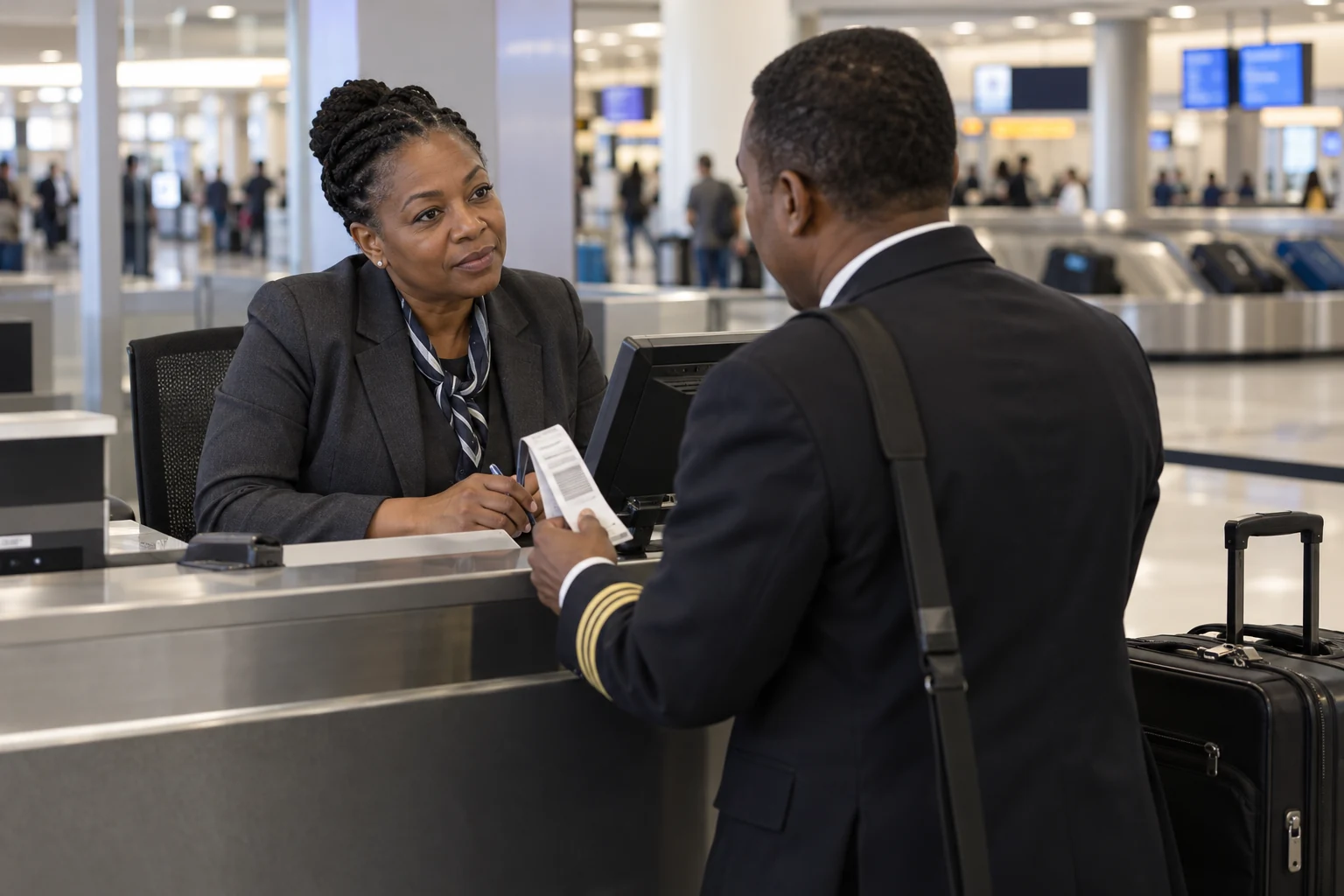
Lost or delayed checked luggage
If your bag is missing at the destination, go to the airline’s baggage service desk before you leave the reclaim area. Provide the bag tag and a clear description, and ask for the written report reference, next update method and delivery procedure. IATA recommends filing a missing-bag report at baggage reclaim before leaving the airport.
Photograph your bag and tag if you still have them, save the report and update your joining contact. Ask before buying replacement items: reimbursement and emergency support depend on the airline’s policy, employer arrangements and the circumstances. Keep itemised receipts and do not assume costs will be repaid.
Document checks and airport transfers
Airline staff may need to verify that your documents match the ticket, destination and transit route. Ask what needs clarification, then bring in the employer contact who arranged the joining travel. Check that your name, passport number, dates and employer details match across the application and supporting records. Keep a readable copy of each item submitted, note the reference number and delivery method, and ask the issuing authority how to correct any mismatch before it delays processing.
Show the travel documents requested and contact your recruiter or designated travel support contact. Do not guess at an immigration answer; ask the airline what specific document or route concern needs resolving.
Recheck the written meeting instructions, terminal and arrival time. Call the listed driver or port contact, wait in a public area and do not accept a ride until the provider and arrangement are verified.
Ask the airline for the status of the ticket, the reason and any available next steps in writing. Tell the joining team immediately, and keep the written information and case number for the next decision.
Contact the employer, recruiter or port agent immediately, even while the airline is still arranging a flight. Share your current airport, expected arrival and any new booking. Ask where to go and who will coordinate the next transfer.
Ships keep operating schedules and may not be able to wait for an individual traveller. Do not independently travel to a different port or buy a replacement route unless the responsible team authorizes it. Follow the latest written plan and keep receipts for any approved costs.
Prepare before travel day
A little preparation makes it easier to get help quickly, especially when you are tired or connecting through an unfamiliar airport. Use the employer’s latest written joining plan to confirm port, date, approved route, transfers, baggage limits and emergency contacts. Keep key documents and contacts accessible, allow a sensible delay buffer and contact the recruiter before changing a booking or buying non-refundable travel.
Common questions
Airline procedures and passenger rights depend on the ticket, route, carrier and jurisdiction. Confirm the current details with the airline and travel contact coordinating your joining.
Check the airline’s latest status and contact the employer or recruiter using the number in your joining instructions. Send your flight number, current location, revised arrival estimate and booking reference. Follow the airline’s rebooking process and the employer’s travel direction; do not make an unapproved route change.
Go to the airline’s transfer or service desk and ask what options apply to your ticket. If both flights are on one booking, ask the airline to arrange the onward journey under its conditions. Separate bookings may have different responsibilities. Contact the crew travel contact promptly and keep all updated itinerary details.
Stay calm and answer accurately. Present the documents requested and contact your recruiter or designated travel support contact while you are still with airline staff. Do not guess about entry or transit rules or alter a document. Ask the airline what specific issue needs clarification.
Report it at the airline’s baggage desk in the reclaim area before leaving the airport. Provide the bag tag, describe the case and request a written reference number or missing-bag report. Photograph the report, tell the employer or recruiter, and keep receipts for essentials while you wait for instructions.
First speak to the airline and the employer’s travel contact. Who can authorize a replacement ticket, hotel, ground transport or extra spending depends on the booking and contract. Do not assume a cost will be reimbursed; keep receipts and get approval in writing where possible.
Use the check-in and gate deadlines published by your airline and airport for that flight, then allow extra time for document checks, security, queues and transfers. There is no single arrival time that suits every airport, route or carrier.
Check the meeting point and contact details on your joining itinerary. Wait in a safe public area and call the designated travel or port contact. Do not accept an unverified ride or pay someone claiming to be the driver without confirming their identity and arrangement.
Contact the employer, recruiter or port agent immediately using the emergency number in your instructions. Explain your location and travel status, then follow the written plan. Do not assume the vessel can wait or that you should travel to a different port without authorization.
Passenger rights depend on the departure and arrival countries, airline, ticket and cause of disruption. Ask the carrier for its written explanation and check the aviation authority rules that apply to your route. Keep receipts and records; this guide cannot determine an individual claim.