


Black cruise activities host on a ship deck at sunset with ocean behind her
Crew Life at Sea
Menu

Cruise ship department guide

Entertainment.Create memorable guest experiences

Shipboard entertainment includes hosts, recreation teams, youth programmes, performers, production and technical crew. Schedules and duties change with the ship’s programme.

Role duties and criteria vary by employer

Entertainment · work and preparation

Understand the work and show your fit.

Match your application to the role: performers may need an audition or showreel, hosts need live audience examples, and technicians need a clear equipment and safety record.

Youth-facing roles can involve safeguarding, background checks and documented procedures. Confirm each employer’s requirements; no one certificate covers every job.

Ask about the real schedule, performance expectations, equipment, safeguarding checks, pay terms and travel arrangements.

Explore the department

Where experience fits

Use these examples to identify relevant experience, then check the precise duties and criteria in the live vacancy. Compare the listed duties, experience level, language needs, schedule and required certificates with work you have actually done. Note evidence for each essential criterion and ask whether equivalent experience is accepted before spending money on training or travel.

Black male cruise recreation host leading a deck game beside the ocean

Hosts and activities

Run events or guest activities using a clear schedule and the ship’s procedures.

Show how you welcomed a group, explained an activity and adapted it when attendance, timing or guest needs changed. If you have stage or microphone experience, describe the venue and your role without claiming responsibility for production decisions you did not make.

Black youth counsellor guiding a children’s art activity in a shipboard club

Youth and programme teams

Support age-appropriate activities with safeguarding awareness and employer-required checks.

Describe age-appropriate activities, supervision and communication with parents or guardians where relevant. State safeguarding training and background checks accurately, and explain how you would refer a concern to the designated supervisor.

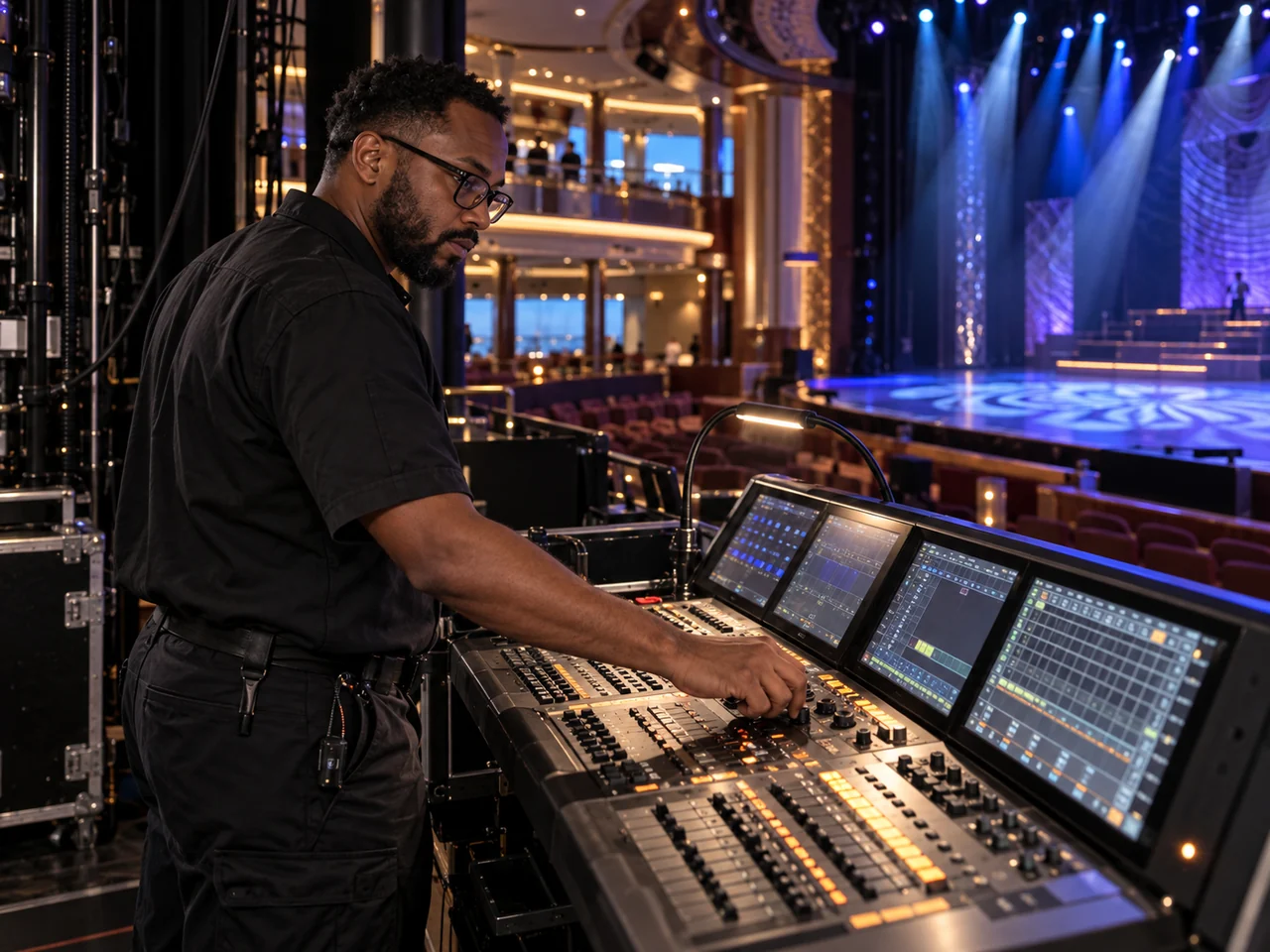
Black stage technician operating a lighting console in a cruise theatre

Production and technical

Prepare equipment, cues and safe event operations; list only systems you have actually used.

Name the sound, lighting, stage or media equipment you have used and the level of responsibility you held. Explain one safe setup, check or close-down routine and how you coordinated a problem with the show caller or technical lead.

Practical next steps

Prepare before you apply

Use the written vacancy and instructions from the relevant employer or authority to confirm details for your case. Use the live listing to decide what to emphasise, while keeping every claim accurate. For each required skill, note where and when you used it, what you personally handled and which evidence supports it; ask the recruiter before treating related experience as an equivalent qualification.

01

Select relevant samples

Choose a showreel, portfolio, activity plan or technical list suited to the vacancy. Describe the work setting, your shift or station, the equipment or system used, the service or safety standard followed and your own contribution. Give one specific example and separate your actions from the team’s result.

02

Explain live experience

Give event type, audience, your role and how you adapted when plans changed. Describe the work setting, your shift or station, the equipment or system used, the service or safety standard followed and your own contribution. Give one specific example and separate your actions from the team’s result.

03

Check safety steps

Confirm background screening, youth-protection, equipment or venue requirements. Describe the work setting, your shift or station, the equipment or system used, the service or safety standard followed and your own contribution. Give one specific example and separate your actions from the team’s result.

04

Ask about the contract

Check hours, performances, equipment, pay, days off and joining steps in writing. Get the amount, currency, pay date, deductions, overtime or commission rules, leave and travel costs in writing. Compare the final agreement with the offer and ask the employer or provider to clarify any difference before signing.

Practical preparation

Prepare a strong entertainment application

Make your experience specific to the format and audience. Prepare a role-specific application file with a concise CV, contactable references and clear copies of relevant qualifications when requested. Check spelling, contact details, dates and certificate expiry, then follow the employer’s file format and keep a record of the submission date and response route.

Bring role-matched samples

Choose a short showreel, set list, event plan or technical portfolio that matches the vacancy. Label your contribution and secure permission for anything featuring other people. Compare the actual vacancy’s duties, reporting line, shift pattern and essential criteria with your experience. Ask the recruiter about certificates, language expectations and contract terms that are not stated clearly.

Explain live delivery

Describe the audience, venue, schedule and how you adapted when timing, equipment or participation changed. Keep examples factual and concise. Describe the work setting, your shift or station, the equipment or system used, the service or safety standard followed and your own contribution. Give one specific example and separate your actions from the team’s result.

Show safety and inclusion

Explain how you follow venue procedures, communicate boundaries and escalate a concern. For roles with children, confirm the employer’s safeguarding and screening requirements. Compare the actual vacancy’s duties, reporting line, shift pattern and essential criteria with your experience. Ask the recruiter about certificates, language expectations and contract terms that are not stated clearly.

Questions to check

Before you commit

Use current written instructions. Requirements can differ by employer, role, nationality, vessel and itinerary. Plan for delays: know who to call if a flight, transfer or checked bag is disrupted, and keep receipts for any approved costs. Do not make an alternative journey or incur expenses on the assumption that the employer will reimburse them.

Do all applicants audition?

Auditions or work samples depend on the specific role and employer.

Can shore-based experience count?

Some roles consider it. Match your portfolio and examples to the vacancy criteria.

What if I work with children?

Confirm safeguarding checks, training, supervision and reporting procedures.

Will I perform every day?

Schedules vary by role, itinerary and programme. Ask about expected duties and hours.

Audition and interview preparation

Show what you can deliver on board.

Selection evidence should be easy to review and specific to the role. Use the employer’s audition brief, technical requirements or interview invitation as the source of truth, and send files only through the named channel.

01 · Audition material

Follow the brief exactly

Check the requested length, format, language, file size and deadline before recording. Choose material that represents your current ability and suits the role; do not submit copyrighted or private material unless you have permission.

Review application steps ↗

02 · Live delivery

Explain your preparation

Describe how you prepared, adapted to a live audience, coordinated with colleagues and handled a change or technical issue. Use a real example and state what you personally did, rather than describing the team’s result as your own.

Prepare for interview questions ↗

03 · Safety and schedule

Ask about the practical work

Confirm the reporting line, rehearsal or activity schedule, equipment responsibility, safeguarding checks and required certificates for the named position. Review the written contract for dates, pay and rest arrangements, and raise unclear terms before accepting.

Check role requirements ↗

More detail for your next step

Prepare the evidence the selection team can actually review.

Entertainment applicants may be assessed through an interview, audition, portfolio or technical discussion. The vacancy and invitation specify what to submit; keep each sample relevant to the named role.

Practical check 01

Build a role-matched portfolio

Select a small number of recent examples that show your work clearly. Label each item with your role, date and contribution, obtain permission before sharing private or copyrighted material, and follow the requested file format.

Practical check 02

Rehearse the practical details

Confirm audition length, equipment, dress, arrival time, file deadline and whether accompaniment or a technical test is required. Ask the organiser about accessibility or setup questions before the assessment day.

Practical check 03

Describe teamwork and safeguarding

Explain how you coordinate with stage, sound, activity or youth teams and how you report a concern. Name relevant checks and training accurately, especially where activities involve children or vulnerable guests.

Continue with a role-specific guide

Check the vacancy and prepare your next step.

Compare your experience with the current requirements before applying.

Continue ↗