 01
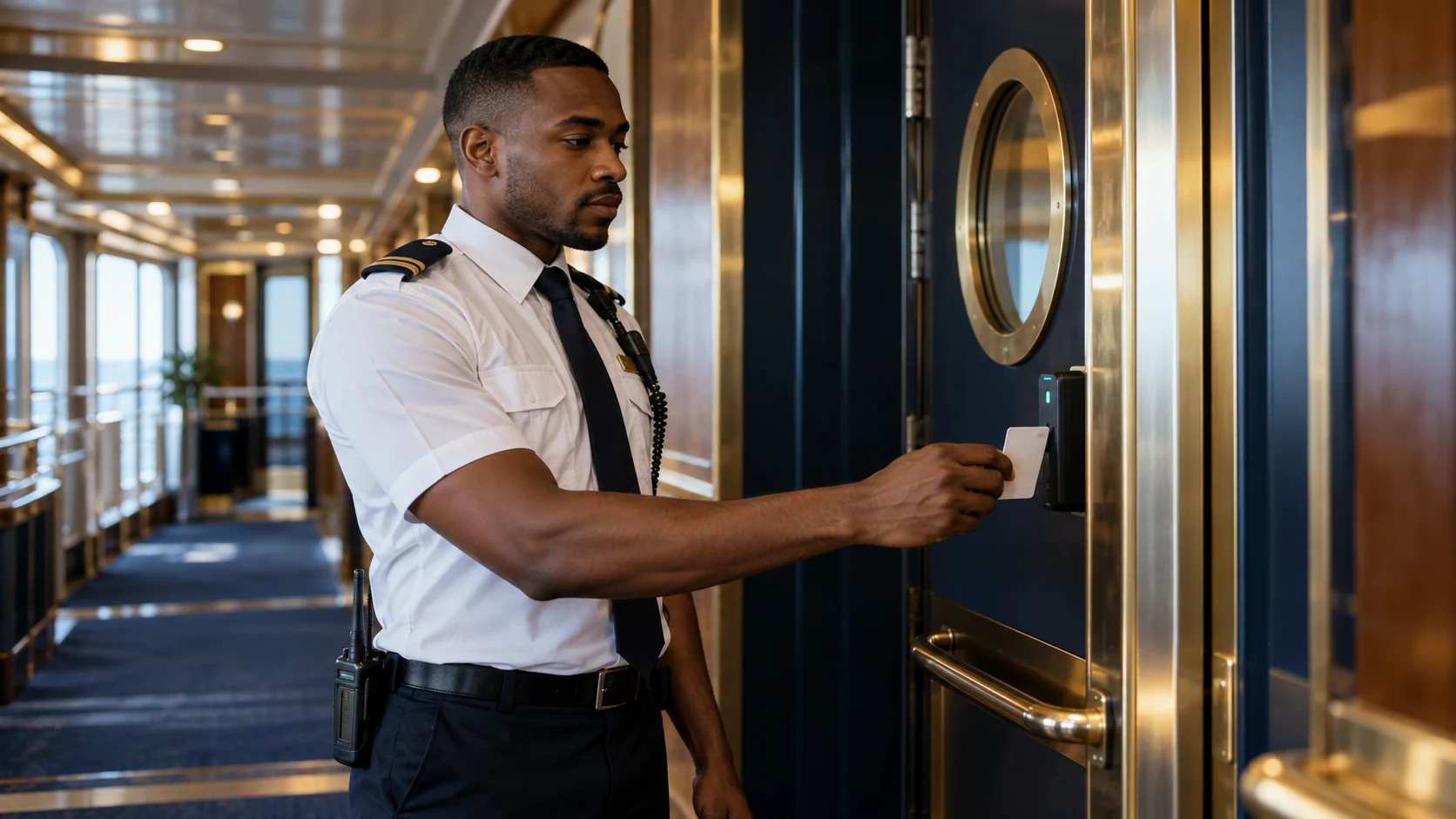
Access and screening
Depending on the post, check authorised access, follow screening procedures and report irregularities through the correct chain of command.

Understand the work, check the right training and prepare a credible application. Role titles, duties and requirements vary by employer and vessel, so always follow the exact vacancy notice.
What the work involves
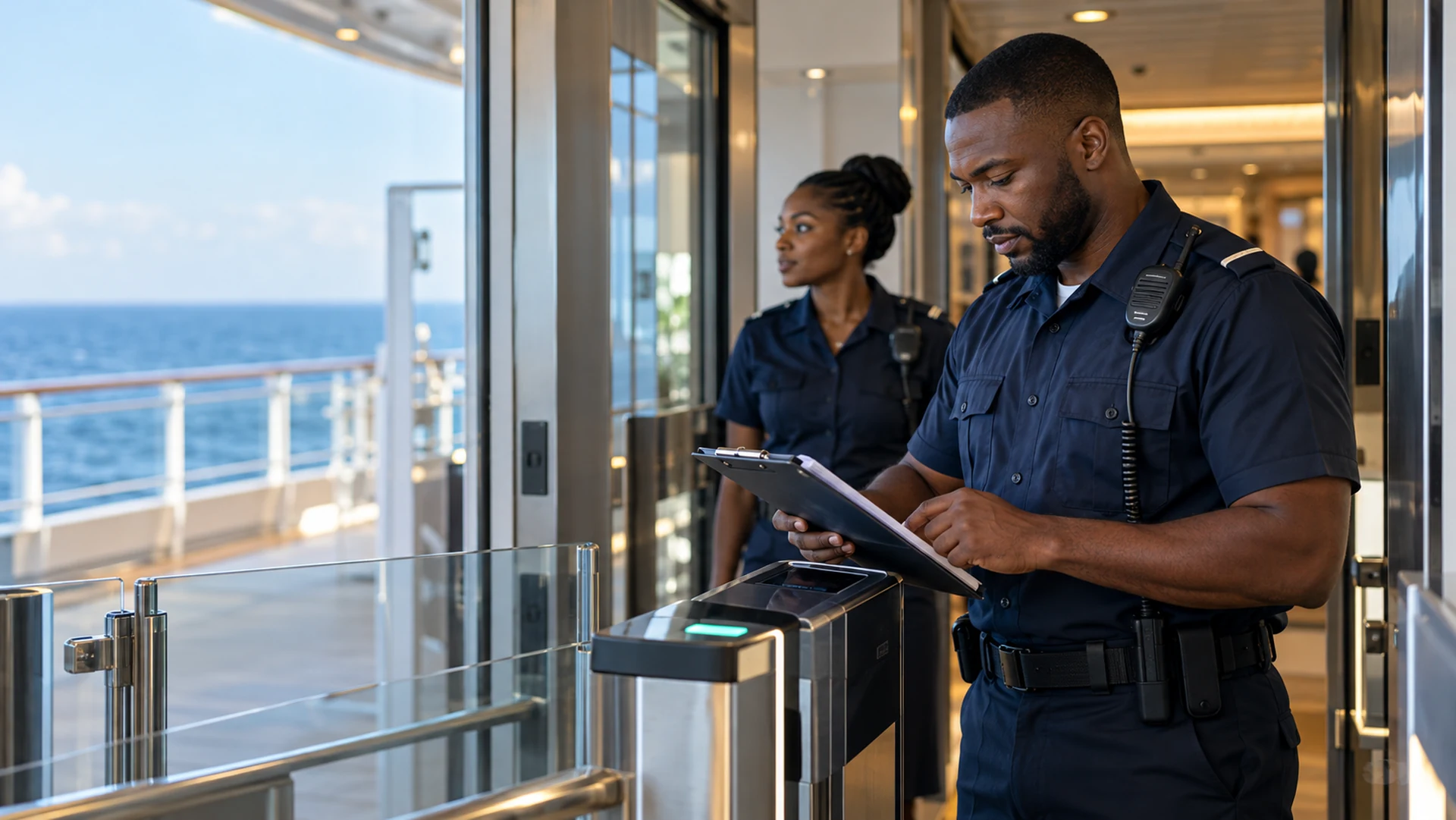
Shipboard security staff work within company procedures and the vessel’s security arrangements. The job calls for steady observation, accurate communication and respectful interaction with crew and guests. Shipboard work includes routines between port calls: safety drills, handovers, shared spaces and role-specific shifts. Confirm the applicable rest arrangements, cabin allocation and personal-item rules with the employer, then follow the vessel’s induction and safety instructions.
01Depending on the post, check authorised access, follow screening procedures and report irregularities through the correct chain of command.
 02
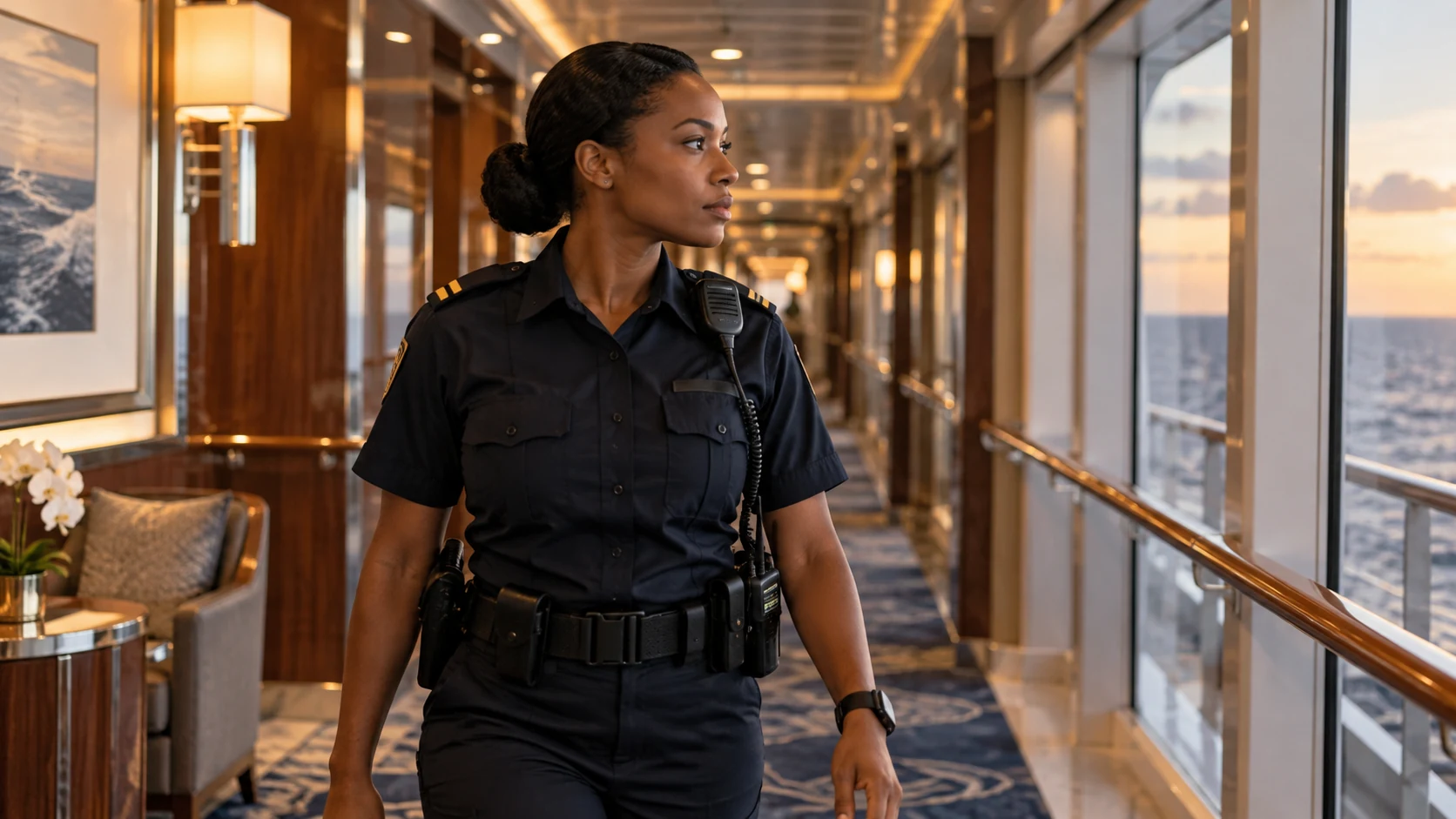
Carry out assigned patrols, remain alert to changing conditions and record relevant details clearly rather than relying on memory.
 03
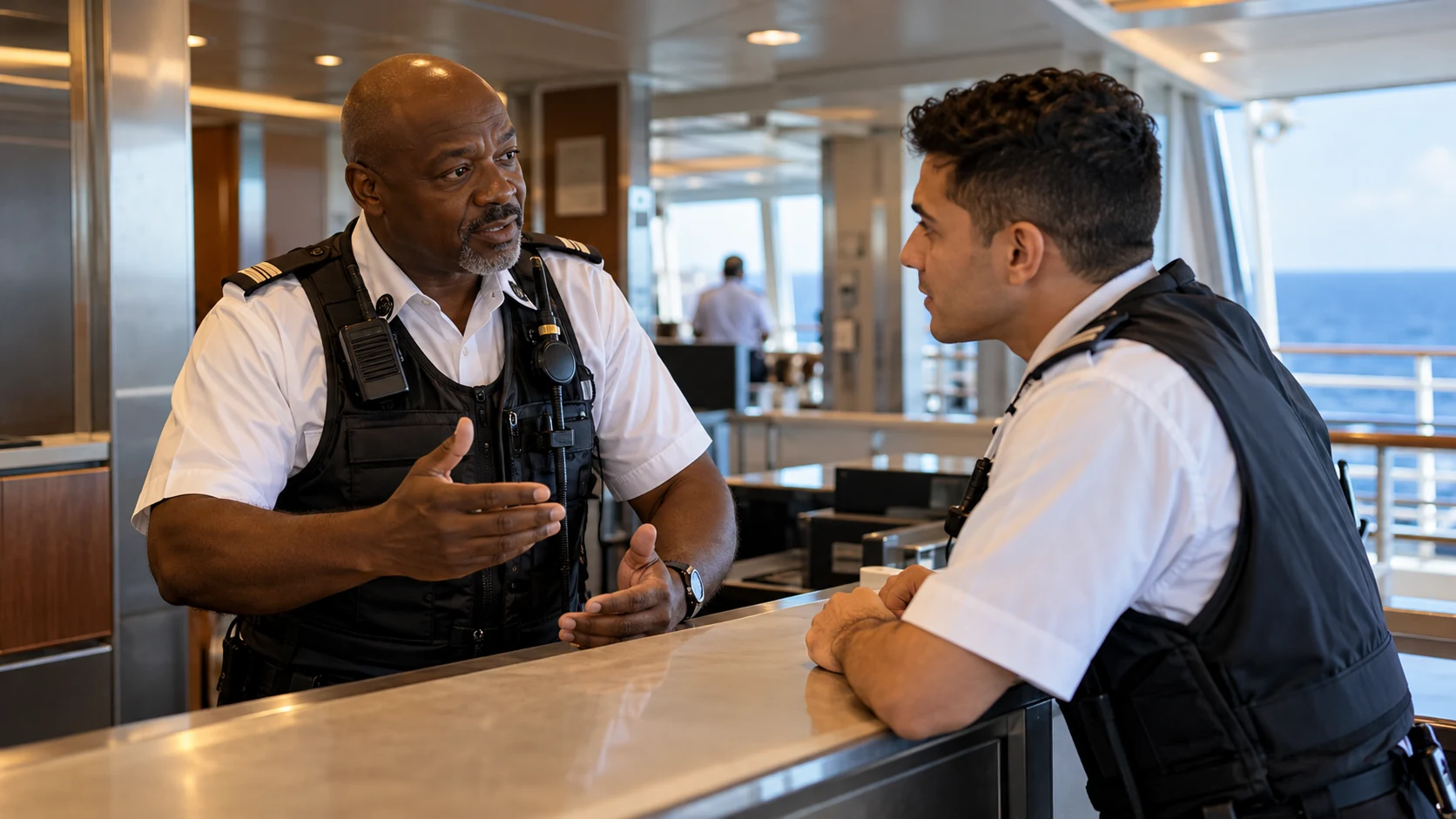
Pass information promptly, follow instructions during drills or incidents, and treat people calmly and consistently. Describe the work setting, your shift or station, the equipment or system used, the service or safety standard followed and your own contribution. Give one specific example and separate your actions from the team’s result.
Security plans, post orders and reporting lines are specific to each employer and ship.
Ships operate around the clock. Watch schedules and rest arrangements depend on the role and vessel.
Security works alongside other departments and ship leadership; it is not a standalone activity.
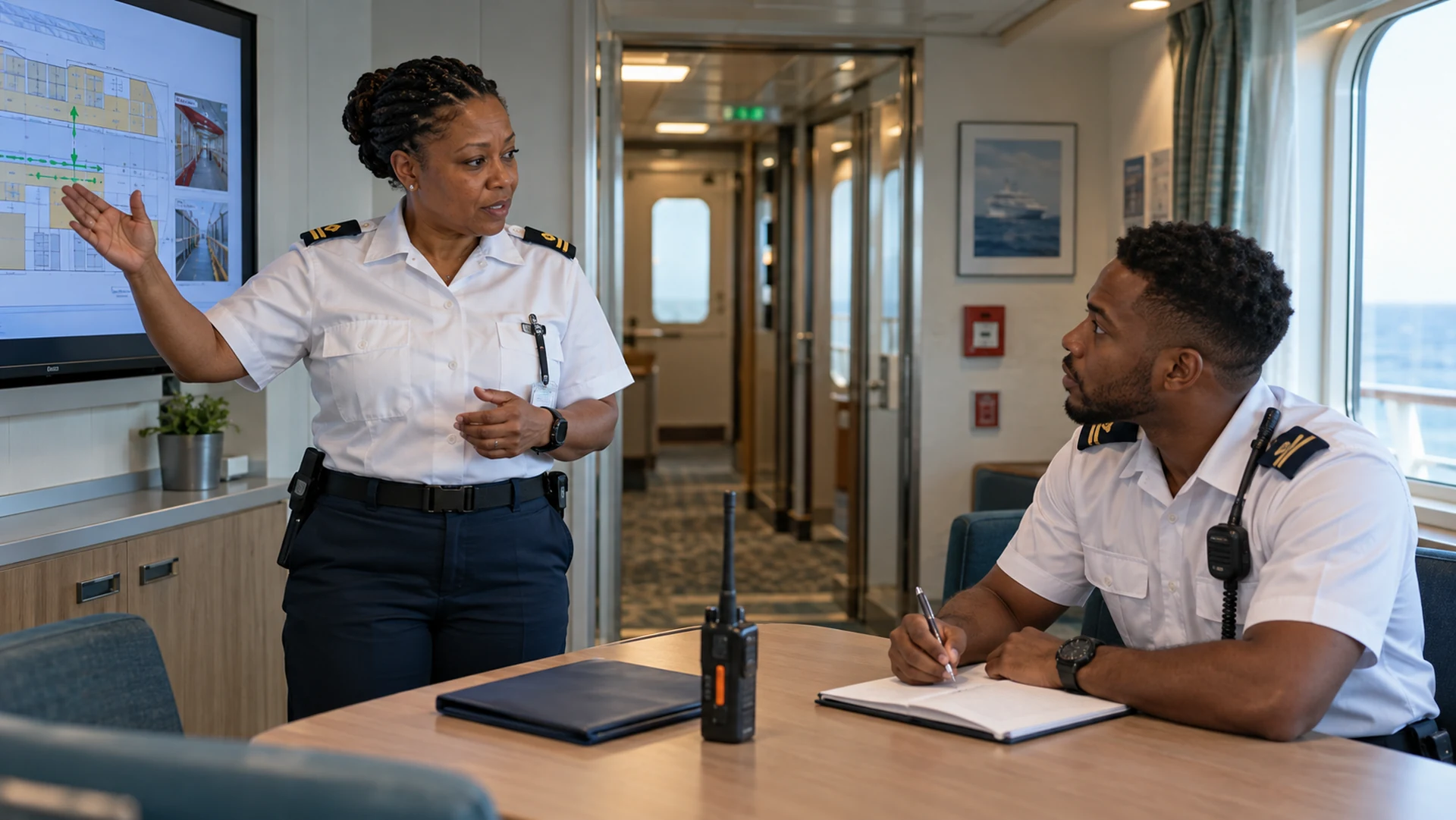
A working watch
A security shift may include a handover, scheduled checks, access-control duties, monitoring, guest or crew enquiries and written reporting. The exact routine comes from the post orders and ship security procedures, not from a universal job description.
Reliable notes should be factual, timely and handled confidentially. Follow the employer’s reporting chain, preserve information as instructed and avoid discussing incidents with people who do not need the details. When circumstances change, report what you observed and let the responsible officer decide the next step.
Read the IMO maritime security FAQ ↗Career development
Cruise lines use different titles and team structures. A vacancy might be entry-level or may require substantial prior service. There is no universal ladder from guard to senior officer, and time served alone does not guarantee promotion.
When you compare vacancies, look for the actual reporting line, duties, minimum experience and required certificates. If you already work at sea, ask your supervisor which development opportunities are available within your company.
Prepare your application
Do not assume that every cruise line uses the same entry criteria. The employer’s published vacancy and recruiter instructions determine what is needed for that role. Match each essential vacancy criterion to dated evidence: a specific duty, your own contribution, a result and a referee or certificate that can support it. Keep job titles and dates consistent across your CV and forms, submit through the verified channel and save the version you sent.
 01 · EXPERIENCE
Describe security, law-enforcement, military, customer-facing or emergency-response work only where it is genuine and relevant. State the level of responsibility you held.
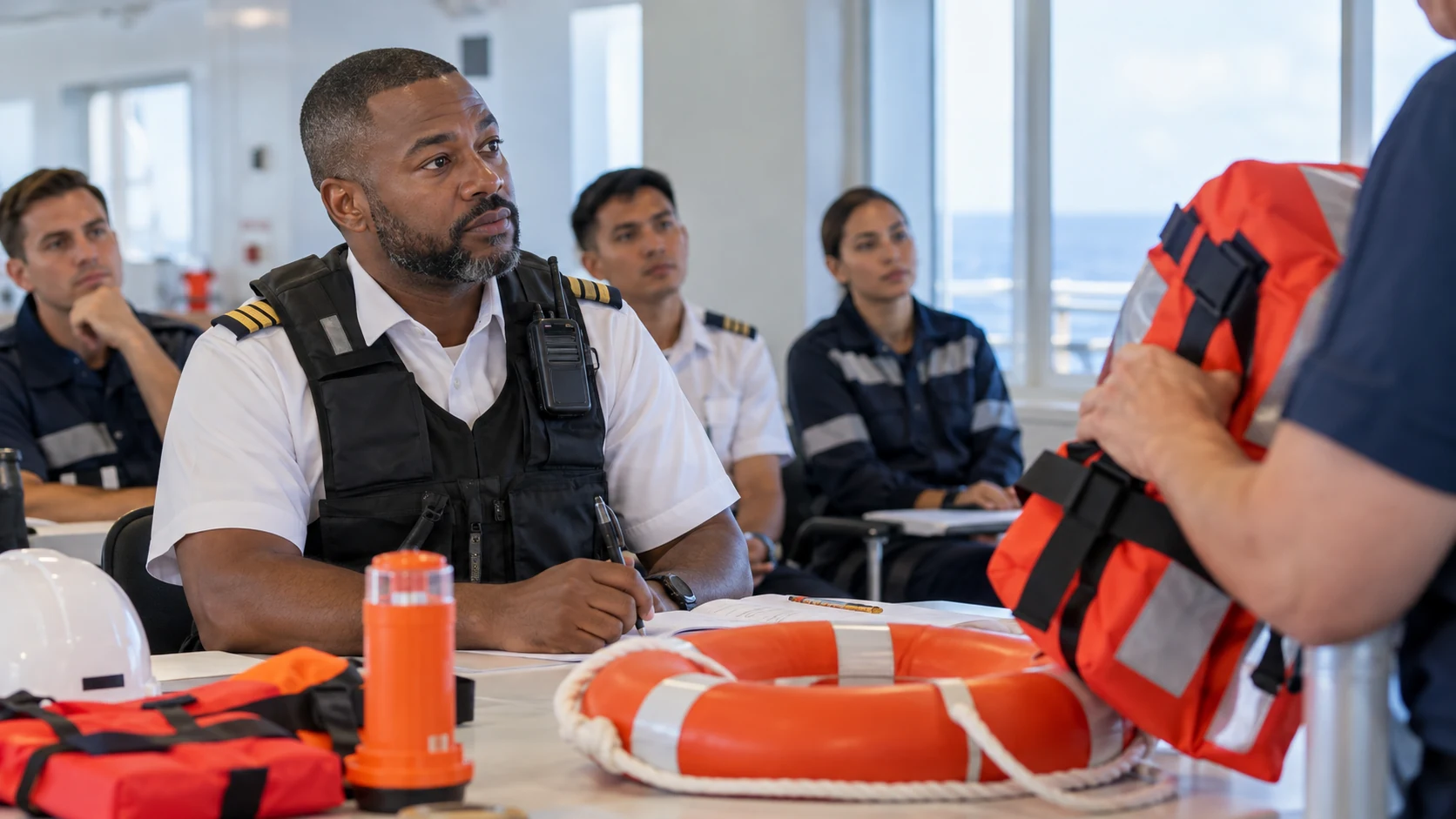 02 · EVIDENCE
List current, verifiable qualifications and licences. Be ready for employer background, medical and document checks where required for the vacancy and itinerary.
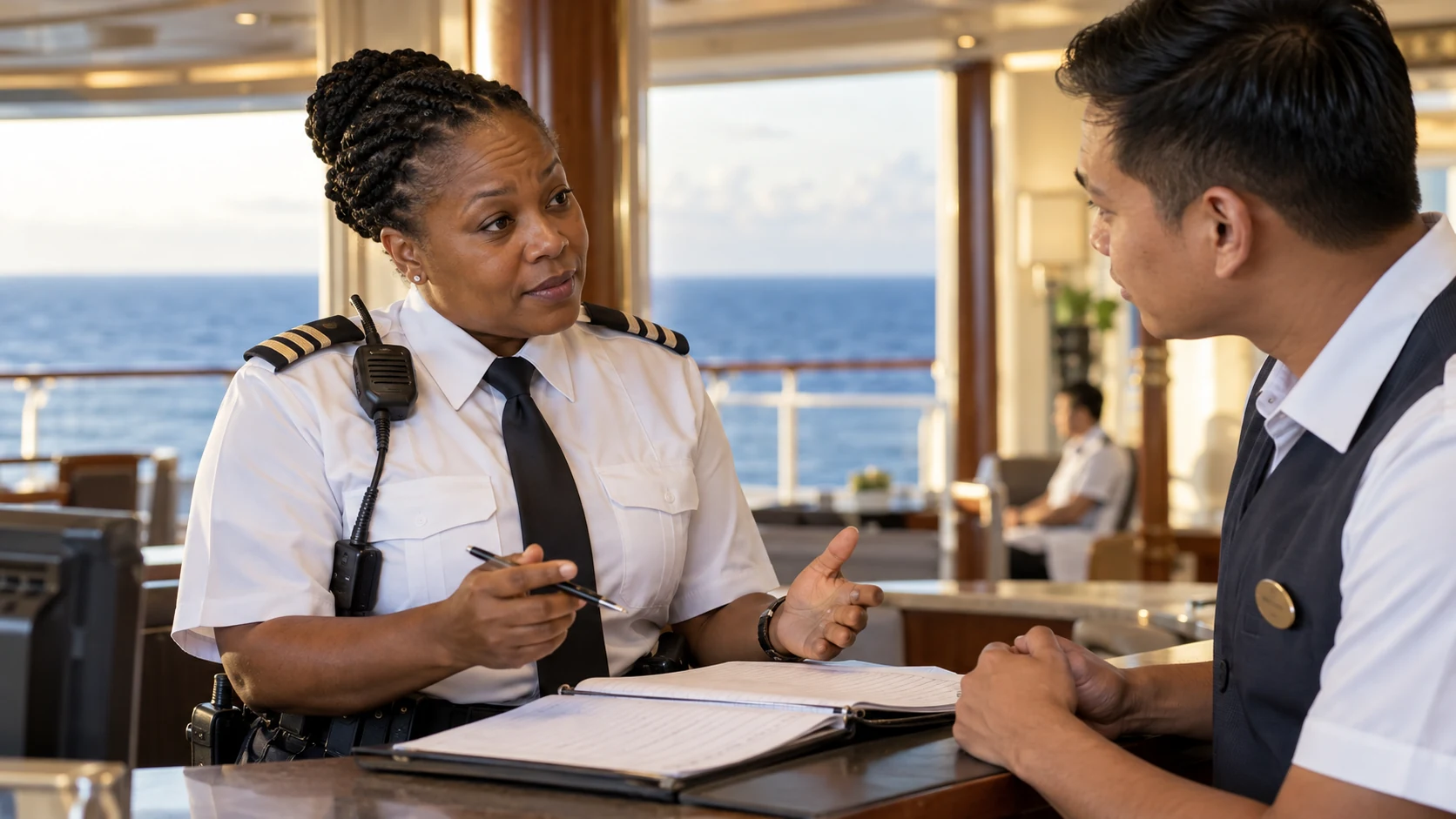 03 · COMMUNICATION
Give examples of calm communication, accurate records, discretion, teamwork and following procedures under pressure. Describe the work setting, your shift or station, the equipment or system used, the service or safety standard followed and your own contribution. Give one specific example and separate your actions from the team’s result.
Security training at sea
IMO’s STCW framework distinguishes general security awareness and familiarisation from training for seafarers with designated security duties and the Ship Security Officer role. Before paying, match the exact course title and competence in the vacancy to the provider’s approval, syllabus, practical assessment and certificate. Confirm recognition with the employer or maritime administration, and ask about prerequisites, expiry or refresher rules and the full cost.
Seafarers receive security-related familiarisation before shipboard duties. Those assigned designated security duties need relevant training before taking on those responsibilities. Ship Security Officer training is for people designated to act as the SSO; it is not a universal entry certificate for every security team member.
Confirm accepted certificates and any flag-state or company requirements directly with the recruiter. Course names and documentary evidence can differ by training route and administration.
Read the IMO STCW Convention overview ↗Read the general STCW Basic Safety Training guide. Security qualifications are separate and role-specific.
Pay and contract checks
Pay can vary with employer, rank, vessel, contract, experience and allowances. Public salary figures are not a substitute for the terms of a specific offer. Compare the vacancy with the final agreement: employer, position, joining date, contract length and pay terms should make sense together. Resolve differences with the authorised recruiter before you resign, pay for travel or send original documents.
Shipboard work does not automatically make earnings tax-free. Tax obligations depend on your circumstances and the law that applies to you. Ask a qualified tax adviser in your tax-residence country before relying on an estimate.
Never pay a recruiter or private individual to secure a vacancy. Verify any unexpected fee or request using the organisation’s published contact details.
A practical application sequence
Use the official vacancy route and keep a copy of what you submit. If the advert is unclear, ask the recruiter before paying for training or sending sensitive records. Check the course against the requirement for your role, not just a similar-sounding certificate. Ask the provider who approves it, what is assessed, where practical training takes place, how long the certificate remains valid and whether your employer accepts that provider.
Check the job title, company, experience requirements, location and closing date on the official recruitment channel.
Connect the requirements to specific duties and achievements. Use dates and certificate names consistently. Describe the work setting, your shift or station, the equipment or system used, the service or safety standard followed and your own contribution. Give one specific example and separate your actions from the team’s result.
Follow instructions for passport, medical, police clearance, seafarer record and training evidence. Do not send more than requested.
Confirm interviews, fees, contract terms and training claims through a verified recruiter contact before acting. Check the next role’s published duties, sea-service or experience threshold, certificates and appraisal criteria with the employer. Keep evidence from each contract so a promotion request can be checked against those requirements.
Common questions
Use these answers as general preparation. The job description and instructions from the hiring employer take precedence.
Duties depend on the ship, company and assigned post. They may include access control, patrols, screening, monitoring, reporting concerns and supporting emergency procedures under the vessel’s security plan.
Some vacancies may prefer law-enforcement, military or professional security experience, while other entry routes can have different criteria. Follow the exact vacancy notice and do not assume one background guarantees eligibility.
STCW security training applies in different ways depending on a seafarer’s duties. Security familiarisation is provided before shipboard duties, and people with designated security duties require relevant training before assignment. Check the employer and flag-state instructions.
No. Ship Security Officer training and certification apply to people designated for that role. The IMO STCW framework distinguishes this from security awareness and designated-duty training.
Titles and reporting structures differ between employers and ships. Progression depends on vacancies, demonstrated performance, relevant experience, training, conduct and the employer’s selection process. There is no guaranteed promotion timetable.
There is no single reliable salary for all cruise lines, ranks, contracts or nationalities. Ask the recruiter for the written pay structure, currency, deductions, contract length, leave terms and any variable components for the specific vacancy.
No. Tax treatment depends on your tax residence, nationality, work pattern, contract and applicable law. Get advice from a qualified tax professional in the country where you have tax obligations.
Use a role-specific CV that explains your relevant duties, verified qualifications, incident-reporting experience, communication skills and any leadership responsibilities. Provide accurate dates and follow the official application instructions.
Continue your preparation
Explore shipboard spa, salon, fitness and guest-wellness roles.
Compare deck rating and navigation officer roles, training routes and certification.
Compare engine-room ratings, officer qualifications and technical career routes.
Compare published role requirements and find an appropriate application route.
Present security and customer-facing experience clearly and accurately.
Understand general shipboard safety training and how it differs from security duties.
Review the practical steps for an employer-requested police record check.
Explore cruise shop roles, guest service and application preparation.
Review guest-facing duties, service recovery and application preparation.