Experience
Relevant hotel or restaurant experience may help. Specialist and senior roles can ask for formal qualifications or shipboard history.

River cruise jobs · straight answers
Get practical answers about river cruise jobs, hiring requirements, pay, contracts, travel documents and life onboard. Since every operator and route is different, use the questions here to get clear written details for the vacancy you want.
Start with the essentials
River ship work can suit people with hospitality, culinary, housekeeping, guest service and marine experience. The exact opening, employer, vessel, route and your nationality shape the requirements.
A useful answer should identify who sets the rule, when it applies and what document proves it. Treat a current job listing and your written offer as the authority for your own application.
Relevant hotel or restaurant experience may help. Specialist and senior roles can ask for formal qualifications or shipboard history.
Passport, visa, medical and training rules depend on the job and route. Ask for a personal checklist before booking.
Get pay, deductions, dates, leave, tips and travel terms in writing. Generic online estimates can be misleading.
Verify vacancies through the operator or an authorised recruiter. Crew Life at Sea says it never charges placement fees.
Getting started
Show how your past work matches the duties in the active vacancy. Job titles and entry requirements differ across river cruise operators.
Not always. Some employers consider strong land-based experience from hotels, restaurants, housekeeping, retail, guest services, catering or resorts. Senior and specialist positions may require cruise experience, relevant licences, trade credentials or a record of similar work. The most useful approach is to match specific examples from your work history to the duties in the vacancy.
Vacancies may include restaurant and bar service, culinary, housekeeping, front office, cruise hosting, excursions, spa, deck, engineering and supervisory roles. Smaller vessels may organise teams differently from larger ships, and a role title may cover different duties at different operators. Read the job description instead of relying on a title alone.
They can be, when the employer is open to applicants without previous shipboard service and your experience fits the role. Living at work, following onboard procedures, sharing facilities and maintaining consistent service can feel different from a land-based job. Ask what induction is provided and what the first weeks typically involve in your department.
Language expectations depend on the operator, guest profile, route and job. Guest-facing roles may ask for strong spoken English or another specified language; back-of-house jobs can have different requirements. State your actual level clearly and ask whether a language is essential, preferred or assessed during the interview.
Employers often value reliability, courtesy, teamwork, practical communication, flexibility and relevant professional skills. Use real examples to show how you handled a guest request, busy service, changing priorities or a disagreement with a colleague. Avoid claiming skills or certificates you cannot verify.
You can express interest in more than one suitable vacancy, but tailor your application to each one. Explain which experience supports each role and be clear about your preference. Applying indiscriminately to unrelated jobs can make it harder for a recruiter to understand where you fit.
Eligibility and paperwork
There is no universal document list for every river vessel. Confirm requirements against your own nationality, job, employer, vessel and route.
There is no single passport rule for every operator or route. Your right to work and travel can depend on your nationality, employing company, vessel, itinerary and the applicable immigration rules. Ask the employer which permit or visa applies to you, who arranges it and when it must be issued. Do not assume a visitor visa allows you to work.
South Africans may apply where a vacancy accepts their nationality and experience. Work authorisation and entry requirements depend on the employer and route, so ask for written instructions early. Confirm which documents the employer supplies, which applications you must complete yourself and who will guide you through the process. Our German visa appointment guide is a starting point for that specific process, not a substitute for the employer’s instructions.
The required validity can differ by destination, visa process, employer and joining date. Check the exact rule with the employer and relevant authority before renewing or booking travel. Our passport guide explains details to check; the route-specific checklist takes priority for your assignment.
Do not assume one safety course applies to every role and inland vessel. Requirements depend on the job, vessel, route and applicable rules. Ask for the precise certificate name, accepted training provider, validity requirement and deadline. Confirm before paying for a course; our STCW Basic Safety Training guide explains how to check a course when an employer requests it.
An employer may request medical clearance or background screening, but the accepted provider, form, timing and validity can differ. Wait for the employer’s written instructions before arranging an examination or paying for a document. You can use the medical requirements guide and police clearance guide to prepare questions.
Not for every position or every route. The employer will tell you whether a seafarer identity document, record book or another document is required and which authority or format it accepts. Do not purchase a document based only on a general online checklist.

Give yourself a clear route to joining
Ask the recruiter to put the application and joining steps in order: interview, references, selection, medical checks, background screening, certificates, visa or work permission, contract and travel. Your sequence may differ, so get the dates and responsible contact for each step.
Do not buy a ticket, pay for a course or make a non-refundable appointment just because you expect to be selected. First confirm what is required, when it is needed, whether the employer arranges it and what happens if the vessel or joining date changes.
Work and life onboard
Ask for the terms for your actual role. Employment packages and onboard arrangements are set by the employer and can differ between ships.
Pay varies by employer, role, experience, contract, currency and gratuity arrangements. Before accepting, check gross pay, payment dates, deductions, tips or service charges, meals, accommodation, travel and any costs you must cover. If an offer mentions a variable amount, ask how it is calculated and when it is paid. Generic salary tables may not reflect your contract.
Contract length, work pattern and time off vary by operator, role, region and season. Some fleets operate on a seasonal schedule; others have different operating cycles. Ask for the exact start and end dates, expected rotation, leave arrangements, possibility of returning next season and what happens if the vessel’s itinerary changes.
Some employers provide crew accommodation and meals during the contract, but details vary. Confirm whether a cabin is shared, which meals are included, whether there are deductions, what facilities are available and what happens on travel or rest days. Do not assume the package matches another company’s offer.
Work follows the vessel’s guest and operational schedule. Service teams may prepare for several meal periods, housekeeping teams work around cabin routines, and marine teams handle vessel duties. Some roles use split shifts or changing hours. Ask the manager what a typical workday and rest period look like in your department.
No. A port call is not a promise of free time. Duties, rest periods, port procedures, immigration requirements, the ship’s schedule and company rules all affect whether crew can leave the vessel. Ask how shore leave is managed and plan to return in time for your assigned duties.
River conditions, weather, locks, traffic and operational decisions may lead an operator to adjust a schedule. Ask how changes are communicated, who confirms a revised joining point and whether the company handles changes to travel or accommodation. Keep your contact details available and wait for confirmed instructions before changing plans.
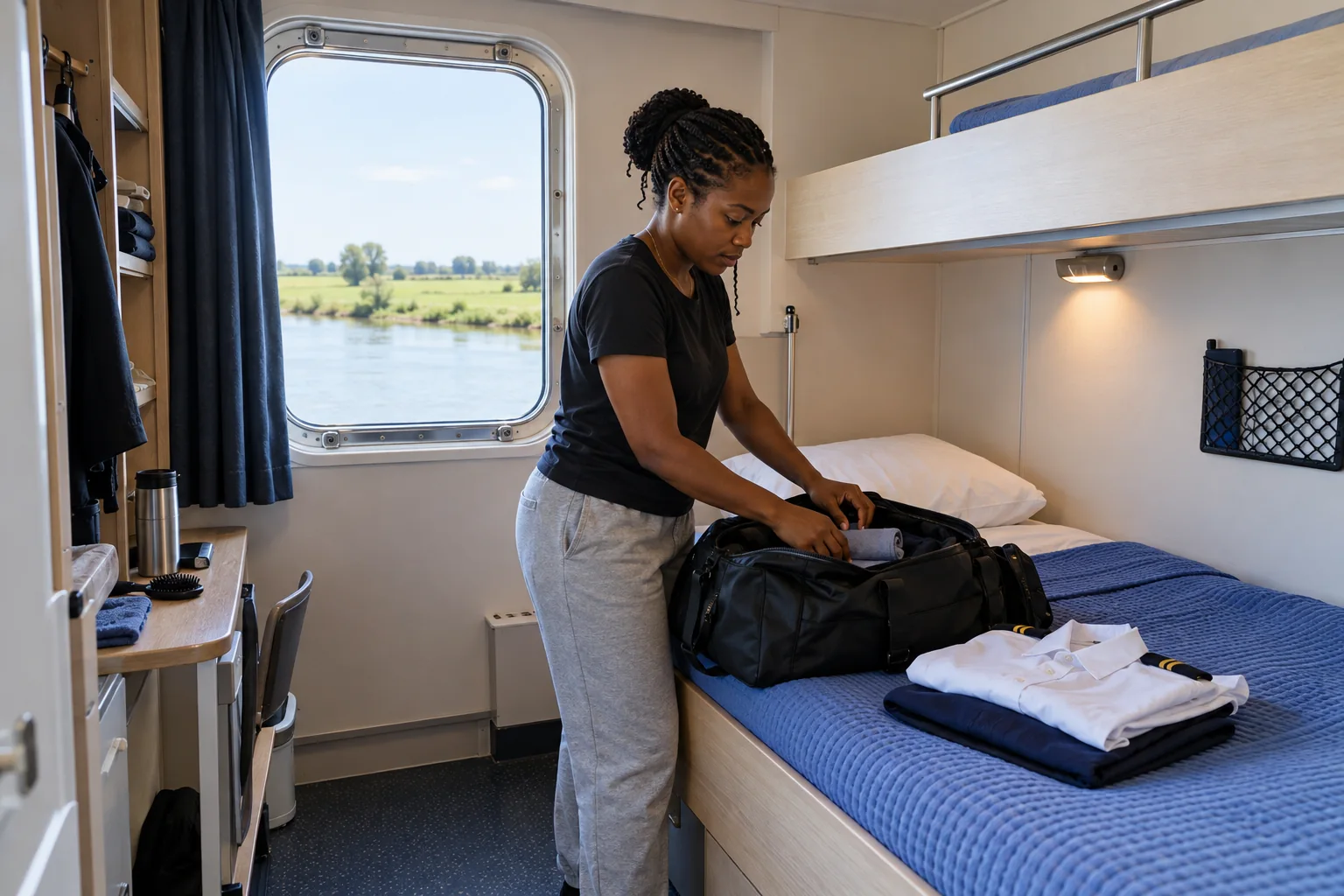
Plan for the real living space
Cabins and crew facilities are designed for practical onboard living, and the arrangement depends on the vessel and position. Ask whether you will share a cabin, what storage is available, how laundry and internet work, where crew meals are served and which personal items you may bring.
Time off can be shaped by duty rosters, sailing and port procedures. Pack for a compact space, keep essential documents secure and follow the ship’s instructions for emergency drills, restricted areas and returning onboard.
From application to joining
A professional application is accurate, role-specific and easy to verify. Keep copies of all written instructions and documents you send.
Include contact details, employment dates, job titles, relevant duties, qualifications, language skills and referees where requested. Show concrete evidence of guest service, teamwork, food safety, housekeeping standards or technical skills that match the vacancy. Keep formatting simple and make sure dates and certificates are accurate. See our cruise CV guide.
Start with an active position and apply through the official channel named by Crew Life at Sea. Follow the vacancy instructions and submit the requested CV and documents. Recruitment is by appointment and invitation, with no walk-in applications. Do not assume that sending a general enquiry is the same as applying to an open role.
Crew Life at Sea states on its official website that it never charges candidates fees for job placement. If someone claims to represent the company and requests a placement fee, verify the request using the contact details published on the official site before taking any action.
Expect questions about your experience, guest service, teamwork, schedule flexibility and why the position fits your skills. Use short examples that explain what happened, what you did and the result. Ask about the job’s day-to-day duties, contract, training, joining timeline and document requirements so you can decide with clear information.
Next steps may include references, medical clearance, background checks, visa or work-permit steps, required training, contract review and joining travel. The order and timing vary. Ask which steps are conditional, what the deadlines are and whom to contact if a document or appointment is delayed.
Check that the vacancy appears on the cruise operator’s official career site or is shared by a recruiter the operator identifies. Verify email addresses and payment instructions using an independent official contact. Be cautious of guaranteed placement, pressure to act immediately, unofficial payment recipients or requests for sensitive documents through an unverified channel.
A simple application sequence
Keep the important details together so you can compare an offer with the job you applied for. Compare the listed duties, experience level, language needs, schedule and required certificates with work you have actually done. Note evidence for each essential criterion and ask whether equivalent experience is accepted before spending money on training or travel.
Check the job title, duties, operator and application channel.
Prepare a tailored CV and accurate copies of requested evidence.
Review pay, deductions, dates, travel, accommodation and leave.
Complete only the confirmed medical, visa, training and travel steps.
These employers publish river crew openings or information about their own river ship work. Roles, requirements and packages change, so use the current vacancy and employer’s written instructions for your application.
Related crew guides
Use these pages to prepare documents and understand common cruise ship recruitment steps. Use the live listing to decide what to emphasise, while keeping every claim accurate. For each required skill, note where and when you used it, what you personally handled and which evidence supports it; ask the recruiter before treating related experience as an equivalent qualification.

Practical preparation
River cruise roles can involve frequent port calls, compact working spaces and close coordination between departments. Ask the operator about the specific vessel, roster, accommodation and service expectations, as these details vary between employers and itineraries.
Continue with related guidance →