01 · Quality
Consistent presentation
Work through assigned tasks in order, check the finished area and report anything that needs maintenance or a supervisor’s attention. Accuracy helps the next team member pick up the work clearly.

Cruise ship departments · Housekeeping
Explore the cabin, public-area and laundry teams that help keep a cruise ship clean, prepared and welcoming. Learn what the roles can involve and how to present relevant experience.
A practical department guide
Housekeeping teams prepare guest accommodation, maintain shared spaces and handle linen and laundry operations. Their work supports guest comfort and the smooth running of hotel operations, often in coordination with front desk, maintenance and other onboard teams.
Job titles and duties are not identical across cruise lines. A stateroom attendant, public-area cleaner and laundry steward may belong to separate teams, work different schedules and follow different standards. Use the employer’s live vacancy as the source for qualifications, responsibilities and contract details.
Explore the work
Titles below are common examples, not a universal rank ladder. Some ships combine duties; others divide them across teams. Check the job description for location, shift, workload, supervisor and required experience. Compare the listed duties, experience level, language needs, schedule and required certificates with work you have actually done. Note evidence for each essential criterion and ask whether equivalent experience is accepted before spending money on training or travel.
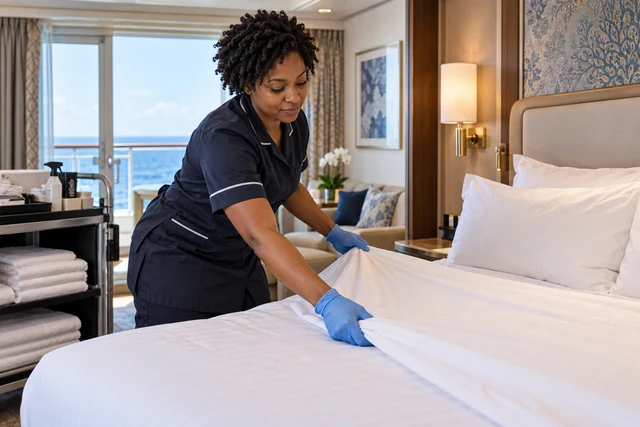
Guest accommodation
Prepare assigned guest cabins, replenish approved amenities, maintain presentation standards and report defects or special requests to the appropriate team. Follow access rules and protect guest privacy throughout the service.
Ask about cabin allocation, service frequency, onboard training, equipment and how the team handles guest requests or maintenance concerns.
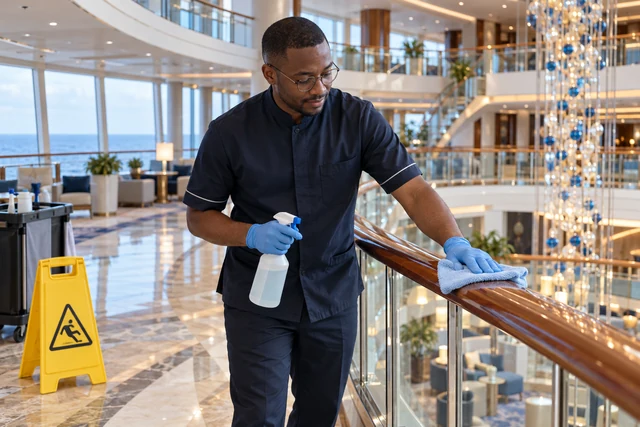
Guest and crew spaces
Maintain assigned corridors, lounges, stairways, washrooms or other shared spaces. The precise area list, timing and interaction with guests differ by vessel and shift.
Relevant experience can include hotels, offices, hospitals or commercial cleaning. Explain the surfaces, equipment, schedules and safety routines you know, without claiming training you do not hold.
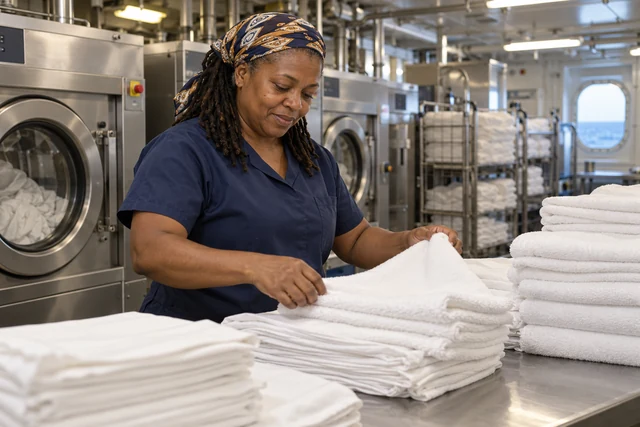
Laundry operations
Depending on assignment, handle linen collection, sorting, washing, drying, finishing, folding or distribution. Follow the ship’s workflow and equipment instructions, and report shortages, damage or faults.
Commercial laundry, hotel linen or textile-care experience may be useful. Ask the recruiter which machines and processes the role uses and what training is provided onboard.
Team coordination
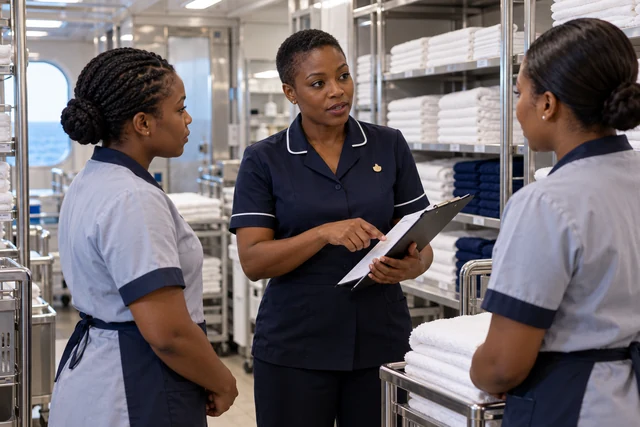
Where these posts exist, supervisors may coordinate assignments, coach colleagues, check presentation, communicate service issues and support inventory or shift handovers. Responsibilities and authority vary by operator.
Show examples of fair teamwork, accurate reporting, calm problem-solving and supporting quality standards. Prior experience does not guarantee appointment to a supervisory vacancy.
Role names vary. A title alone may not explain whether the position focuses on cabins, public areas, crew accommodation or laundry. Confirm the department, daily duties, employer and reporting line in writing.
What the job asks of you
Housekeeping work combines routine tasks with changing guest and operational needs. Follow employer training and onboard procedures; a general online guide cannot replace the ship’s instructions. Before paying, match the exact course title and competence in the vacancy to the provider’s approval, syllabus, practical assessment and certificate. Confirm recognition with the employer or maritime administration, and ask about prerequisites, expiry or refresher rules and the full cost.
01 · Quality
Work through assigned tasks in order, check the finished area and report anything that needs maintenance or a supervisor’s attention. Accuracy helps the next team member pick up the work clearly.
02 · Safety
Use products, equipment and protective measures only as instructed and trained by the employer. Follow labels and shipboard rules, keep work areas orderly and report hazards rather than improvising.
03 · Guest care
Respect cabin access rules, lost-property processes and confidentiality. Communicate politely, avoid discussing guest details and refer requests beyond your authority through the proper channel.
04 · Teamwork
Coordinate with colleagues and relevant departments, record or report issues accurately, and ask when instructions are unclear. A reliable handover helps the team avoid missed requests and duplicated work.
05 · Routine
Hours, rest arrangements, room assignments, service schedules and physical demands depend on the employer, vessel and contract. Request the current terms and ask specific questions before accepting an offer.
06 · Adaptability
Voyages, guest turnover and staffing needs can affect daily priorities. Follow your supervisor’s direction and role boundaries, and raise workload or safety concerns through the correct onboard process.
Skills employers can recognise
Housekeeping experience from hotels, resorts, hospitals, care settings, commercial laundry or facilities work may transfer when it matches the vacancy. Be specific and honest about what you have done. For each role, identify the day-to-day tasks, who it reports to, the expected experience and any mandatory qualification. Build a shortlist around evidence you can provide, then use the live vacancy to confirm current duties and conditions because titles vary by employer.
Prepare before you apply
Use the employer’s current vacancy and authorised recruitment channel. Requirements differ by role, nationality, itinerary and joining stage; verify what applies to you before paying for documents or travel. Match each essential vacancy criterion to dated evidence: a specific duty, your own contribution, a result and a referee or certificate that can support it. Keep job titles and dates consistent across your CV and forms, submit through the verified channel and save the version you sent.
A realistic development route
Some employers offer senior attendant or supervisory opportunities, but titles and progression differ. These stages describe preparation, not a guaranteed career ladder or timeline. Compare the listed duties, experience level, language needs, schedule and required certificates with work you have actually done. Note evidence for each essential criterion and ask whether equivalent experience is accepted before spending money on training or travel.
Practise consistent cleaning, guest care, equipment awareness and reliable shift work in an appropriate setting. Describe the work setting, your shift or station, the equipment or system used, the service or safety standard followed and your own contribution. Give one specific example and separate your actions from the team’s result.
Compare the advertised duties and experience criteria with your record. Ask how the team is structured onboard.
Complete employer induction and role training, then follow safety, privacy and quality procedures consistently. Compare the actual vacancy’s duties, reporting line, shift pattern and essential criteria with your experience. Ask the recruiter about certificates, language expectations and contract terms that are not stated clearly.
Build a record of performance and teamwork, seek feedback and apply for a senior vacancy when you meet its stated criteria.
Common questions
Use these answers as a starting point. A current job description and written employer guidance take priority for the specific vacancy.
Titles vary by employer but may include stateroom or accommodation attendant, public-area attendant, utility cleaner, laundry attendant or steward, and housekeeping supervisor. Read the actual vacancy because scope, seniority and reporting lines differ.
Not always. Some employers consider relevant hotel, resort, hospital, commercial laundry or cleaning experience; others may require shipboard or luxury-hospitality experience. Follow the current vacancy criteria and describe your real experience clearly.
Depending on the ship and assigned duties, attendants may prepare cabins, replenish approved supplies, report maintenance issues and respond to guest requests. Employers set room allocations, service standards and schedules, so do not assume one universal workload.
Many roles involve extended periods standing and walking, repeated movements, handling linen or equipment, and working to a service schedule. Physical demands and adjustments vary. Ask the employer about the specific duties and assess them against your own circumstances.
There is no single certificate that applies to every housekeeping vacancy. Employers may specify experience, language ability or role training; joining documents, medical fitness, visas and safety familiarisation depend on the employer, itinerary and applicable rules.
Use only products and procedures approved by the employer, follow labels and training, wear specified protective equipment and report hazards. Respect cabin privacy, follow access and lost-property procedures, and never share guest information or photographs.
Give accurate examples of the environments you worked in, the standards you followed, equipment or systems you used, teamwork, guest communication and how you reported problems. Quantify work only when you can support the figure.
Some operators have senior attendant, team-leader or supervisory positions. Progress depends on available vacancies, performance, experience and selection by the employer; a promotion or timeline is not guaranteed.
Continue exploring
Compare onboard departments, check the application steps and prepare your documents with information relevant to your next move. Match each essential vacancy criterion to dated evidence: a specific duty, your own contribution, a result and a referee or certificate that can support it. Keep job titles and dates consistent across your CV and forms, submit through the verified channel and save the version you sent.