Recognise your responsibilities
Know which security-related instructions apply to your role, who provides supervision and where approved information is available.


Understand the STCW security-awareness route, what to verify before booking and how it differs from training for designated security duties.
STCW regulation VI/6 addresses security-related training and instruction for seafarers. The scope is to help crew understand the security awareness relevant to their work and contribute appropriately to the vessel’s arrangements.
Awareness training is designed for general seafarer knowledge. IMO guidance makes clear that it does not turn all crew into security specialists. Course delivery, documentary evidence and certificate requirements depend on applicable administration rules and the duties assigned to the role.
Approved providers and employers explain the applicable learning outcomes and shipboard procedures. Requirements vary by assignment. Before paying, match the exact course title and competence in the vacancy to the provider’s approval, syllabus, practical assessment and certificate. Confirm recognition with the employer or maritime administration, and ask about prerequisites, expiry or refresher rules and the full cost.
Know which security-related instructions apply to your role, who provides supervision and where approved information is available.
Use the vessel’s authorized processes for crew, visitor and restricted-area access. Do not improvise checks or share credentials.
Learn how to raise a concern through the company’s reporting chain. Communicate facts promptly and follow instructions from designated personnel.
This page is general career guidance, not operational security advice. Follow the vessel’s current security plan, training and designated command.
Course titles are similar, so compare the vacancy duties and certificate wording before you enrol. Before paying, match the exact course title and competence in the vacancy to the provider’s approval, syllabus, practical assessment and certificate. Confirm recognition with the employer or maritime administration, and ask about prerequisites, expiry or refresher rules and the full cost.
A short check with the employer or maritime authority can prevent paying for a course that is not accepted. Before paying, match the exact course title and competence in the vacancy to the provider’s approval, syllabus, practical assessment and certificate. Confirm recognition with the employer or maritime administration, and ask about prerequisites, expiry or refresher rules and the full cost.
Identify whether it asks for awareness only, designated security duties or a security-officer qualification. Ask the employer for the exact course title or code, certificate level, validity period and completion deadline. Verify the provider’s current approval with the responsible authority, and keep the full certificate and receipt.
Confirm approval and accepted certificate format with the relevant administration or employer. Ask the employer for the exact course title or code, certificate level, validity period and completion deadline. Verify the provider’s current approval with the responsible authority, and keep the full certificate and receipt.
Ask about identity documents, attendance, assessment method and course prerequisites. Ask the employer for the exact course title or code, certificate level, validity period and completion deadline. Verify the provider’s current approval with the responsible authority, and keep the full certificate and receipt.
Check your name and certificate details, keep a secure copy and follow company rules for sensitive records.
Familiarization is vessel-specific. Your employer explains the appropriate contacts, procedures and boundaries. Before paying, match the exact course title and competence in the vacancy to the provider’s approval, syllabus, practical assessment and certificate. Confirm recognition with the employer or maritime administration, and ask about prerequisites, expiry or refresher rules and the full cost.
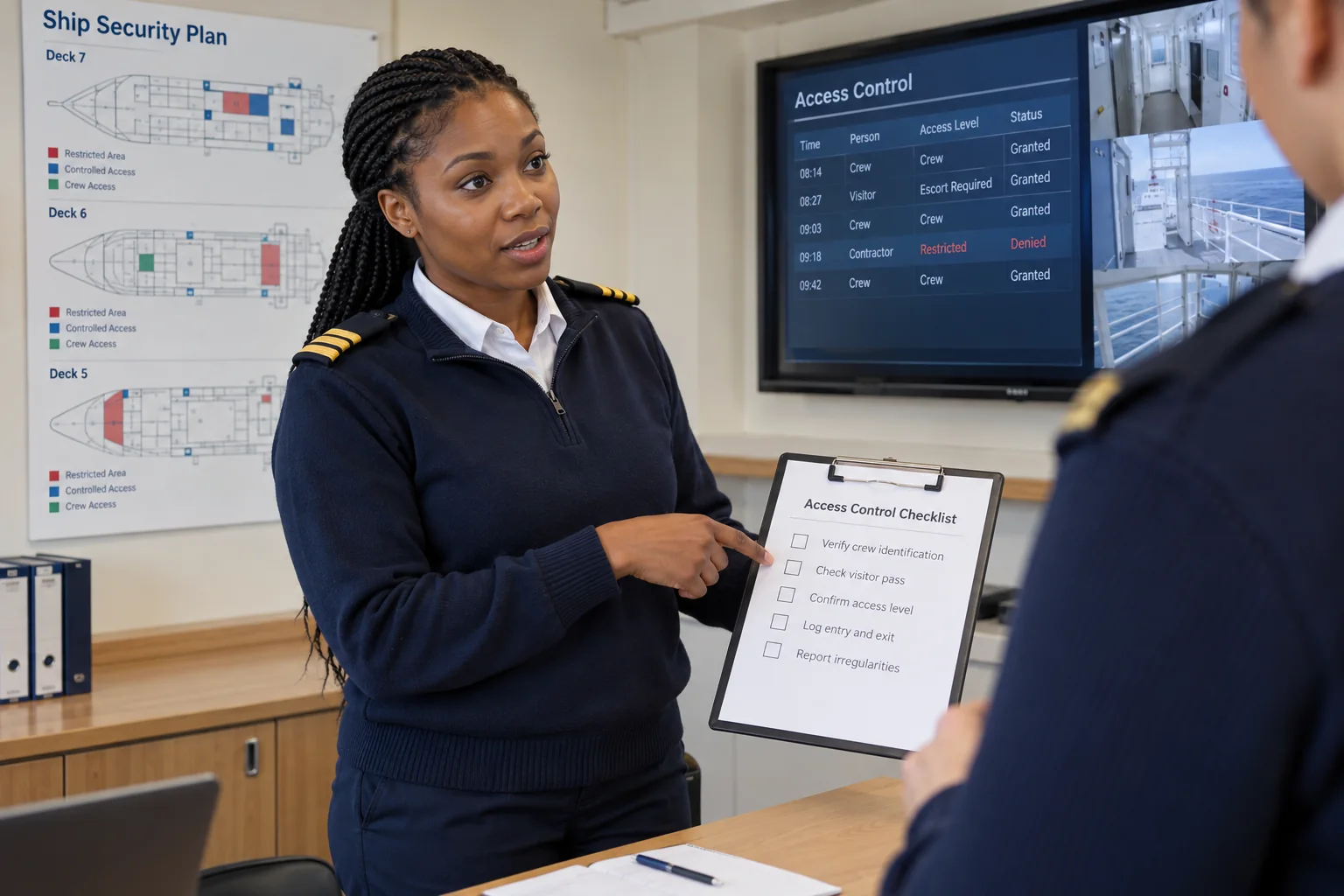
Security awareness helps crew recognise routine precautions and pass concerns to the right person. The course title and accepted approval can vary, so verify the exact requirement with the employer.
IMO materials describe international standards and model courses; your administration applies requirements locally. Before paying, match the exact course title and competence in the vacancy to the provider’s approval, syllabus, practical assessment and certificate. Confirm recognition with the employer or maritime administration, and ask about prerequisites, expiry or refresher rules and the full cost.
Confirm the exact training and documentary requirement against your written role and current administration guidance.
SAT commonly refers to Security Awareness Training. IMO’s STCW framework covers security-related familiarization and security-awareness training or instruction for seafarers.
STCW regulation VI/6 establishes security-related familiarization and awareness requirements for seafarers. Confirm the exact certificate or instruction accepted for your position with your employer and administration.
No. Awareness training gives seafarers knowledge relevant to assigned duties; it does not make them security experts or qualify them automatically for designated security responsibilities.
Security Awareness Training is the general awareness route. Proficiency in Designated Security Duties is for seafarers assigned specific security duties and has separate competency requirements.
Ship Security Officer training is a separate role-specific qualification. Check your written job duties and applicable administration requirements.
Certificate and refresher arrangements depend on the administration, course and employer. Verify what evidence is required for your certificate and assignment.
Ask the maritime administration or employer for the accepted provider and course. Confirm the course title, issuing authority, assessment and certificate format before paying.
The vessel explains the security arrangements relevant to the ship and your duties. Follow official company instructions, protect sensitive security information and ask your supervisor where to report concerns.
Compare related training pathways. Requirements and course acceptance depend on the role, employer, vessel and responsible maritime administration.
Put the information to work
Security awareness supports safe, observant work across shipboard roles. It is different from training for designated security duties or an officer role; follow the employer’s written requirement for the exact position.
Action 01
Learn the ship’s method for reporting a suspicious item, access concern or unusual behaviour. Share factual observations with the designated contact rather than confronting a person or circulating an unverified report.
Action 02
Use only the access permissions issued for your job, protect keys and credentials and avoid sharing restricted ship or passenger information. Ask a supervisor before allowing an exception to a security procedure.
Action 03
Confirm the course title, provider and certificate format with the employer. Keep the record legible and make sure your application does not describe awareness training as a higher security qualification.