Black cruise ship boutique supervisor in an elegant onboard retail shop.
Crew Life at Sea
Menu

Career guide · Retail and onboard shops

Cruise Ship Retail Career Path

Learn what cruise ship shop roles can involve, how retail experience may transfer to life at sea, and what to verify before applying. Job titles, products, qualifications and contracts vary between employers and ships.

Guest service · Product knowledge · Shipboard retail

A practical department guide

Retail at sea combines guest service with a different kind of workplace.

Cruise shops may sell watches, jewellery, fragrance, beauty products, resort wear, souvenirs and other goods. Teams help guests during scheduled shop hours, maintain displays and stock, and deliver the service standards set by the cruise line or retail operator. The exact product mix and responsibilities are ship-specific.

Retail work takes place within a vessel’s operating environment. Crew live and work away from home, follow shipboard rules, cooperate with colleagues from different departments and may have long or changing workdays tied to the itinerary and shop schedule. Ask the employer to explain the actual duties, contract and onboard arrangements before accepting a role.

There is no single retail career ladder across all cruise companies. A shop operator may recruit directly, provide specialist training or use its own performance structure. Treat any progression shown below as examples of roles, not promised promotion steps.

Use the current vacancy as your source of truth: requirements, pay arrangements and shipboard preparation can differ by employer and position.
Service firstListen carefully, offer relevant choices and make accurate product statements.
Standards matterFollow point-of-sale, cash, stock, display and guest-care procedures.
Verify the employerConfirm who issues the contract and which recruitment channel is authorised.

Different responsibilities

Explore retail and shop roles at sea.

These examples describe common types of onboard retail work. A vacancy may combine duties or use a different title. The employer’s current role description decides what experience and qualifications are relevant. Before joining, note what the employer has confirmed and what still needs an answer: schedule, cabin, meals, uniform, contact access and port-day rules. Keep those questions in writing and use the ship’s official induction for final procedures.

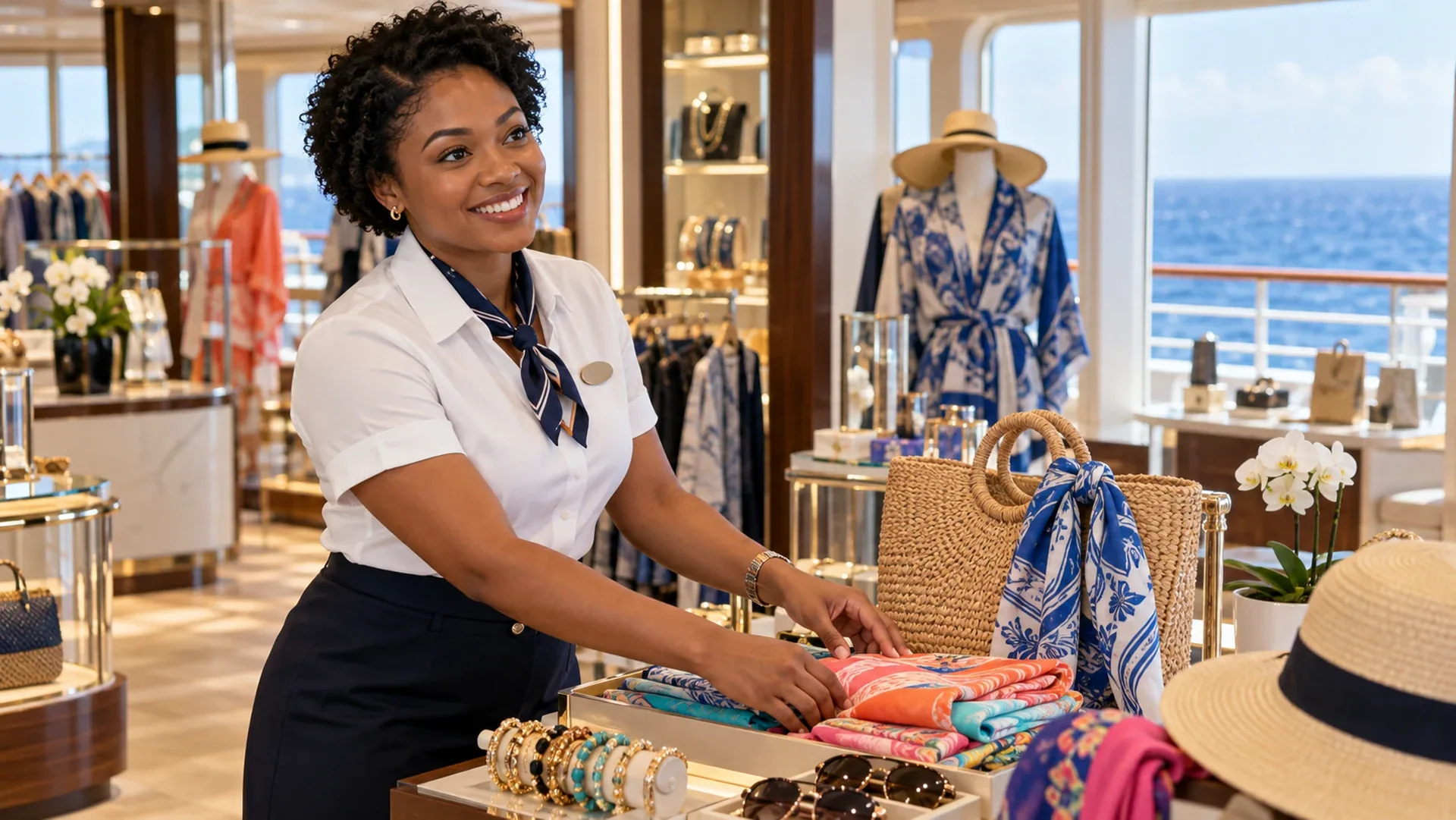
A Black cruise ship retail associate arranges colourful resort clothing in an onboard boutique.

Retail sales associate

Guest service and everyday shop operations

Retail associates welcome guests, ask useful questions and help them compare products without pressure. Depending on the assignment, work may include operating point-of-sale systems, replenishing stock, keeping displays presentable, answering product questions and following cash-handling procedures.

Bring clear examples of helping customers, resolving a concern calmly and working to a service or sales standard. Employers may assess communication, reliability, teamwork, flexibility and comfort in a busy international guest environment.

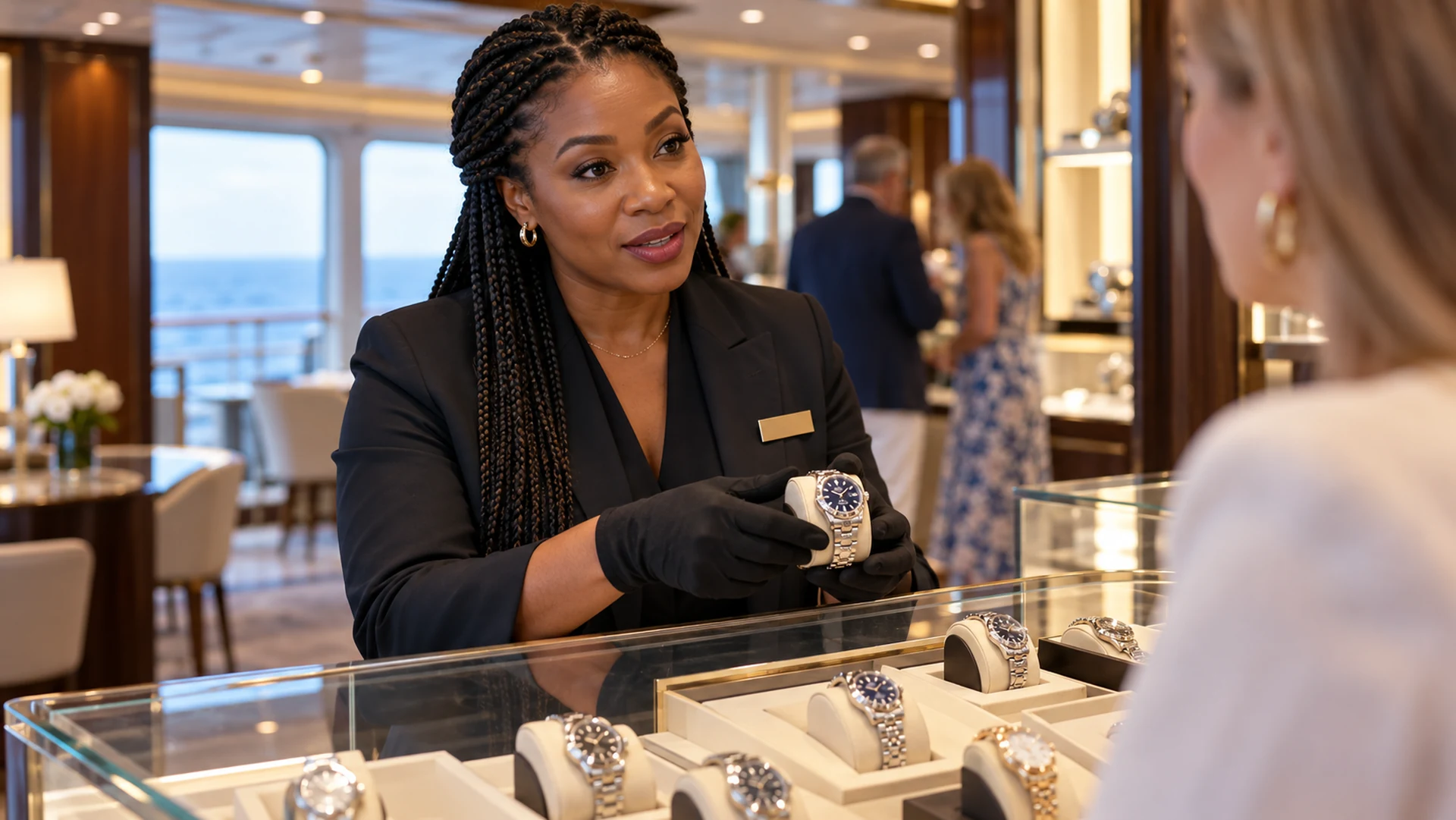
A Black cruise ship luxury retail specialist presents a watch to a boutique guest.

Product or category specialist

Build confident, accurate product knowledge

Some shops recruit specialists for watches, jewellery, beauty, fragrance or other premium categories. The role can involve explaining product features and care, understanding guest needs, maintaining category displays and supporting in-store presentations or events where the operator offers them.

A specialist should explain products honestly and stay within approved claims. Relevant category knowledge or luxury retail experience can help when the vacancy asks for it; do not claim technical expertise or brand authorisation you do not hold.

A Black cruise ship retail team leader briefs colleagues beside the boutique counter.

Team leader or assistant manager

Support the team and daily standards

With experience, some crew may apply for supervisory roles involving shift coordination, coaching, opening or closing routines, merchandising checks, stock control and clear handovers. Actual authority depends on the shop operator’s structure and the job description.

Leadership applications are stronger when they show specific examples: onboarding a colleague, handling an escalation, achieving a shared service goal, resolving a stock discrepancy or keeping procedures consistent during a busy period.

A Black cruise ship retail manager reviews boutique stock and daily figures on a tablet.

Retail or shop manager

Coordinate people, products and performance

Manager roles may combine team leadership, inventory accuracy, shop presentation, reporting, guest concerns, training and commercial targets. The mix varies by company, ship, itinerary and product categories, so read the actual vacancy carefully.

Management opportunities are not an automatic next step or a guaranteed timeline. Employers may look for proven retail leadership, sound judgement, accurate reporting and the ability to support a diverse team while following company and shipboard procedures.

What makes a strong candidate

Turn real customer experience into clear evidence.

Retail teams need people who can listen, communicate and follow procedures as well as support the commercial goals of the shop. Use specific examples from work you have actually done. Compare the listed duties, experience level, language needs, schedule and required certificates with work you have actually done. Note evidence for each essential criterion and ask whether equivalent experience is accepted before spending money on training or travel.

01 · Guest service

Understand the need

Describe how you welcomed customers, asked questions, explained options and handled a complaint respectfully. Show that you can assist different people without being pushy or making promises outside policy.

02 · Product knowledge

Be accurate and curious

Explain how you learned product details, cared for merchandise and kept advice within your knowledge. If you have worked with watches, jewellery, beauty or fragrance, identify the category and your actual responsibilities.

03 · Shop operations

Keep standards consistent

Give truthful examples involving point-of-sale systems, cash handling, stock counts, replenishment, visual displays, loss-prevention routines, teamwork or reliable shift handovers.

Before you accept an offer

Understand who employs you and what the contract says.

Onboard retail can involve a specialist concessionaire or another employer arrangement. Confirm all material terms with the organisation named on your offer and employment documents. Separate guaranteed pay from tips, service charges or commission, and check how each is calculated and shared. Confirm travel responsibility, accommodation, meals, insurance, deductions and cancellation terms in the contract or an official written explanation before accepting.

Ask for the details in writing

  • Legal employer name, recruiter identity and the channel used to verify the vacancy.
  • Contract length, joining date, role title, ship assignment and duties.
  • Base pay currency, commission formula, sales targets and when variable pay is earned.
  • Working hours, rest days, leave, deductions, accommodation, meals and repatriation terms.
  • Any required medical, travel documents, training and which party arranges or pays for each item.

Check recruitment claims carefully

For example, Starboard Retail Group publishes its own careers information; use the relevant operator’s official channel to verify a recruiter and opening. Be cautious of messages promising a guaranteed job, promotion or ship assignment in return for payment. If a fee or expense is mentioned, ask the named employer to confirm in writing what it covers, whether it is legitimate and whether it is refundable.

Do not send passport scans, bank details or sensitive medical records through an unverified contact. Share personal documents only through a confirmed, appropriate recruitment or employment channel.

Application preparation

A focused application makes your experience easy to assess.

Before applying, match your evidence to the actual vacancy. Do not pay for courses or arrange documents based on a general online checklist when the employer or relevant authority can confirm the requirements. Before paying, match the exact course title and competence in the vacancy to the provider’s approval, syllabus, practical assessment and certificate. Confirm recognition with the employer or maritime administration, and ask about prerequisites, expiry or refresher rules and the full cost.

  • Use the exact role title and employer name from the current vacancy.
  • List customer-facing and sales experience with clear employers and dates.
  • Include product categories, POS or stock systems only if you have used them.
  • Give accurate performance results with context; do not invent figures.
  • State relevant language ability, product training and availability honestly.
  • Prepare examples of teamwork, guest service and handling a difficult situation.
  • Check passport validity and travel needs against the employer’s instructions.
  • Confirm job-specific medical and shipboard training requirements before booking.
A useful CV is specific and verifiable. See CV Writing for Cruise Ship Jobs and prepare with Cruise Ship Interview Tips.

Developing in the role

Build capability step by step, without assuming promotion is automatic.

Retail career growth depends on the operator’s job structure, available openings, performance, conduct, training and business needs. These steps are a preparation framework, not a guaranteed timeline. Ask for the syllabus, entry requirements, assessment method, schedule and certificate details before enrolling. Training may improve readiness, but it does not guarantee recruitment or replace the experience and documents stated in a live vacancy.

01

Learn the standards

Understand shop procedures, product care, guest-service expectations, shipboard rules and reporting lines. Describe the work setting, your shift or station, the equipment or system used, the service or safety standard followed and your own contribution. Give one specific example and separate your actions from the team’s result.

02

Show reliable results

Use feedback, accurate records and consistent service to demonstrate that you can meet the role’s standards.

03

Support the team

Share product knowledge, help colleagues and take on delegated responsibilities when trained and authorised. Describe the work setting, your shift or station, the equipment or system used, the service or safety standard followed and your own contribution. Give one specific example and separate your actions from the team’s result.

04

Apply for openings

Ask about written criteria and vacancies. Promotion depends on selection and business need; it is never guaranteed by time served alone.

Frequently asked questions

Cruise ship retail career FAQs.

Always verify changing details with the employer and the exact vacancy. These answers explain general considerations rather than promising a particular job outcome.

What retail jobs are available on cruise ships?

Depending on the ship and retail operator, vacancies may include retail sales associate, watch or jewellery specialist, beauty or fragrance adviser, visual merchandising, team leader, assistant manager and shop manager. Titles and product ranges vary by employer.

Do I need previous retail experience?

Requirements differ by vacancy. Employers may value customer-facing sales, hospitality, luxury retail or product-category experience, but only the written job criteria can confirm what is required. Show measurable, truthful examples of service and sales work.

Do cruise ship shop staff need STCW certificates?

Do not assume every retail vacancy has identical seafarer training requirements. Ask the named employer which medical, safety, security, travel and shipboard familiarisation requirements apply to that specific role and when each must be completed.

Who employs cruise ship retail staff?

Some onboard shops are operated by specialist retail concessionaires, while recruitment arrangements differ across cruise lines and ships. Confirm the legal employer, the contract issuer and who is responsible for travel, training, pay and joining arrangements before accepting.

How does retail career progression work at sea?

Progression can involve greater product responsibility, coaching, team leadership or shop management, but titles, vacancies and promotion criteria vary. Strong performance does not guarantee a promotion or a particular timeline.

Are commission and sales targets guaranteed?

No. Pay structures and targets are employer-specific. Ask for written details of base pay, commission calculations, eligibility, sales targets, deductions, working hours, contract duration, leave and repatriation before signing.

Should I pay a recruiter to secure a cruise shop job?

Verify any recruiter through the employer’s own careers channel. Be wary of anyone promising a guaranteed job or ship assignment for payment, and confirm legitimate costs directly with the named employer before paying for any required service.

What should I include on a cruise retail CV?

List relevant employers, product categories, service responsibilities, point-of-sale or stock systems you have actually used, languages, training and accurate sales results where available. State dates clearly and tailor examples to the vacancy without inventing figures or qualifications.