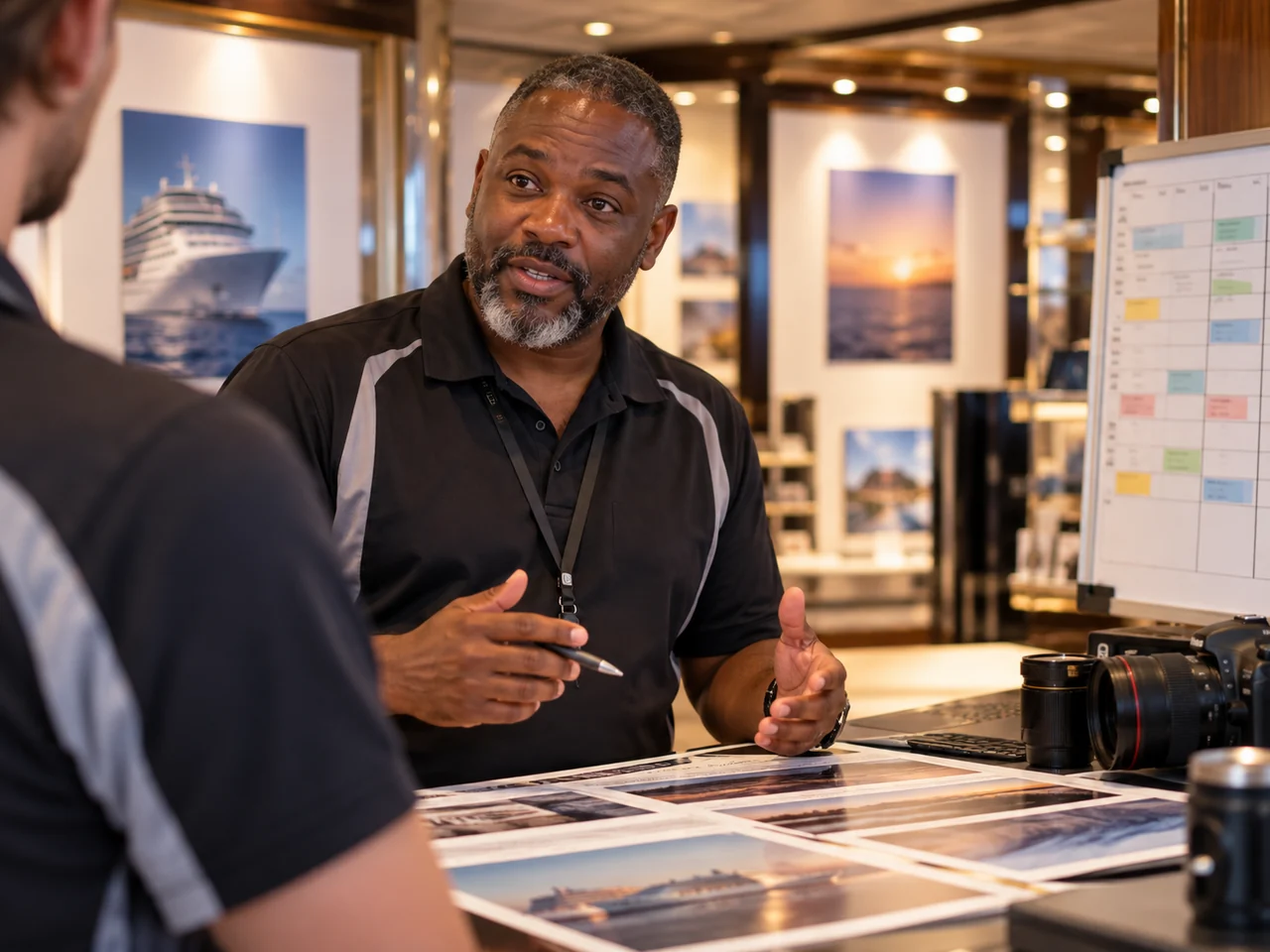
Black cruise ship photographer holding a camera in an ocean-view lounge.
Crew Life at Sea
Menu

Career guide · photography and media

Build your cruise ship photography career

Discover how shipboard photography jobs can combine image-making, guest service and sales. Learn how to shape a relevant portfolio, assess a vacancy and plan your next step without relying on promises that every employer follows the same route.

Photography · guest experience · onboard media

A creative role with a service focus

Photography at sea is about people as much as pictures.

Shipboard photo teams may capture portraits and events, support a photo gallery or studio, produce images for guests, and work alongside other departments during busy parts of a voyage. Some jobs also include booking services or meeting sales measures. The balance depends on the actual vacancy.

Photography services may be run by the cruise line or by an outside media partner. Before tailoring your application, confirm the legal employer, the main duties, the onboard department and whether the role includes a sales or incentive component. One job advert is not a rule for every fleet.

Build your application around what you can show: a considered portfolio, reliable technical work, confident guest communication and a clear understanding of the specific role.

Different job families

Find the part of photography that fits your strengths.

Titles and duties vary between operators and media partners. These examples explain common areas of work, not a guaranteed promotion ladder. Use the official contact details to confirm current services, eligibility and application routes. Keep the reply and any instructions with your records, and verify unusual requests for money, travel or identity documents through a second official channel before acting.

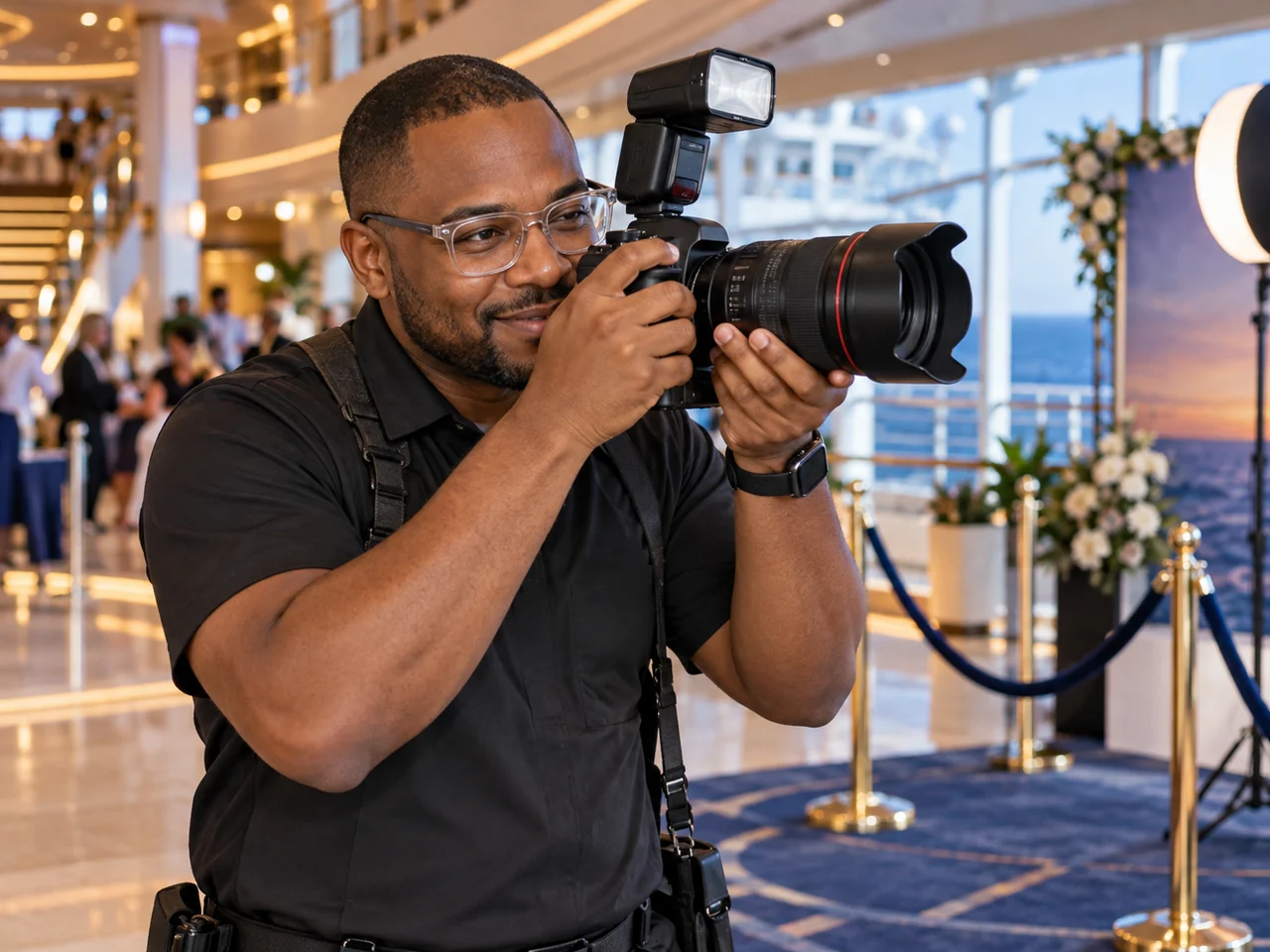
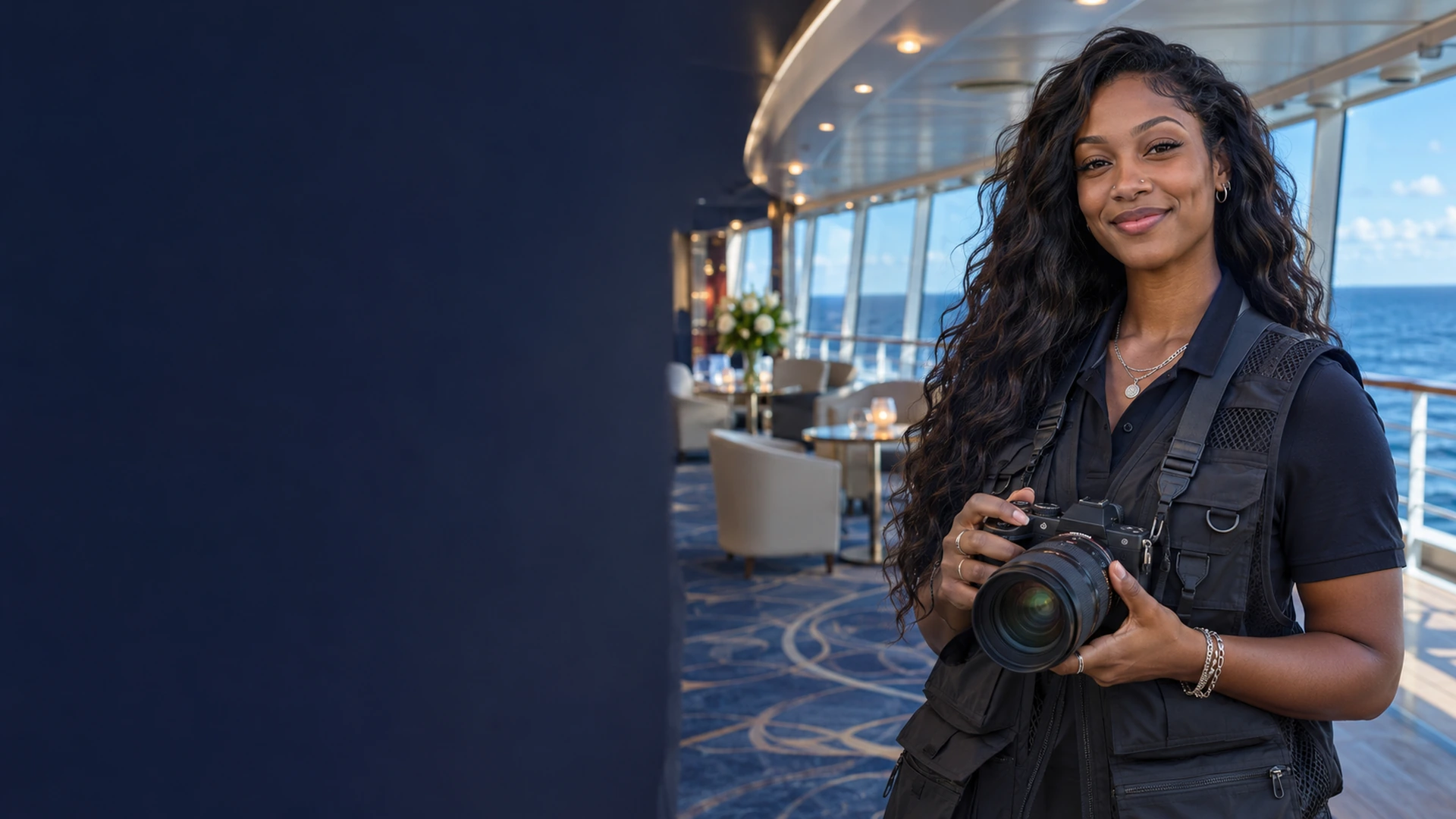
Black male cruise ship photographer framing a guest portrait with a professional camera at an onboard event

Guest photography

Photographer / Photo Artist

A typical assignment may include portraits, formal events, embarkation scenes or shipboard activities. Strong candidates can keep technical quality consistent while working quickly, engaging guests naturally and following the brief for each location.

Evidence to prepare: Show a varied set of your own portraits and event images. Explain how you choose exposure, focus, composition and light, and how you adapt when the setting or schedule changes.

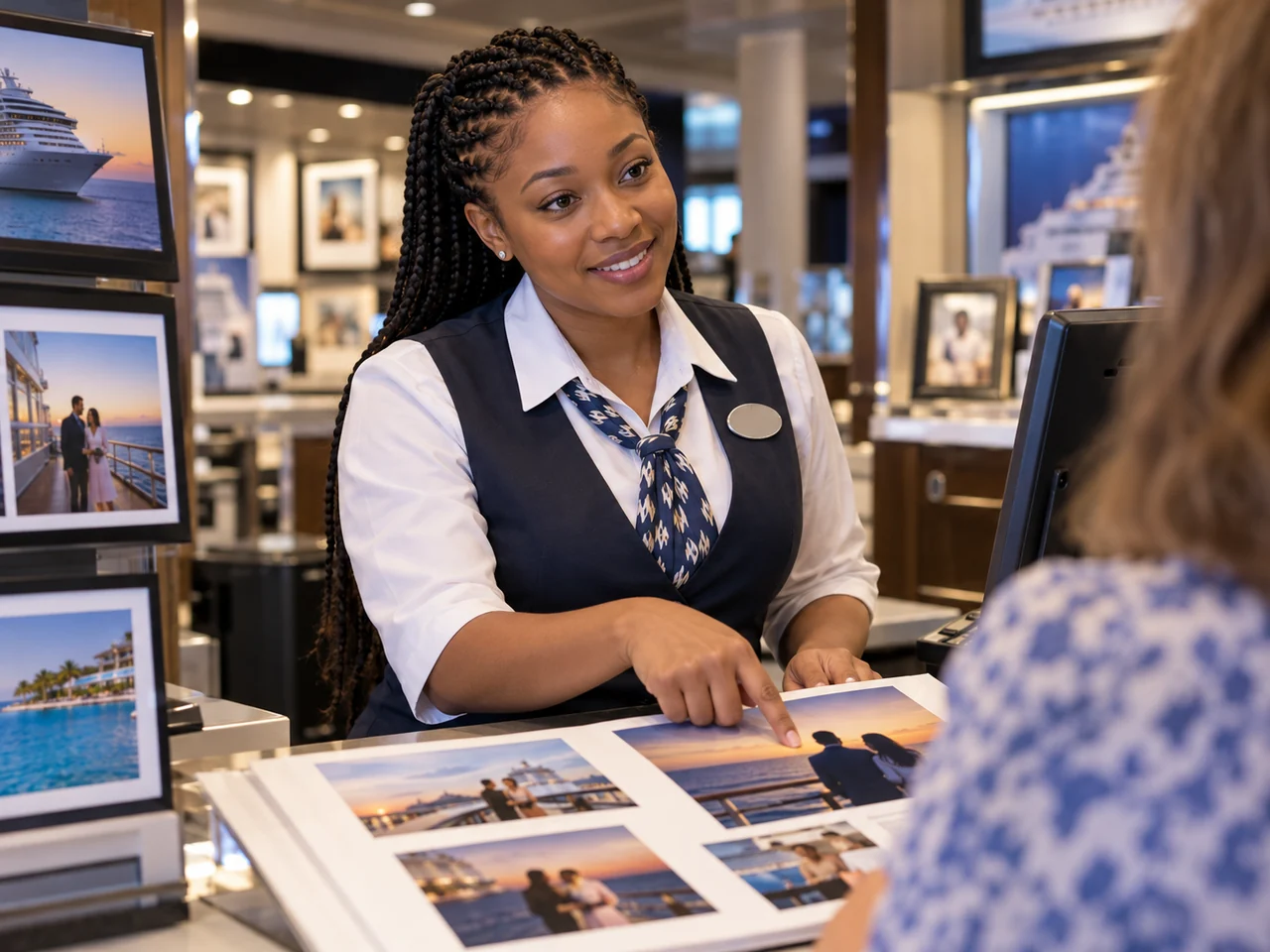
Black woman photo gallery associate presenting cruise portrait prints to a guest at an onboard counter

Photo gallery and guest sales

Gallery or studio associate

Some photo teams help guests find, compare and purchase images, arrange studio bookings, answer questions and process transactions. This calls for patient customer service, product knowledge and accuracy as well as an interest in photography. Sales goals or incentives may apply to some jobs; check the offer for the exact arrangement.

Evidence to prepare: Give examples of explaining options without pressure, resolving a service concern and handling a transaction accurately.

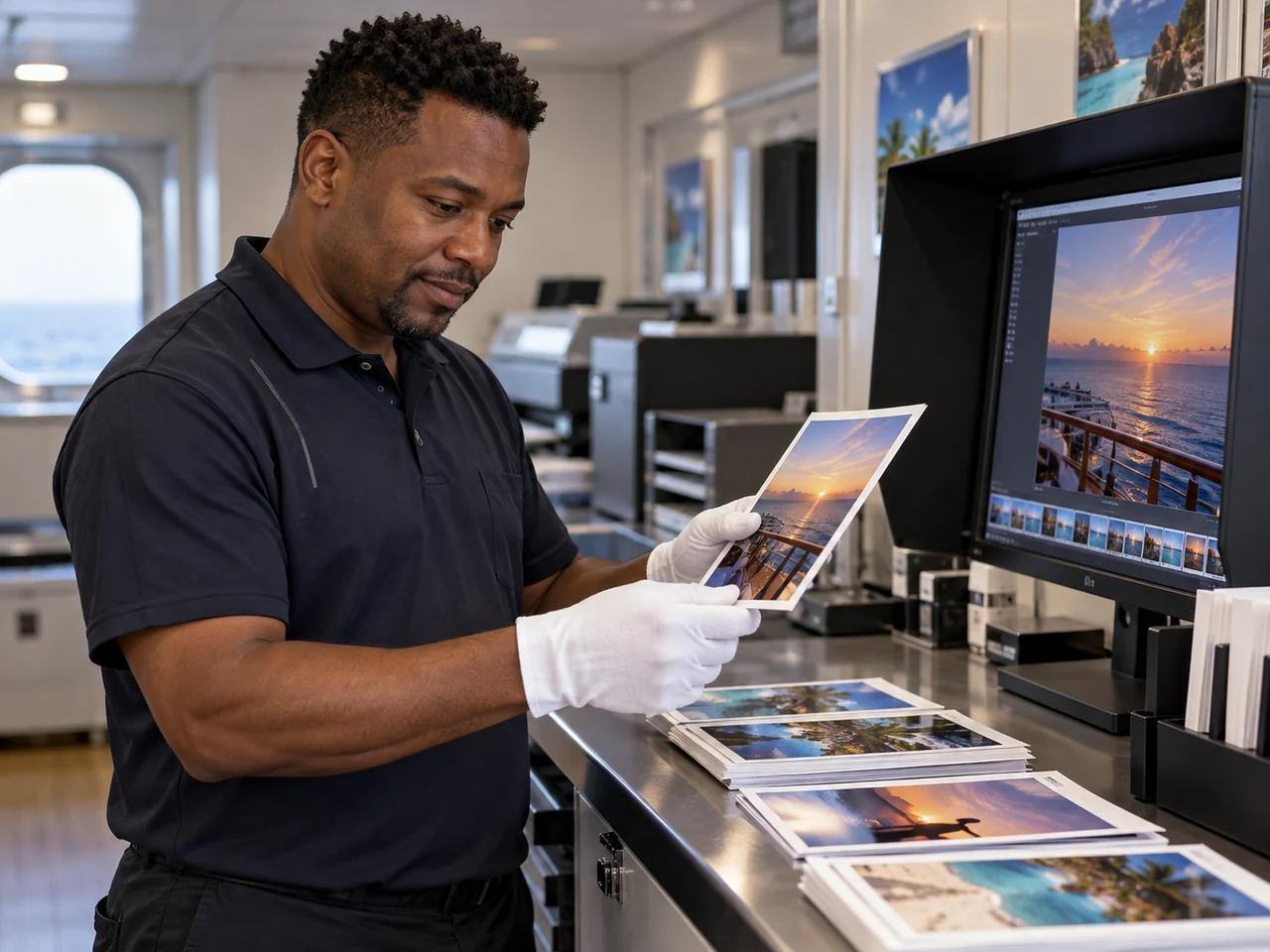
Black male cruise ship imaging technician inspecting printed guest photos at a production workstation

Image production

Photo lab or imaging support

Where a ship operates an onboard photo workflow, production duties can involve importing, sorting, basic editing, print checks, file organisation and meeting service deadlines. The exact equipment and workflow depend on the employer and ship.

Evidence to prepare: Name the editing or print tools you have genuinely used. Describe colour and exposure checks, file naming, backup routines and how you protected client images.

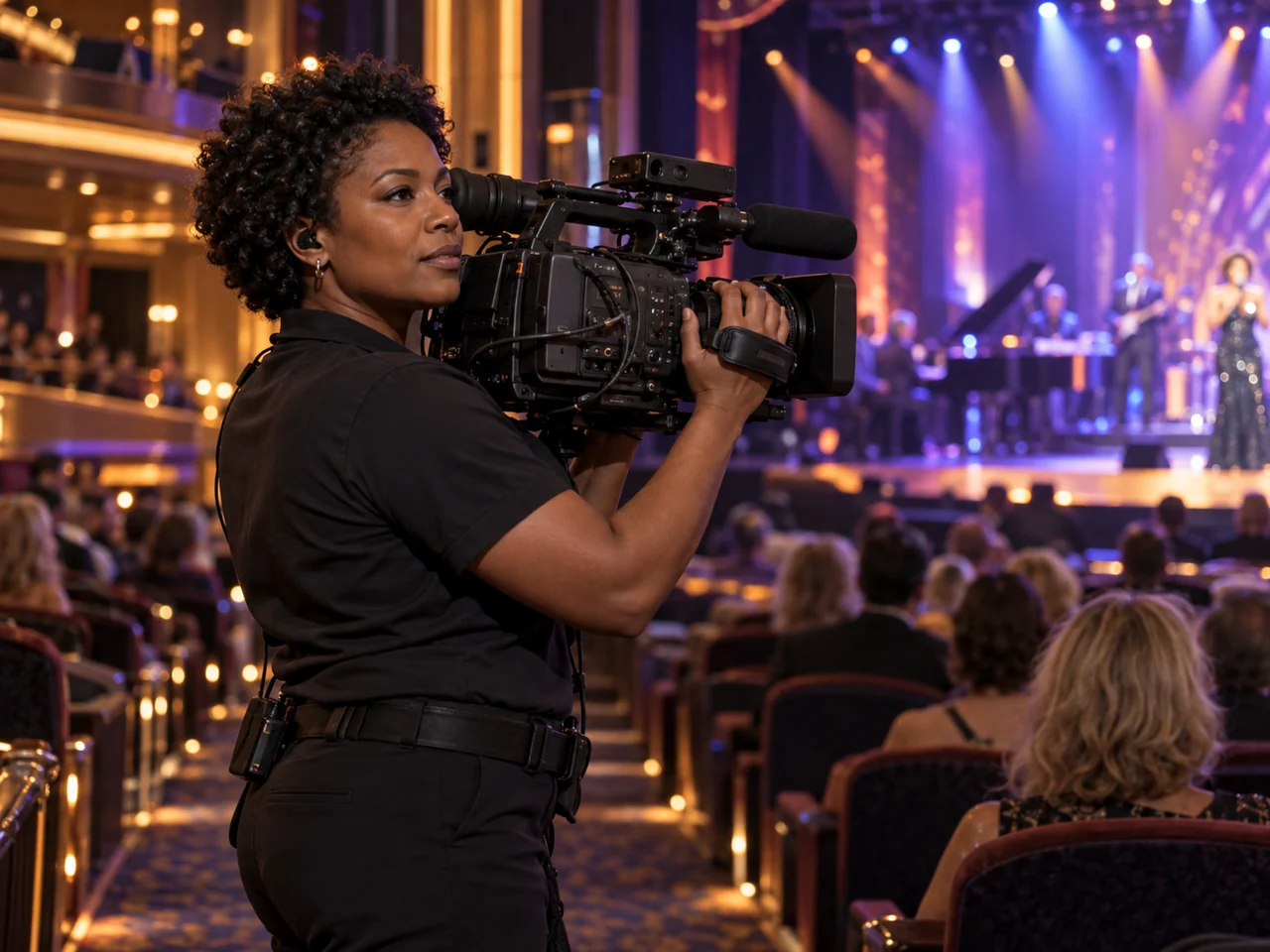
Black woman videographer filming a live performance in a cruise ship theatre

Video and content capture

Videographer or media specialist

Some operators or media partners recruit separate video staff to capture shows, excursions or voyage highlights. These roles may require sound recording, editing, storytelling and a portfolio of moving images; they are not automatically part of a photographer vacancy.

Evidence to prepare: Share a short showreel with clear permission to use all footage. State your contribution to filming, sound, editing and final delivery.

Leadership roles: A photo-team supervisor or manager may coordinate schedules, gallery standards, training, service recovery, stock or reporting. These positions may require previous shipboard experience, proven team leadership or employer-specific results. Apply when a real vacancy is open; service time alone does not guarantee promotion.

Make your experience visible

A portfolio should prove how you work.

Choose a small, carefully edited collection rather than uploading every image you have. Follow the employer’s file and submission instructions, and only share work you own or have permission to use. Record the tasks and responsibilities you can support with references, service records or certificates. Compare them with the vacancy’s must-haves, contract and joining requirements, and ask the recruiter about any gap rather than assuming it will be waived.

01 · Portraits

Show consistency with people

Include individual and group portraits with natural expressions, considered backgrounds and balanced exposure. Explain how you guide subjects and make adjustments without making the experience awkward.

02 · Events and low light

Show control in changing conditions

Use a few event images that demonstrate timing, focus and exposure in mixed or dim lighting. Mention the equipment and settings only when you can explain them accurately.

03 · Editing and delivery

Show finish and file discipline

If relevant to the position, include edited work alongside a brief process note: selection, colour consistency, export, quality checks and a realistic delivery workflow.

Caption template: “I photographed [type of session] using [available light or setup]. My role was [specific contribution], and I adjusted [focus, exposure, composition or direction] to achieve [clear result].” Use honest details and remove private client information.

Build a relevant application

Turn creative ability into clear evidence.

Hiring teams need to understand both your image-making and how you work with guests, colleagues and deadlines. Match each example to the vacancy’s stated duties. For each role, identify the day-to-day tasks, who it reports to, the expected experience and any mandatory qualification. Build a shortlist around evidence you can provide, then use the live vacancy to confirm current duties and conditions because titles vary by employer.

01 · Capture

Technical fundamentals

Explain focus, exposure, composition, flash or continuous light, and how you choose practical settings for portraits or events.

02 · Connect

Guest communication

Give an example of offering direction, listening to preferences and helping people feel comfortable in front of a camera.

03 · Deliver

Speed and consistency

Describe how you organise a busy shoot, keep quality steady, meet the deadline and check your work before delivery.

04 · Select

Editing and workflow

Name software and equipment you have genuinely used, then describe your selection, retouching, export and backup process.

05 · Serve

Sales and service recovery

For roles with gallery or sales duties, show how you explain options clearly, handle a concern and respect a guest’s decision.

06 · Protect

Consent and privacy

Show that you follow the employer’s rules for photographing, storing and sharing guest images, and do not publish work without permission.

Black cruise ship photography supervisor discussing image selections with a team member in the onboard photo gallery
A portfolio review can demonstrate image quality, selection judgement and the way you explain your decisions.

Portfolio review and interview

Practise explaining the choices behind each image.

Pick three portfolio examples and prepare a short explanation for each: what the brief was, what conditions you faced, what you did personally and what you would change next time. Be ready to discuss customer service, teamwork and image privacy as well as camera technique.

If an advert includes gallery sales or photo bookings, practise explaining a service in a helpful, low-pressure way. Ask how the team measures success and whether the role includes commission or target-based incentives. Do not assume the same terms apply to other ships or employers.

Prepare for your interview ↗

An illustrative development route

Grow through skills, evidence and open opportunities.

There is no universal sequence or fixed timeline. Employers use different titles, teams and selection criteria; some specialist services sit with a partner company. Match each essential vacancy criterion to dated evidence: a specific duty, your own contribution, a result and a referee or certificate that can support it. Keep job titles and dates consistent across your CV and forms, submit through the verified channel and save the version you sent.

Stage 01 · Prepare

Build a relevant foundation

Develop dependable camera skills, guest interaction, file workflow and a concise portfolio matched to the advertised position.

Stage 02 · Deliver

Learn the onboard operation

Follow location briefs, guest-service standards, photo handling rules, team schedules and the employer’s approved systems.

Stage 03 · Broaden

Strengthen a specialist area

Where roles exist, deepen experience in portraits, events, gallery service, imaging production or video and media capture.

Stage 04 · Lead

Apply for a suitable vacancy

Show reliable results, coach others and manage service priorities before applying for an open supervisory or management position.

A course, strong appraisal or extra contract can support a career plan, but none guarantees a promotion. Ask which experience, results and vacancies matter for the next role with that employer.

Check the vacancy first

Prepare for the requirements that actually apply.

Official listings differ. For example, some employers ask for previous professional photography experience, while trainee listings can specify a different mix of education and practical skills. Requirements change; check the current advert. Use the live listing to decide what to emphasise, while keeping every claim accurate. For each required skill, note where and when you used it, what you personally handled and which evidence supports it; ask the recruiter before treating related experience as an equivalent qualification.

Portfolio and experience

Ask whether the role needs portrait, wedding, event, commercial or video examples, and what format the employer accepts. Do not pay for a course based only on a generic online claim.

Equipment and software

Confirm whether equipment is supplied, what systems are used onboard and which capabilities you need before joining. Do not assume you should purchase expensive equipment for an employer.

Safety and joining documents

Medical, travel, visa, background and maritime safety training requirements may apply, but vary by job and itinerary. Get the exact steps and approved providers from the verified employer or recruiter.

Employer and contract terms

Check who employs you, where you report, contract length, base pay, commission rules, targets, deductions, working hours, accommodation, travel costs and repatriation in writing.

Your application checklist

Make every part of the application easy to verify.

Use the current vacancy as your checklist. Keep examples truthful and protect your client work, references and personal documents. Match each essential vacancy criterion to dated evidence: a specific duty, your own contribution, a result and a referee or certificate that can support it. Keep job titles and dates consistent across your CV and forms, submit through the verified channel and save the version you sent.

01

Choose the right vacancy

Confirm the title, legal employer, ship or fleet, department, duties and closing date through an official careers page or verified hiring partner.

02

Prepare a concise portfolio

Use selected, permission-cleared images. Check file sizes, links and captions, and make sure every sample represents work you personally completed.

03

Tailor your CV

State your experience, equipment, software, guest-facing work, production workflow and real results. Keep dates and qualifications accurate.

04

Clarify the offer

Request the pay calculation, commissions, deductions, contract, joining costs and training instructions in writing before you commit or pay for anything.

Recruitment safety: Verify the person and application channel through the employer’s official careers site or authorised-partner information. Do not send passport, banking or medical records to an unverified contact.

Photography career FAQs

Straight answers before you apply.

Use the current job listing and written employer instructions for any requirement that affects your application.

What does a cruise ship photographer do?

Depending on the vacancy, photographers may capture guest portraits, events or shipboard activities, help guests choose images, and contribute to photo-gallery or studio services. The assigned duties differ by employer and ship.

What experience do cruise photographer jobs require?

It depends on the current posting. Official employer listings show different entry routes: some ask for professional event, portrait or wedding experience, while trainee openings may emphasise basic technical training, customer service and sales communication. Check the actual vacancy rather than assuming one universal rule.

Do I need a photography degree?

A degree is not a universal requirement. Employers may value a relevant portfolio, practical experience, formal training or a particular combination. Read the job advert and ask the hiring employer how it assesses equivalent experience.

What should I include in my photography portfolio?

Select a concise set of your own, permission-cleared work: portraits, events, low-light scenes, group composition, details and any editing or print-production work relevant to the post. Add brief captions explaining your role and the lighting or workflow. Remove private client data and images you cannot lawfully share.

Are onboard photographers expected to sell photos?

Some shipboard photo roles include guest interaction, bookings, gallery support or sales targets. Others may have a different balance of capture and production. Confirm the written duties, performance measures and any commission formula before accepting.

How much do cruise ship photographers earn?

Pay and incentives vary by employer, job title, contract and agreement. Online salary ranges can be outdated or exclude commission, deductions or other terms. Request the base pay, commission rules, targets, deductions and payment schedule in writing.

Is cruise ship photography always employed by the cruise line?

No single arrangement applies everywhere. Some roles may be employed by a cruise operator; photography services may also be provided by a specialist company or concessionaire. Confirm the legal employer, who signs the contract and which company handles recruitment and payroll.

Does a cruise ship photographer need STCW training?

Do not assume that a photography vacancy has the same safety-course requirements as another shipboard job. Training and joining checks can depend on the employer, duties, ship, flag and itinerary. Ask for the exact required course, approved provider and deadline before paying.

Can photographers move into photo management?

A move into a senior or management vacancy may be possible when an employer has that role and the applicant meets its experience, performance and selection requirements. There is no guaranteed title sequence or promotion timeline.

How do I apply safely?

Start at the employer’s official careers site or verify the recruiter through the employer’s authorised-partner list. Compare the vacancy and written offer carefully; do not send money or sensitive documents through an unverified channel.
Keep your next step connected

Related cruise crew guides.

Compare the role, shape a useful portfolio and check the written recruitment and contract details before accepting an offer. Separate guaranteed pay from tips, service charges or commission, and check how each is calculated and shared. Confirm travel responsibility, accommodation, meals, insurance, deductions and cancellation terms in the contract or an official written explanation before accepting.

Employer examples: Princess Cruises photographer vacancy, Carnival Photographer Trainee listing, Costa Cruises photographer role and CruiseVision careers illustrate different job descriptions and employer arrangements. These examples do not set requirements for other vacancies; confirm current terms directly with the hiring organisation.