Engine ratings, engineering officers and electro-technical officers have different duties and qualification pathways.

Career guide · Engine and technical department
Engine Technical Career Path
Explore cruise ship engine-room and technical careers, from practical support roles to licensed engineering positions. Training, certificates and progression depend on the job, vessel, flag state and your approved sea-service route.
Engineering careers grow through competence, approved training and verified sea service
How the technical department works
A ship’s technical team keeps essential systems running safely.
On a cruise ship, engine and technical crew support propulsion, power generation, machinery, electrical systems and planned maintenance. The team’s work affects safe operations and guest services, but job titles and responsibilities vary between companies and vessel types. Use the official contact details to confirm current services, eligibility and application routes. Keep the reply and any instructions with your records, and verify unusual requests for money, travel or identity documents through a second official channel before acting.
Training and certification depend on the role, duties, vessel, flag state and issuing maritime authority.
Sea service, competence, required assessments and vacancies all affect advancement. No promotion timeline is guaranteed.
Choose the route that fits
Engine-room ratings and engineering officers are different career tracks.
Start with the written vacancy and the qualifications you hold today. Do not assume that joining in a support role automatically leads to an officer licence; each certificate has its own approved training and sea-service requirements. Check the course against the requirement for your role, not just a similar-sounding certificate. Ask the provider who approves it, what is assessed, where practical training takes place, how long the certificate remains valid and whether your employer accepts that provider.

Engine rating route
Practical machinery and maintenance duties
Entry and rating positions can include engine-room support, machinery-space rounds, cleaning and upkeep, assisting with planned maintenance, and work under the direction of qualified engineers. Actual duties depend on the post and the vessel’s safety procedures.
Some watchkeeping duties require the relevant training and certification under the applicable national implementation of STCW. A rating who wants to advance should keep sea-service records accurate, complete assigned onboard training and ask the employer or administration which next certificate applies.
Engineering officer route
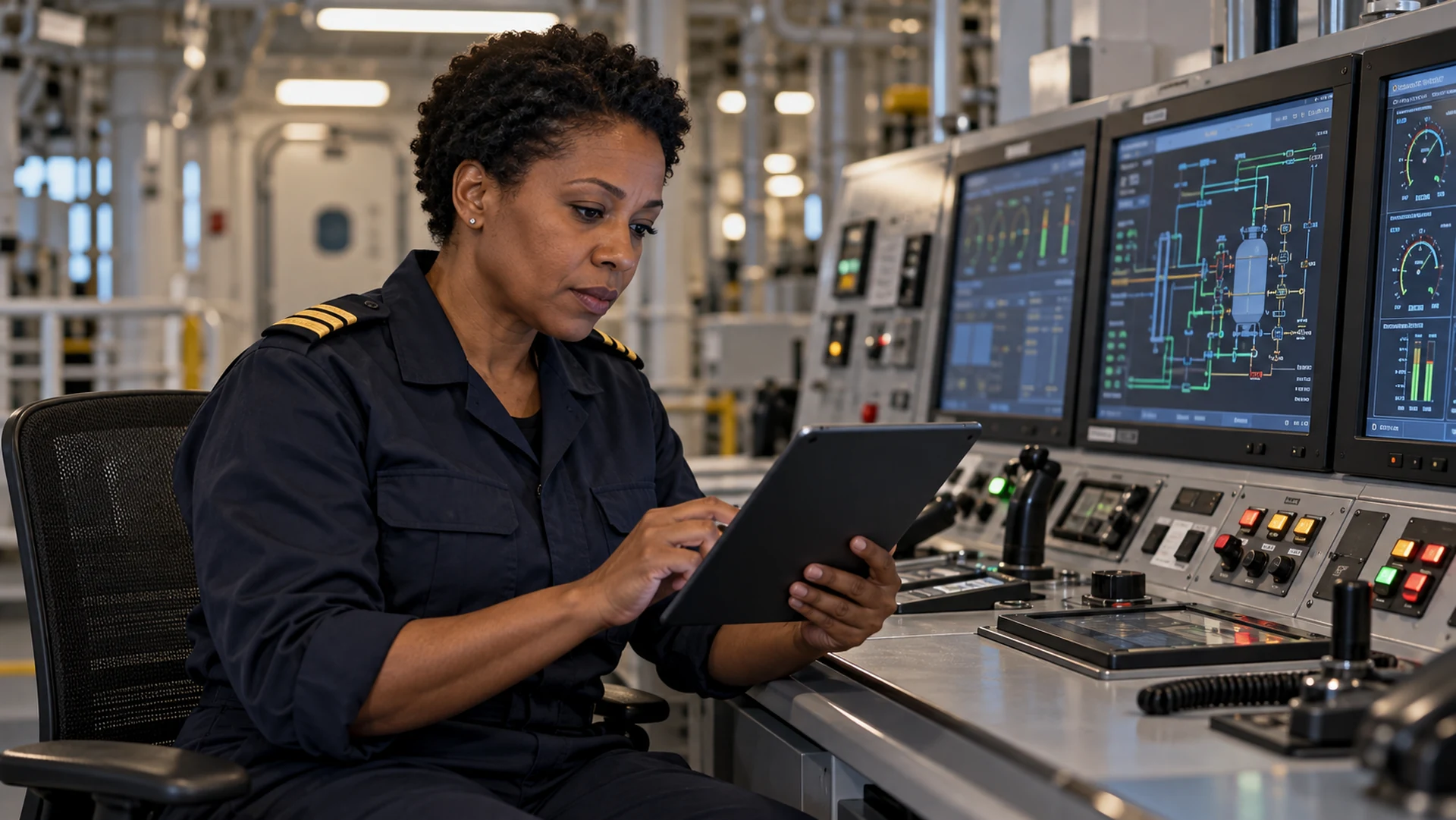
Watchkeeping and technical responsibility
Engineering officers operate and maintain machinery at a level set by their certificate and assignment. Officer certification is not simply a company promotion: it requires meeting the standards set by the issuing administration and holding the required certificate for the duties performed.
Cadet, approved education, experienced-seafarer and other national routes may differ. Confirm entry qualifications, approved training, workshop requirements, sea service, examinations and documentation with the relevant maritime authority before investing in a course.
Electrical and control systems
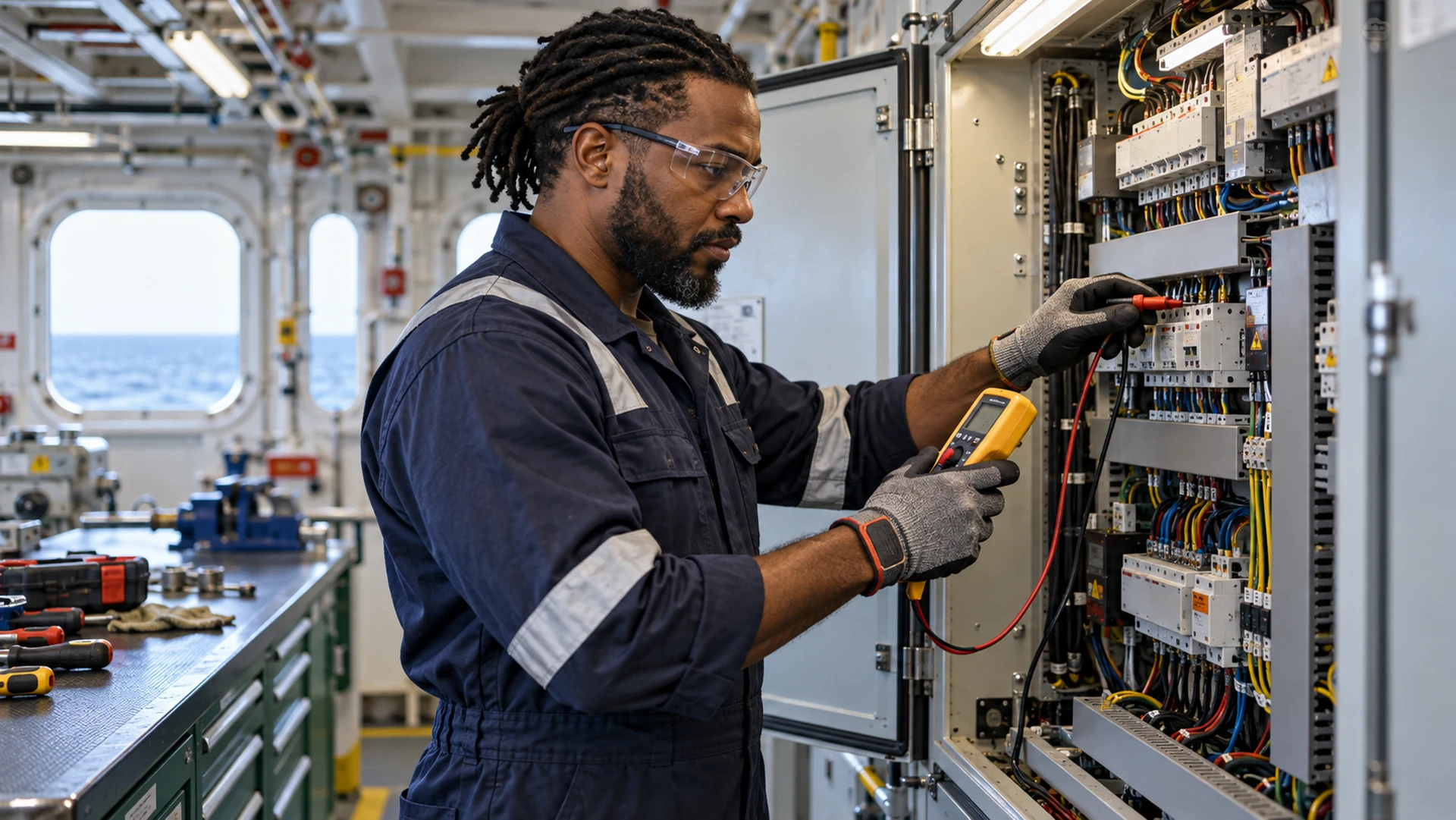
Electro-technical officer pathway
Electro-technical officers focus on shipboard electrical, electronic, automation and control systems. This is a specialised route with distinct training and certification requirements; it should not be presented as an automatic step in the marine engineering officer ladder.
For vacancies with an electrical or automation focus, show the systems you have worked on, the level of responsibility you held, relevant electrical qualifications and any seagoing certificates requested in the advertisement.
Related technical work
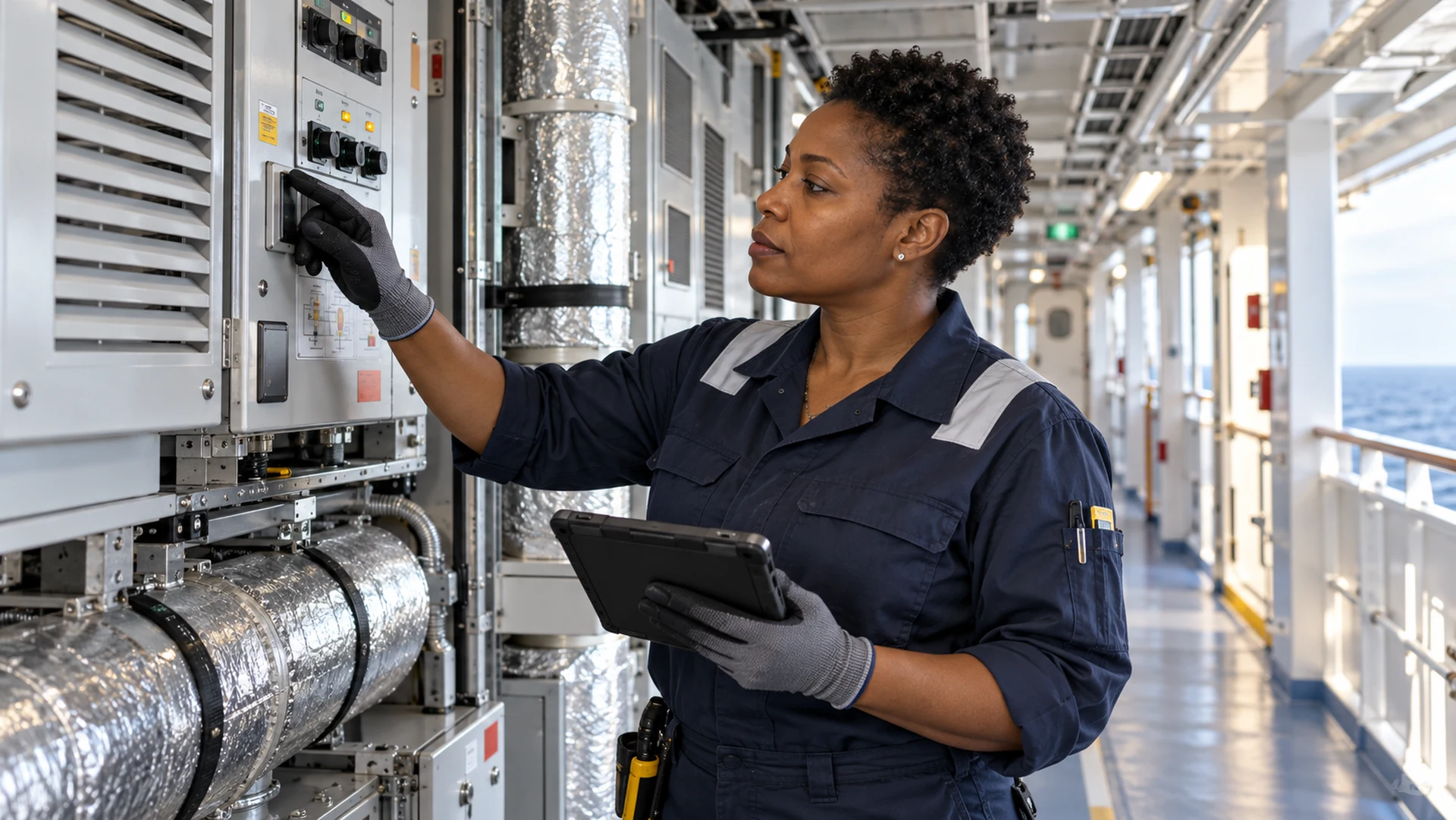
Hotel maintenance and ship services
Some cruise ships recruit technical workers for hotel maintenance, refrigeration, plumbing, HVAC, pools or other guest-area systems. These roles can sit outside the engine officer certification route and may have employer-specific requirements.
Use the job description to tell whether the position is an engine-room seafarer role, a shipboard technical trade or another department. If it is unclear, ask the recruiter before paying for training or arranging documents.

What the work can involve
A technical career is built on safe routines and accurate records.
Depending on the role, an engine crew member may assist with inspections, planned maintenance, machinery monitoring, defect reporting, equipment care or watchkeeping. Officers have responsibilities set by their certificate, watch assignment and the vessel’s procedures. No one should carry out work beyond their training or authorisation.
Engine departments also coordinate with the bridge and other ship teams. Clear handovers matter because machinery condition, faults, maintenance status and safety precautions must be communicated reliably across watches and departments.
- Follow permit-to-work, isolation and personal protective equipment procedures for the assigned task.
- Record readings, inspections, maintenance and defects in the designated system or log.
- Report abnormal sounds, leaks, temperatures, vibration or alarms promptly through the correct chain.
- Keep machinery spaces orderly and respect environmental and waste-handling procedures.
Certificates and sea service
Check the certificate route before booking training.
The STCW Convention sets international minimum standards for seafarer training, certification and watchkeeping. Administrations implement those standards and publish the detailed process for each certificate. Cruise employers may add their own selection, medical, document and familiarisation requirements. Keep the referral, appointment instructions and completed certificate together. If medication, a condition or a follow-up could affect your schedule, discuss it with the authorised clinic and recruiter early. Do not assume that a certificate from a different provider or route will be accepted.
What to confirm with the authority or recruiter
- Whether the target post is a rating, an officer position, an electro-technical role or hotel technical trade.
- The exact certificate, regulation, endorsement or recognised qualification required for the duties.
- Which training providers and courses are approved, and whether prior qualifications are accepted.
- How sea service, training record books, workshop skills and examinations must be documented.
- Medical fitness, passport, visa, background checks and certificate validity for the specific employer and itinerary.
Do not buy a course based on a job promise. Ask for the exact vacancy and written confirmation that the course and provider meet the requirements for your chosen certification route.

Prepare a credible application
Show the evidence behind your technical experience.
Recruiters need to see what you can do, the conditions under which you did it, and which certificates support your application. Keep each statement accurate and easy to verify. Prepare a role-specific application file with a concise CV, contactable references and clear copies of relevant qualifications when requested. Check spelling, contact details, dates and certificate expiry, then follow the employer’s file format and keep a record of the submission date and response route.
Identify the role
Read the job title, duties, rank, vessel context and required certificates. Ask for clarification where the description is unclear.
Match your evidence
Connect your mechanical, electrical, maintenance or seagoing experience to the listed tasks without overstating your responsibility. Describe the work setting, your shift or station, the equipment or system used, the service or safety standard followed and your own contribution. Give one specific example and separate your actions from the team’s result.
Check documents
Review certificate names, issuing authorities, expiry dates, medical status and sea-service records against the vacancy instructions. Describe the work setting, your shift or station, the equipment or system used, the service or safety standard followed and your own contribution. Give one specific example and separate your actions from the team’s result.
Prepare for interview
Be ready to explain safe work practices, a fault you helped resolve, accurate handovers and how you respond when a task is beyond your authorisation.
CV tip: list machinery, systems, tools and maintenance methods only when you have genuinely used them. See our cruise ship CV guide for a role-focused format.
Career development
Progression depends on the route, not a promised timetable.
Movement into higher-responsibility roles can require more than time onboard. The applicable qualification, approved sea service, assessments, exams, medical fitness, performance, conduct and available vacancies all matter. Requirements vary by administration and employer. Ask the employer which examination and clinic it accepts, what referral and identification to bring, and when the certificate must be valid. Confirm how results are sent, whether follow-up tests are possible and who should be told if the appointment could affect your joining date.
For an officer pathway, use the maritime authority’s current guidance to map each certificate level before planning the next step. For an engine rating pathway, ask which watchkeeping or able-seafarer-engine certificate applies to the duties you want. Keep copies of certificates and sea-service testimonials, and make sure dates, vessel details and duties are recorded accurately.
Senior responsibility is earned through the relevant certification and demonstrated competence. There is no universal cruise-line sequence that guarantees progression from wiper to Chief Engineer, and a rating position is not a substitute for officer certification.
Common questions
Engine department career FAQs
Use the vacancy and the applicable maritime administration as the final source for requirements. The answers below explain the general distinctions that help applicants plan their next step.
What does the engine department do on a cruise ship?
The department operates and maintains propulsion, electrical generation, auxiliary machinery and related systems. Specific duties depend on rank, qualifications, the vessel and the employer’s procedures.
Can I become a ship engineer without an engineering officer licence?
Some engine-room rating or support roles have different entry requirements from officer posts. An engineering officer role requires the appropriate certificate of competency and flag-state recognition for the ship and duties.
Does every engine-room rating need the same STCW certificates?
No. STCW requirements depend on assigned duties and the certificate sought. Watch-rating and able-seafarer-engine qualifications have specific training and sea-service requirements; confirm the current route with your maritime administration and employer.
How do you progress from rating to engineering officer?
There is no automatic promotion ladder. Officer certification generally requires an approved education and training route, documented sea service, required assessments and examinations, medical fitness and certificates accepted by the issuing administration.
Is an electro-technical officer the same as a marine engineer?
No. Electro-technical officers focus on electrical, electronic and control systems and follow their own qualification route. Job titles and reporting structures differ between cruise lines.
What experience should I put on my technical CV?
Use verifiable duties such as planned maintenance, fault-finding, machinery inspections, electrical or mechanical work, safety procedures and accurate handovers. State your actual responsibility and list certificates with their issuer and validity.
Can a land-based mechanic apply for ship engine jobs?
Relevant mechanical or electrical experience may support an application for some vacancies, but it does not replace required seafarer training, certificates, medical fitness or sea-service qualifications. Check the exact vacancy criteria first.
Where can I check current certification requirements?
Start with the maritime administration that will issue or recognise your certificate, then verify the employer’s vacancy instructions. The IMO STCW framework sets international minimum standards; national authorities publish the applicable route and application process.
Official references: IMO STCW Convention · IMO training and certification · UK MCA seafarer skills and training · SAMSA maritime opportunities · SAMSA online services. Requirements depend on the certificate sought, flag state and current administration guidance.
Continue your preparation
Related crew career and training guides
Spa & Wellness Career PathExplore shipboard spa, salon, fitness and guest-wellness roles.Deck and Engine JobsCompare shipboard deck, bridge and engineering role families.Deck Department Career PathCompare navigation officer and deck rating qualifications with technical department roles.Security Career PathCompare a different onboard department and its employer-specific entry expectations.Cruise Ship Job RequirementsReview general documents, medical checks and preparation before applying.STCW Basic Safety TrainingUnderstand the core safety-training guide and when to confirm course requirements.Training and ProgramsExplore maritime learning routes and questions to ask before enrolling.Seaman’s BookLearn how a discharge book and related identity documents fit into sea service.Crew Contracts ExplainedReview contract terms and clarify pay, duration, leave and deductions in writing.Available Cruise Ship PositionsBrowse current job categories and check the exact technical vacancies.Cruise Ship Interview TipsPrepare clear examples of safety, teamwork and technical problem-solving.Retail & Shops Career PathExplore guest-facing cruise retail roles, applications and contract questions.Guest Services Career PathExplore reception, guest relations and multilingual support roles.Cruise Ship Career PathCompare the shipboard departments and plan a realistic next step.IT Career PathExplore shipboard IT support, systems and operations roles.