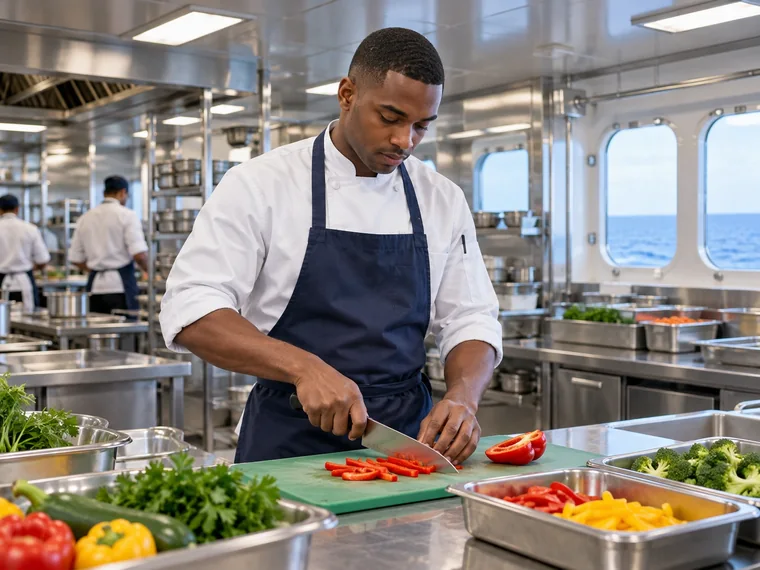
A Black cruise ship sous chef plates a dish in a working galley with the dining room beyond.
Crew Life at Sea
Menu

Cruise ship careers · Culinary and galley

Cruise ship culinary jobs skill, pace and teamwork.

Find out how cruise ship galley roles differ, what employers may look for, and how to present your kitchen experience clearly. Then check the role and joining requirements before you apply.

Culinary careers at sea · Crew Life at Sea

A practical guide to kitchen vacancies

Good kitchen work is built on consistency.

Cruise ship culinary teams prepare food across several venues and service periods. Depending on the vessel, the operation may include hot and cold kitchens, bakery and pastry, crew dining, buffet production, specialist restaurants, food stores and galley utility support.

The vacancy title alone does not tell you the full job. Compare the stated section, level of responsibility, expected experience, food-safety duties and joining conditions with the work you can genuinely evidence. Employers set their own criteria, and requirements can differ between ships and contracts.

Use the written vacancy to identify the job, then tailor your CV to the section and duties described.
Match the sectionHot kitchen, cold kitchen, pastry, bakery, utility or supervision may require different evidence.
Show safe practiceDescribe the hygiene routines and training you actually used, without claiming credentials you do not hold.
Check the offerConfirm the employing company, duties, written terms and joining steps before making commitments.

Kitchen roles and evidence

Where your experience may fit.

Job names and reporting lines vary by cruise line. Galley teams can include hot and cold production, pastry and bakery, buffet, crew dining, specialist restaurants, and utility or stewarding support. The duties attached to a title depend on the vessel, menu, service style and staffing.

Before you apply, compare the vacancy’s station, expected skill level, shift pattern, food-safety duties and reporting line with your experience. Ask the recruiter to clarify any title that does not make the day-to-day work clear. Match each essential vacancy criterion to dated evidence: a specific duty, your own contribution, a result and a referee or certificate that can support it. Keep job titles and dates consistent across your CV and forms, submit through the verified channel and save the version you sent.

A Black commis cook prepares vegetables at a stainless workbench in a cruise ship galley.
Preparation, section support and a tidy, organised station.

Preparation and production

Commis and junior cooks

Entry and junior cook vacancies can involve ingredient preparation, recipe following, mise en place, basic production tasks, cleaning and supporting a designated station. The work can suit applicants who can demonstrate reliable commercial-kitchen habits and a willingness to learn the employer’s systems.

  • Describe the kitchen type, station and tasks you handled.
  • Give examples of consistency, teamwork and safe handling.
  • Be clear about supervision and the level of responsibility.
A Black galley cook checks a hot food pan with a probe thermometer and records the reading.
Food checks are recorded and escalated through the ship’s procedure.

Food safety and galley support

Utility, stewarding and hygiene roles

Some positions focus on galley sanitation, equipment care, dish and pot operations, waste handling or support for food production. These are distinct from cook roles, although attention to cleaning schedules, safe storage and communication with the team matters throughout the operation.

  • Check whether the vacancy is culinary, stewarding or another department.
  • Explain cleaning systems and equipment you have used.
  • Ask what food-safety induction is provided onboard.
A Black pastry chef finishes plated desserts in a cruise ship pastry kitchen.
Specialist sections value accuracy, timing and repeatable results.

Specialist kitchen work

Pastry, bakery and section chefs

Specialist and experienced vacancies may ask for direct pastry, bakery, butchery, cold-kitchen or hot-section experience. Chef de partie and supervisory roles can include organising production and supporting a team, but job titles and authority differ between employers.

  • Name the section and products you know well.
  • Show production planning, portion control or service coordination where relevant.
  • Describe leadership accurately; progression is never automatic.

What the work can involve

Show how you work under service pressure.

Recruiters need specific examples, not broad claims. Choose a real service shift and explain the station, the work expected and the part you personally handled. Be clear about how you prepared ingredients, followed recipes or production sheets, and kept your section ready.

Prepare examples of maintaining hygiene, checking allergens or temperatures, rotating stock, coordinating with another station and adapting when a service plan changed. Describe the procedure you actually followed and who you informed when a concern needed attention. Record the tasks and responsibilities you can support with references, service records or certificates. Compare them with the vacancy’s must-haves, contract and joining requirements, and ask the recruiter about any gap rather than assuming it will be waived.

Keep each answer focused: what was happening, what action you took and what resulted. If you made a mistake, explain how you reported and corrected it and what you learned. Specific, honest examples show reliability more clearly than broad claims about working well under pressure.

01 · preparation and timing

Organise mise en place

Explain how you prepared ingredients, followed recipes or production sheets, checked quantities and kept your station ready for service. If you worked to a set cover or production target, include a realistic figure only when you can support it.

02 · standards and hygiene

Follow documented routines

Describe how you handled cleaning, storage, temperature checks, allergen controls or separation of raw and cooked foods in your workplace. Follow the procedures and reporting chain used by the employer; do not imply that one generic checklist replaces onboard training.

03 · teamwork and handover

Communicate clearly

Give an example of coordinating with another station, receiving a handover, reporting a shortage or escalating an equipment issue. Include the action you personally took and the outcome, while protecting confidential employer or guest information.

04 · feedback and reliability

Show professional judgement

Busy kitchens depend on punctuality, consistent output and calm responses to corrections. Use a genuine example of adapting to a changed service plan, supporting colleagues or correcting a mistake before it affected service.

Build a credible application

Turn kitchen experience into clear CV evidence.

Tailor the first half of your CV to the position. Start with a short profile that matches the vacancy, then place your most relevant kitchen role and section near the top. Describe preparation, production, service and handover tasks you personally handled.

Use accurate dates and job titles. Where you can support them, include service volume, production quantities, equipment or team size to show the scale of your work. Keep the CV focused and readable, with recent relevant work, language skills, qualifications and contactable referees. Remove unsupported claims, check the file on a phone as well as a computer and save a clean PDF using a clear filename.

List food-safety training and certificates with their correct names and dates. Keep every claim consistent with your references and documents, and never describe shore-based work as cruise-ship experience.

What to includeUseful detailAvoid
Kitchen and sectionRestaurant, hotel, resort, catering, bakery or production kitchen; name your actual station.Calling all work “cruise experience” when it was shore-based.
Daily dutiesPreparation, cooking, baking, plating, cleaning, stock rotation or handover tasks you personally performed.Listing duties from a higher role that you did not hold.
Food-safety practiceRelevant training, safe handling routines and how you followed local procedures.Claiming a certificate, inspection authority or medical clearance you do not have.
Scale and paceService volume, covers, production quantities or team size when accurate and appropriate.Inflated figures or confidential commercial information.
ResponsibilityEquipment, ordering, training, station coordination or supervision you were genuinely assigned.Implying management authority from informal support alone.
Transferable experience: hotel, restaurant, resort, contract-catering, bakery and institutional kitchens may provide relevant evidence. They do not automatically replace a certificate, medical check or other requirement stated for a particular shipboard vacancy.

Food safety and joining checks

Confirm what applies to your role.

There is no universal pre-joining checklist for every employer or itinerary. Ask for the current written instructions for the specific vacancy, vessel and joining date. Airline rules and shipboard joining instructions are separate. Check baggage, medication and battery restrictions with the carrier, then confirm the ship’s uniform, luggage and transfer requirements with the employer. Save your itinerary and a verified contact number offline.

Food handling

Understand the procedure onboard

The World Health Organization’s Five Keys to Safer Food cover keeping clean, separating raw and cooked foods, cooking thoroughly, keeping food at safe temperatures and using safe water. Use them as a foundation for good practice, then follow the employer’s approved food-safety procedures and training.

For ships covered by the US Centers for Disease Control and Prevention Vessel Sanitation Program, operational inspections include areas such as galley equipment and food-handler knowledge. That programme is specific to ships within its scope and does not replace your employer’s onboard instructions.

Before you travel

Get joining requirements in writing

Ask which medical, visa, travel, safety, food-handler and background checks apply; who arranges each step; which documents are needed; and what must be completed before embarkation. Confirm the employer, position, contract length, pay, deductions, work/rest arrangements and repatriation terms in your employment agreement.

The ILO Maritime Labour Convention covers seafarers’ employment agreements, work and rest, wages, food and catering, health and safety, and other working conditions. Check the rules and guidance relevant to your flag and contract.

Apply through the existing form

Share your culinary experience.

Use the application form when you are ready to provide accurate details about your kitchen background. These checks will help you prepare a complete, role-specific submission. Use the live listing to decide what to emphasise, while keeping every claim accurate. For each required skill, note where and when you used it, what you personally handled and which evidence supports it; ask the recruiter before treating related experience as an equivalent qualification.

Prepare before you submit

Make your experience easy to review.

Gather the information that shows where you have worked, what you can do and which vacancy you want. Keep dates, job titles and certificates consistent with your supporting documents.

  • Contact details and availability.
  • Kitchen type, section, job duties and accurate dates.
  • Relevant qualifications and food-safety training.
  • The vacancy or role you are applying for.

Send sensitive identity, banking or medical documents only when an authorised recruiter requests them through an appropriate channel for a clear reason.

Open application form in a new tab ↗
01

Confirm the vacancy

Check the employer, kitchen section, job title, duties and application closing date. Describe the work setting, your shift or station, the equipment or system used, the service or safety standard followed and your own contribution. Give one specific example and separate your actions from the team’s result.

02

Match your evidence

Use relevant kitchen experience, station tasks, food-safety routines and genuine responsibility. Describe the work setting, your shift or station, the equipment or system used, the service or safety standard followed and your own contribution. Give one specific example and separate your actions from the team’s result.

03

Check joining requirements

Ask which certificates, medical, visa, background or training steps apply to this role and itinerary. Compare the actual vacancy’s duties, reporting line, shift pattern and essential criteria with your experience. Ask the recruiter about certificates, language expectations and contract terms that are not stated clearly.

04

Read the written offer

Before accepting, review the employer, pay, contract length, deductions, work and rest terms in writing.

After submitting: keep a copy of your application and follow up through the employer’s or authorised recruiter’s official contact channel.

Answers before you apply

Cruise ship culinary jobs FAQ.

Requirements change with the position and employer. Use these answers as preparation, then verify the live vacancy and official joining instructions.

What jobs are included in cruise ship culinary teams?

Depending on the ship and employer, culinary vacancies may include commis or junior cooks, cooks, section chefs, pastry and bakery specialists, galley utility or stewarding roles, and supervisory or executive kitchen positions. Titles and duties vary, so use the vacancy description to confirm the actual work.

Can I apply for a cruise ship cook job without cruise experience?

Some employers may consider relevant hotel, restaurant, resort, catering, bakery or other commercial kitchen experience. Show the section you worked in, the tasks you handled, food-safety practice, service pace and teamwork. A hiring decision remains specific to the vacancy and employer.

Do all cruise ship culinary jobs require the same certificates?

No single certificate list applies to every culinary vacancy. Medical, safety, food-handling and travel requirements can depend on the role, employer, vessel, flag, itinerary and your nationality. Confirm the exact requirements with the authorised recruiter before paying for a course.

What should I include on a cruise ship chef CV?

List accurate employers, job titles and dates; kitchen type and section; preparation, cooking, baking or service duties; equipment and systems you used; food-safety training; and any genuine leadership responsibilities. Give measurable details only when you can support them.

Is galley utility or stewarding a chef position?

These roles are usually focused on kitchen cleanliness, equipment care, safe handling routines and support for food production. Their duties and titles differ from cook or chef positions. Read the vacancy carefully and ask who employs you and which department the role belongs to.

What is a cruise ship culinary interview likely to cover?

Prepare clear examples of your station experience, organisation during busy service, food-safety habits, teamwork, following recipes and instructions, handling feedback and reporting a problem. Be honest about the kitchen systems and responsibilities you know.

How can I check whether a culinary job offer is genuine?

Confirm the employer and vacancy through its official careers channel or the named authorised recruiter. Read the written employment agreement, verify the role and pay terms, and independently check any request for money. Do not rely on a promise of guaranteed placement.

Does completing a culinary course guarantee a cruise ship job?

No. A course can support relevant skills, but hiring depends on the vacancy, experience, certificates, medical fitness, availability and the employer’s selection process. Verify that the course is relevant to your target role before enrolling.


Keep planning your next step

Explore the galley department, compare nearby careers and prepare the documents and interview evidence requested for your chosen role. Prepare two or three truthful examples that show the situation, your actions and the result. Include the procedure you followed, how you communicated with guests or colleagues and what you learned; keep the example concise and be ready to explain your own part in the work.