Crew Life at Sea
Menu
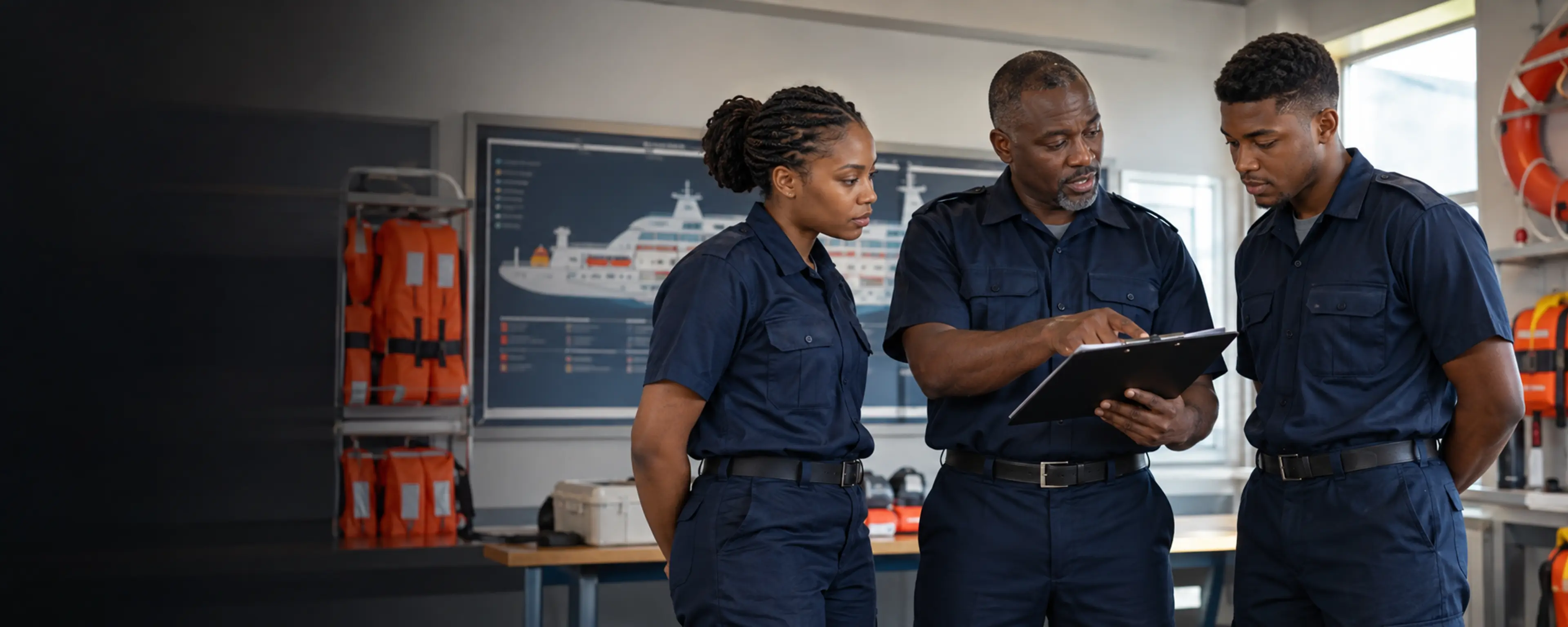
A Black maritime instructor reviews a safety checklist with two Black crew trainees in a shore-based maritime training room

Maritime safety training

STCW Basic Safety Training

Understand the four core safety subjects, learn what to check before you enrol, and confirm the exact training accepted for your cruise ship role.

Learn the standard · verify your course

Start with the requirement

Build the safety foundations expected at sea.

The four STCW subjects at a glance

PSTPersonal survival techniques
FPFFFire prevention and firefighting
EFAElementary first aid
PSSRPersonal safety and social responsibilities

STCW is the International Convention on Standards of Training, Certification and Watchkeeping for Seafarers. Its basic training framework helps crew prepare for safety responsibilities and emergencies onboard. The four subjects are a foundation; they do not replace ship-specific drills, onboard familiarisation or role-specific qualifications.

Cruise ships employ people in hotel, food service, guest services, entertainment, deck, engine and specialist roles. Crew members must follow the vessel’s safety system, while the formal certificates and modules required for an individual depend on the duties assigned, the employer and flag State rules. Ask your recruiter which course code and certificate are required for your own position.

Before paying, get the course name, provider, training location, dates and certificate issuer in writing. If you already hold a certificate, ask whether it is recognised for this assignment and whether a refresher is required. This guide explains what the subjects cover and what to verify before you enrol.

What the training covers

Four subjects, one shared safety culture

STCW Regulation VI/1 and the related Code describe the basic training framework. Providers may package delivery differently, so match the course to the exact certificate your employer or authority has requested. Ask for the syllabus, entry requirements, assessment method, schedule and certificate details before enrolling. Training may improve readiness, but it does not guarantee recruitment or replace the experience and documents stated in a live vacancy.

Personal survival techniques

Learn how to respond to emergencies at sea, use personal life-saving appliances, follow muster and abandon-ship procedures, and apply survival techniques in the water as required by the approved course. Depending on the approved syllabus, you may practise checking a lifejacket, locating survival equipment and following instructions in a supervised drill.

Focus: recognise alarms, follow instructions, use equipment correctly and act in a controlled way. Your ship’s familiarisation explains the equipment and procedures on your assigned vessel.

Fire prevention and firefighting

Build awareness of fire risks, prevention routines, alarms and initial response. The course may discuss how safe housekeeping and awareness of heat, electrical and other hazards support fire prevention. Approved training may include practical use of firefighting equipment and protective measures.

Focus: raise the alarm, understand immediate actions and use training equipment safely. Never attempt a response beyond your training or the ship’s instructions.

Elementary first aid

Learn initial first-aid actions while considering scene safety, the need to alert the ship’s response team and the limits of your training. The module prepares you to respond within your competence while qualified assistance is arranged.

Focus: protect yourself, communicate clearly, follow the approved response sequence and get appropriate onboard assistance. This is not a medical qualification.

Personal safety and social responsibilities

Understand safe working practices, communication, teamwork and environmental responsibility. The subject also helps crew understand how personal conduct, clear reporting and cooperation contribute to a respectful shipboard workplace.

Current topic: IMO amendments include training on preventing and responding to bullying and harassment at sea, including how to recognise concerns and follow appropriate reporting and support procedures.

The syllabus, practical exercises and assessment should follow the standard and approval that apply to the certificate being issued. Ask the provider to explain what is included before you pay.

From enrolment to certificate

What to expect from an approved course

Providers organise teaching differently, but you should know the learning plan, practical requirements and assessment method before the first day. Confirm the details for the exact course you are booking. Before paying, match the exact course title and competence in the vacancy to the provider’s approval, syllabus, practical assessment and certificate. Confirm recognition with the employer or maritime administration, and ask about prerequisites, expiry or refresher rules and the full cost.

01

Read the joining instructions

Check the venue, start time, identification requirements, clothing, any pre-course reading and whether you need to bring an existing seafarer record or certificate.

02

Learn the safety principles

Expect instruction on the relevant procedures, equipment, alarms, safe conduct and your responsibilities. Ask how the material connects to the competency listed on your course confirmation.

03

Practise under supervision

Where the approved syllabus requires it, practical sessions let you demonstrate tasks with training equipment in a controlled setting. Follow the instructor’s safety directions and ask for clarification before attempting an unfamiliar task.

04

Complete assessment and records

Ask how knowledge and practical competence are assessed, what counts as successful completion and when the certificate will be issued. Before leaving, confirm the contact for correcting an error or checking a delayed certificate.

How requirements can differ by assignment

Assignment detailWhat to checkUseful question
Designated safety dutiesWhether your onboard duties require a formal STCW basic training certificate before assignmentWhich regulation, course code or module applies to my role?
Passenger or crowd functionsWhether your duties include crowd management, passenger safety or emergency supportAre additional passenger-ship certificates needed?
Deck, engine or licensed workSeparate professional qualifications, certificates of competency or department-specific trainingWhich credentials must be valid before joining?
Existing training recordRecognition of the certificate, issuer, completion date and any refresher requirementCan you confirm in writing that my current certificate is accepted?

Important: a course timetable, package name or provider advertisement does not determine your legal requirement. Use the job instructions and confirmation from the employer or maritime authority responsible for your assignment.

Match training to your position

Basic training is one part of readiness.

Your role may also require ship-specific familiarisation, security training, passenger-ship duties training, a professional certificate or an employer’s onboarding modules. These are separate requirements and are not interchangeable with BST.

If you already hold a certificate, ask whether it remains acceptable for the intended assignment and whether your employer accepts its issuer and course format. Do not book a refresher or repeat a module only because a general website says you must; confirm what applies to your record.

For South African applicants, SAMSA publishes seafarer service information and accredited programme material. Approval can be specific to a course and provider, and a published list has a date. Check current status directly with SAMSA before enrolling.

Get these details in writing: exact course title and STCW reference; why it applies to your job; approved provider and location; dates and practical attendance; total fee and cancellation terms; and expected certificate issue time.
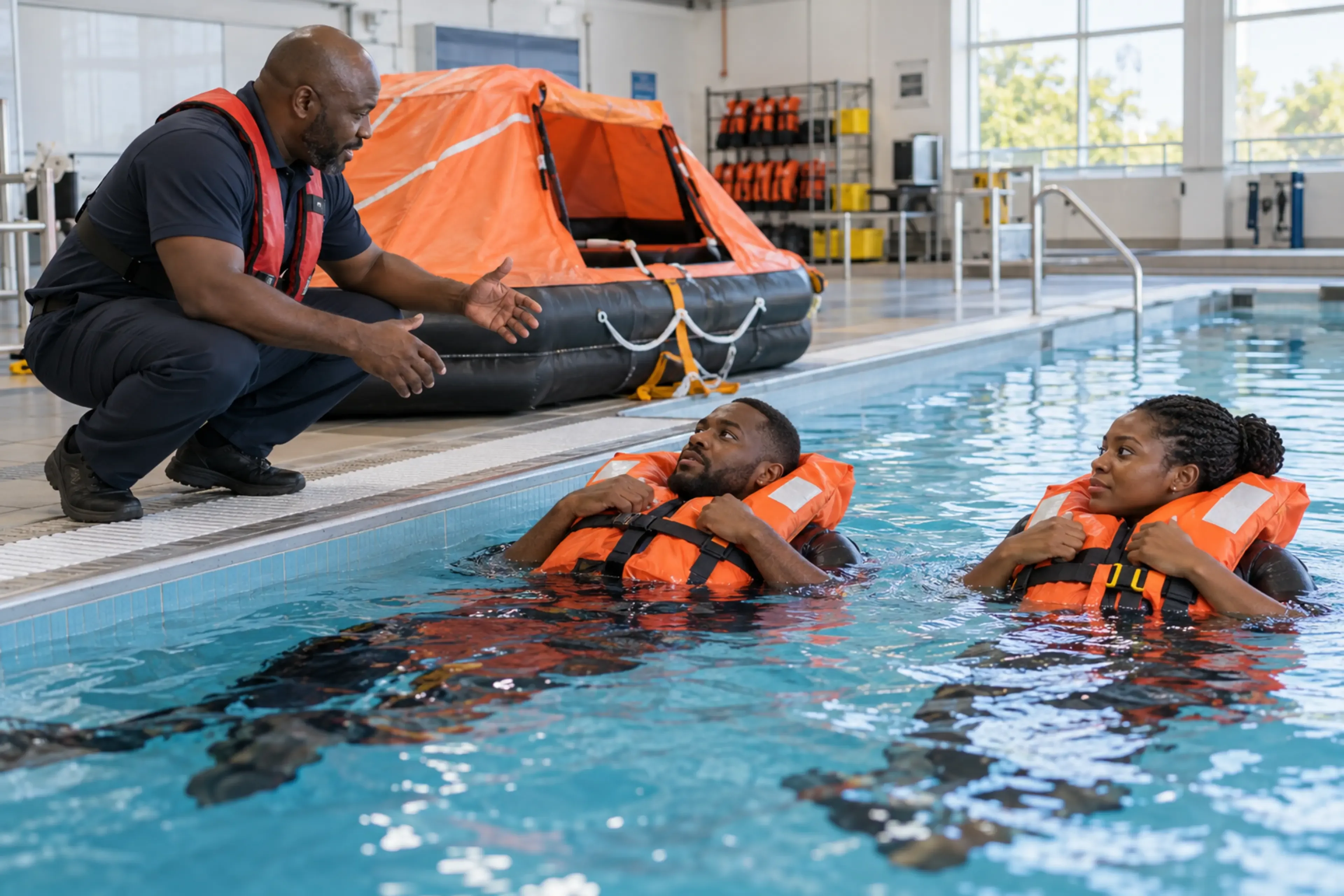
Two Black trainees practise personal survival techniques in a supervised maritime training pool
Ask how the approved course combines instruction, practice and assessment.

Your enrolment checklist

Four checks before you enrol

A few direct questions can prevent paying for training that does not match your position, location or certificate requirement. Check the course against the requirement for your role, not just a similar-sounding certificate. Ask the provider who approves it, what is assessed, where practical training takes place, how long the certificate remains valid and whether your employer accepts that provider.

01

Start with the vacancy

Save the job description and identify your role, employer, vessel type and safety duties. Ask the employer for the exact course title or code, certificate level, validity period and completion deadline. Verify the provider’s current approval with the responsible authority, and keep the full certificate and receipt.

02

Ask for the course code

Request the exact course or modules, relevant STCW reference and deadline. Ask the employer for the exact course title or code, certificate level, validity period and completion deadline. Verify the provider’s current approval with the responsible authority, and keep the full certificate and receipt.

03

Verify the provider

Check current approval for the course, provider, venue and planned dates. Ask the employer for the exact course title or code, certificate level, validity period and completion deadline. Verify the provider’s current approval with the responsible authority, and keep the full certificate and receipt.

04

Check delivery and terms

Confirm attendance, practical training, assessment, prerequisites and all fees. Ask the employer for the exact course title or code, certificate level, validity period and completion deadline. Verify the provider’s current approval with the responsible authority, and keep the full certificate and receipt.

CheckAsk forWhy it matters
Course identityExact title, module list and STCW referenceSimilar names may refer to different competencies or certificates.
ApprovalCurrent approval for provider, course and locationAcceptance depends on the authority and employer for your assignment.
DeliveryDuration, attendance, practical work and assessmentKnow what you must complete and how competence is assessed.
CertificateIssuer, issue date, verification and record formatCheck it can be submitted before your deadline.

Copy and personalise

Ask your recruiter before you enrol

Subject: Confirm STCW training for [job title]

Hello [recruiter name],

I am preparing for the [job title] position. Could you please confirm the exact STCW course or module references required for this assignment, whether my existing certificate [certificate name, issuer and date] is accepted, which provider and location are approved, and the deadline for completion? Please also let me know if passenger-ship or other role-specific training is required.

Thank you,
[Your name]

Keep your record ready

Store your certificate details carefully.

After training, check that your name, course title, issuing organisation, certificate number and dates are correct and readable. Ask the provider to fix errors before submitting the document to an employer.

Keep the original safe and a clear digital copy in a secure location. Send documents only through the recruiter’s verified channel and note when you submitted them.

IMO guidance describes refresher training at five-year intervals for personal survival techniques and fire prevention and firefighting. Confirm how this applies to your certificate, flag State, position and employer before assuming a certificate has expired or remains acceptable.

Related preparation

Training is one part of getting ready.

Review your role requirements, prepare for interviews and keep your travel documents in order. Your employer’s instructions determine the next step.

Explore training and programs

Review job requirements →
Prepare for an interview →

Choose with confidence

A practical way to compare training providers

Check what is approved and what is offered. Verify the exact course before committing money or time. Before paying, match the exact course title and competence in the vacancy to the provider’s approval, syllabus, practical assessment and certificate. Confirm recognition with the employer or maritime administration, and ask about prerequisites, expiry or refresher rules and the full cost.

01

Match approval to the course

Look for the precise course title and the provider’s approval for that course and venue. Approval for one program does not automatically confirm every course a provider sells.

If a public list is dated, check whether it has been updated. Ask the authority directly if you cannot confirm the dates or location.

02

Understand the full cost

Request an itemised quote for tuition, materials, assessment, certificate charges and any resit or cancellation fees. Check whether travel or accommodation is separate.

Be cautious of pressure to pay immediately or claims that training guarantees a job. A certificate is not an employment offer.

03

Plan around recruitment

Check available dates and the time needed to issue and verify the certificate. Tell your recruiter if you have an interview, medical or joining deadline.

Keep the written requirement, provider confirmation, receipt and certificate together to resolve any mismatch early.

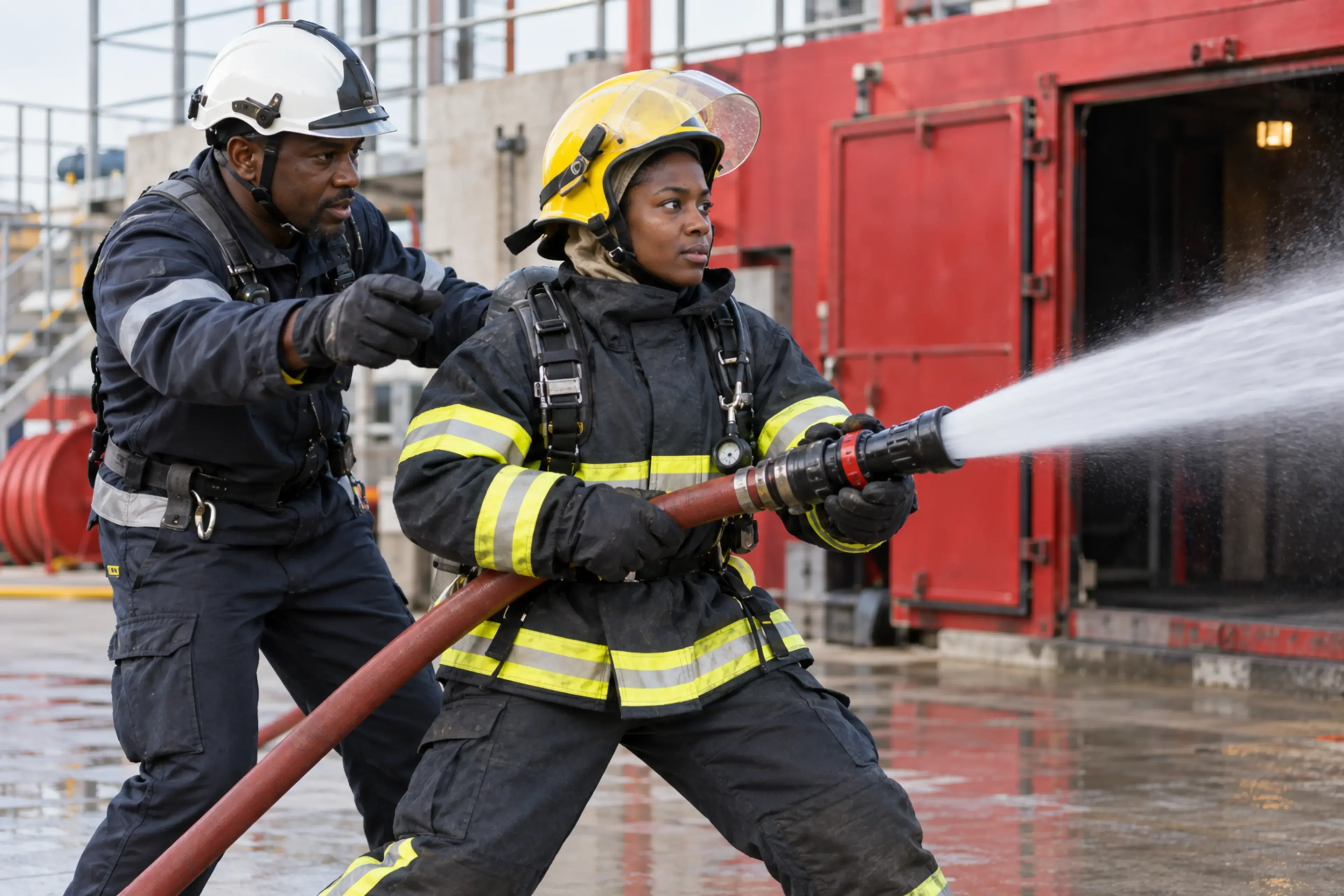
A Black STCW trainee and instructor practise a hose drill at a land-based fire safety facility

Practical preparation

Train with an approved provider and check the certificate

Before paying, confirm the provider, course modules, assessment, certificate format and any refresher rules against the employer’s current instructions. Practical safety training should be completed through a suitable provider and documented clearly for the recruitment process.

Continue with related guidance →

Clear answers

STCW Basic Safety Training FAQs

Use the relevant maritime authority and your employer’s instructions to confirm what applies to your position.

What does STCW Basic Safety Training cover?

The four basic subjects are personal survival techniques, fire prevention and firefighting, elementary first aid, and personal safety and social responsibilities. Confirm the accepted course and certificate for your assignment.

Does every cruise ship job require the same BST course?

No. Requirements can vary by duties, ship, employer and flag State, as well as the certificates you already hold. Ask your recruiter which exact training applies.

How do I verify a course provider in South Africa?

Start with SAMSA Seafarer Services, then confirm current approval for the course, provider, venue and dates. Treat older lists as references that need rechecking.

Does an STCW certificate expire after five years?

IMO guidance describes five-year refresher intervals for personal survival techniques and fire prevention and firefighting. Ask the issuing authority or employer how this applies to your certificate and assignment.

Is elementary first aid a medical qualification?

No. It is a basic safety subject; it does not replace a professional medical qualification or the ship’s medical response procedures.

Will completing BST guarantee a cruise ship job?

No. It may meet a training requirement, but hiring also depends on vacancies, qualifications, experience, interviews, medical fitness, documents and employer selection.

Official training references

Reviewed 25 October 2026. IMO: STCW Convention overview · IMO: seafarer support and safety training updates · SAMSA: Seafarer Services · SAMSA accredited programmes list (dated; verify current approval). This page is general information; requirements for an individual assignment are set by the relevant maritime administration and employer.

Course component

Personal Survival Techniques (PST).

Review the practical survival skills, provider approval checks and certificate questions covered in this STCW basic-training component. Check the course against the requirement for your role, not just a similar-sounding certificate. Ask the provider who approves it, what is assessed, where practical training takes place, how long the certificate remains valid and whether your employer accepts that provider.

Course component

Personal Safety and Social Responsibilities (PSSR).

Review this STCW basic-training component, its practical scope and current course acceptance checks. Ask for the syllabus, entry requirements, assessment method, schedule and certificate details before enrolling. Training may improve readiness, but it does not guarantee recruitment or replace the experience and documents stated in a live vacancy.

Course component

Elementary First Aid (EFA).

Review the STCW basic first-aid course purpose, provider checks and how EFA differs from onboard medical-care qualifications. Medical checks can depend on the role, employer and applicable seafarer rules. Get the accepted examination name, provider and timing in writing; bring the requested history and records; and ask the clinic how results or additional tests will be communicated to the hiring team.